


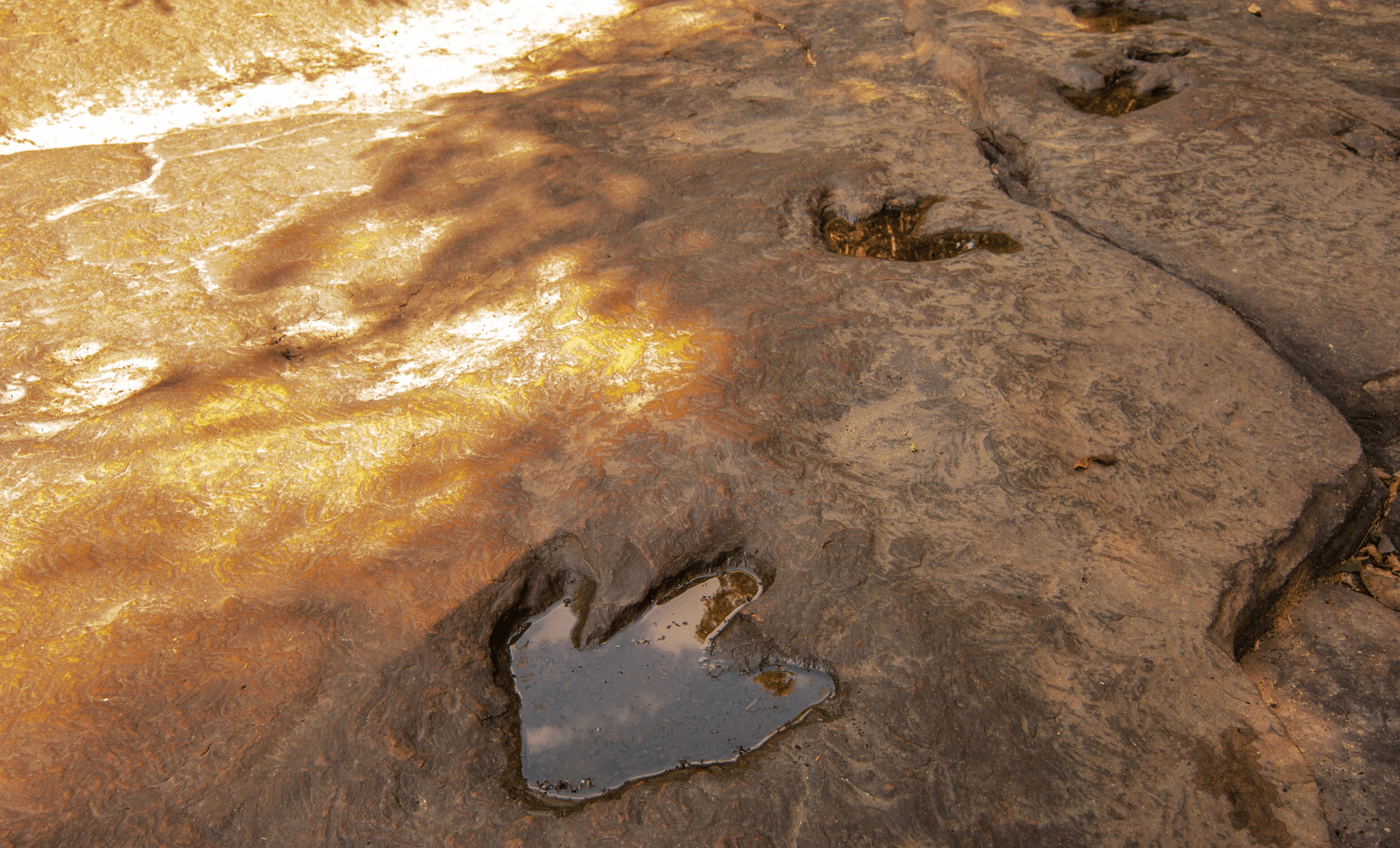
10-Year-Old Girl Stumbles Upon Dinosaur Footprints On A Welsh Beach
A quiet family walk along the windswept coast of South Wales turned into a discovery that astonished paleontologists. What began as a simple beach outing ended with a 10-year-old uncovering traces from the age of dinosaurs — five perfectly aligned footprints fossilized in stone. The finding, now confirmed by experts, is reshaping how scientists view prehistoric life in the region.
A Walk That Made Prehistoric History
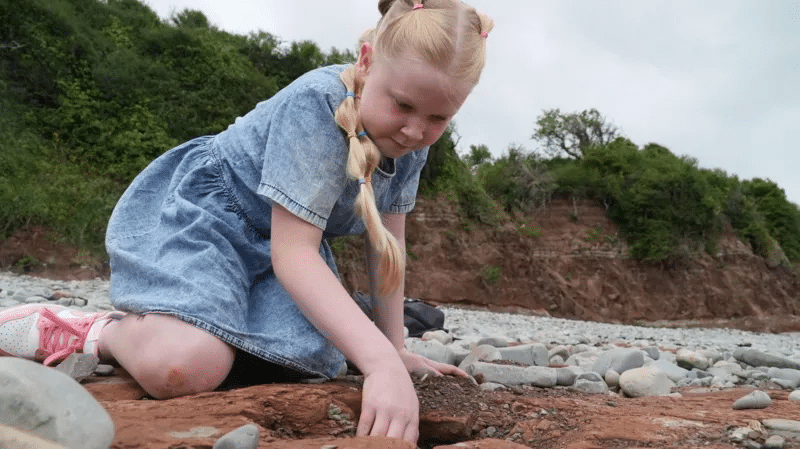
The discovery took place near the Vale of Glamorgan, where Tegan and her mother, Claire, set out for a seaside stroll. Their plan was simple: look for shells, maybe spot a few fossils. Instead, they stumbled across something far rarer.
“It was so cool and exciting,” said Tegan, who had traveled from Pontardawe near Swansea for the day. “We were just out looking to see what we could find, we didn’t think we’d find anything. We found these were big holes that looked like dinosaur footprints, so mum took some pictures, emailed the museum and it was from a long-necked dinosaur.”
Experts from the National Museum Wales quickly got involved after receiving Claire’s email. As reported by BBC’s The Dinohunters programme, paleontology curator Cindy Howells recognized the markings immediately. “These footprints are so big, it would have to be a type of dinosaur called a sauropodomorpha,” she explained, referring to an ancient group of long-necked herbivores that once dominated the planet. Each print was spaced about 30 inches apart in a rhythmic left-right sequence, unmistakably the stride of a walking dinosaur.
The Evidence Beneath The Sandstone
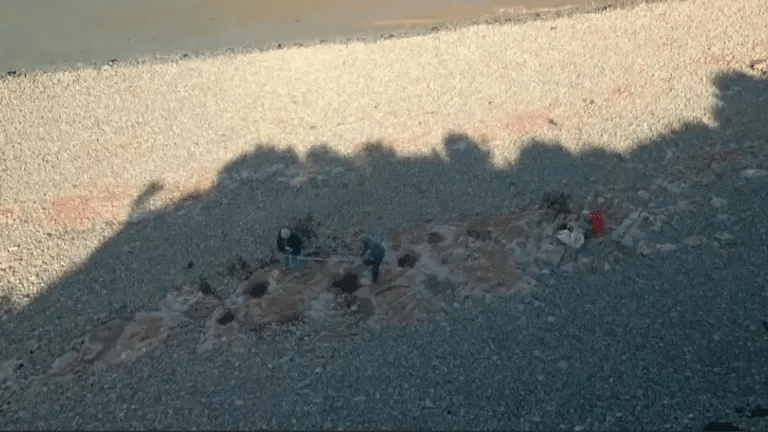
The site, Lavernock Point — nestled between Cardiff and Barry — is already known as a fossil hotspot. The distinctive red siltstone in the area has preserved countless prehistoric traces, but this latest find adds a compelling chapter to the story.
“We’ve got five footprints and we’re talking about half-to-three-quarters of a metre between each one,” Howells told the BBC, adding, “If they were random holes, we’d be wary but because we have a left foot, a right foot and then a left and another right… there’s a consistent distance between them.”
Paleontologists believe the prints likely belonged to a Camelotia, a large herbivorous dinosaur from the late Triassic period, standing around ten feet tall and stretching up to sixteen feet long. These early sauropodomorphs alternated between walking on two legs and all fours, leaving distinct impressions that match the Lavernock pattern. For scientists, each new discovery along the Welsh coastline helps piece together a clearer timeline of when and how these massive creatures inhabited the area.
Howells highlighted the growing significance of Welsh fossil discoveries, noting that new finds are now surfacing every five or six years — a frequency that challenges the old belief that dinosaurs were rare in the region.
A Moment That Sparked Wonder
For Tegan and her mother, the moment remains surreal. “It’s hard to comprehend you’re walking on the same beach that hundreds of millions of years ago some massive prehistoric animal was here,” Claire reflected. “You can spend a lifetime looking for dinosaur treasures so for it to happen for Tegan at this age is great.”
The find has inspired Tegan’s growing fascination with paleontology, as well as rekindled interest among amateur fossil hunters across South Wales. As Howells described it, “It’s quite a significant find — the buzz you get when someone contacts us with a definite dinosaur find, it’s amazing.”
For now, those five ancient prints serve as both scientific evidence and a reminder of how discovery often begins — with curiosity, a sharp eye, and a bit of luck along the shoreline.
First Appeared on
Source link






