


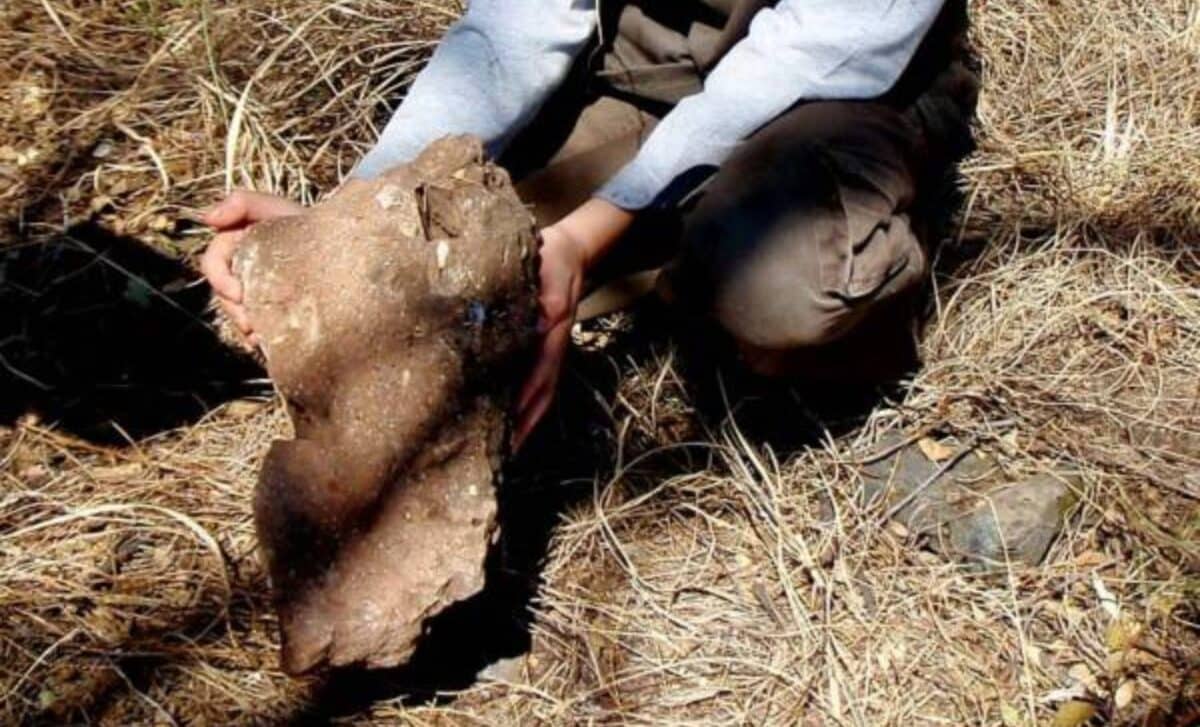
This Fossil Was Discovered by a 9-Year-Old Boy While Walking His Dog
In 2008, 9-year-old Matthew Berger was just out walking his dog when he tripped over what he thought was a rock. What he actually discovered was far more significant—a nearly 2-million-year-old fossil that has since been identified as Australopithecus sediba.
The bones were found in a cave near Johannesburg, South Africa, and they’ve since been hailed as one of the most important fossil finds of the century. Australopithecus sediba is now believed to have lived between Australopithecus afarensis—the species of the famous “Lucy”—and Homo habilis, an early human species known for making tools.
A Vital Link in the Human Evolution Chain
For years, researchers have been piecing together the human evolutionary puzzle, trying to figure out how we went from ape-like creatures to tool-using, walking beings. Australopithecus sediba seems to fit neatly in the middle of this puzzle, sitting between Australopithecus afarensis (the species of the famous Lucy) and Homo habilis, one of the first toolmakers.
“These fossils give us an extraordinarily detailed look into a new chapter of human evolution and provide a window into a critical period when hominids made the committed change from dependency on life in the trees to life on the ground,” noted Lee Berger, a paleoanthropologist with South Africa’s University of the Witwatersrand.
The bones suggest that while Australopithecus sediba still had some ape-like features, like long arms, it also had a more human-like ability to walk on two legs. According to researcher Jeremy DeSilva:
“The anatomies we are seeing in Australopithecus sediba are forcing us to reassess the pathway by which we became human.”
Its hands, in particular, resemble those of Homo habilis, hinting that this early ancestor may have had the ability to make tools, or at least hold them with greater precision than previous species.
A Fossil Find More Complete Than Lucy’s
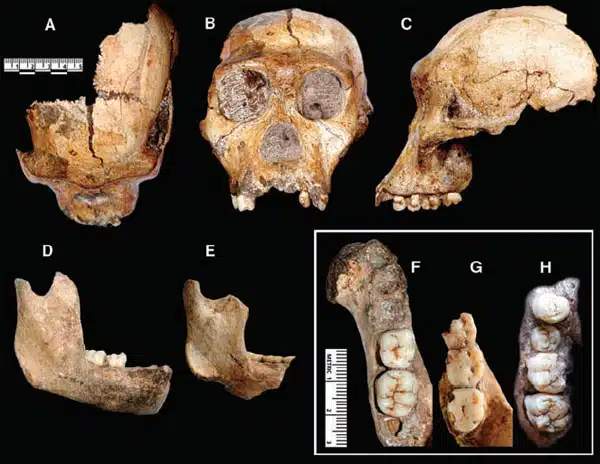
What makes this discovery even more extraordinary is how well preserved the fossils are. These aren’t just fragmented bones; they’re some of the most complete hominin skeletons ever discovered from this period.
The Au. sediba fossils include nearly complete skeletons of both an adult female and a juvenile male. The state of preservation has allowed scientists to study the intricate details of the anatomy.
The detailed skeletons show features that suggest Australopithecus sediba was uniquely adapted for life both in the trees and on the ground. While its body shows evidence of bipedal locomotion, meaning it walked on two legs, the long arms suggest it still spent significant time in the trees, perhaps for foraging or as a defense against predators.
A Simple Stumble That Changed Everything
And yet, despite its significance, the discovery of Australopithecus sediba was, in essence, an accident. Matthew Berger was just a boy out for a walk with his dog when he tripped over what he thought was a rock, a find that would later be described in the study “Australopithecus sediba: A New Species of Homo-Like Australopith from South Africa”, published in the journal Science.
“Matthew ran off the site and within about a minute and a half said, ‘Dad I found a fossil!’” Berger quoted. “When I got to the block and looked at it, there was a hominid mandible and canine sticking out of the back. So he did, in fact, make the first discovery.”
Had he not paid attention, the fossils might still be there today, waiting to be found by someone else, or perhaps never discovered at all. In fact, DeSilva, even muses about the near-miss of it all:
“If Matthew had stumbled over that rock and continued walking, our science would not know about Au. sediba, but those fossils would still be there, still encased in calcified clastic sediments, still waiting to be discovered,” explained one of the study’s authors.
First Appeared on
Source link






