


Researchers Realized What They Found Wasn’t a 550-Million-Year-Old Fossil at All
A fossil once believed to belong to the ancient creature Dickinsonia has been debunked. Initially thought to date back around 550 million years, the specimen found in India’s Bhimbetka rock shelters was later revealed to be much more recent, a rapidly decaying beehive. This revelation, as the study published in Gondwana Research specifies, has profound implications for the dating of the rock shelters and the surrounding landscape, potentially reshaping our understanding of the region’s ancient history.
A Fossil That Wasn’t: How the Mistake Happened
Back in 2020, researchers were thrilled when they stumbled upon what appeared to be a Dickinsonia fossil, a flat, oval-shaped organism that lived during the Ediacaran period. This find was seen as a major breakthrough in understanding the geological history of the Bhimbetka rock shelters, which are crucial for studying India’s ancient past. The presence of such an organism in the caves, scientists thought, could help date the site to around 550 million years ago.
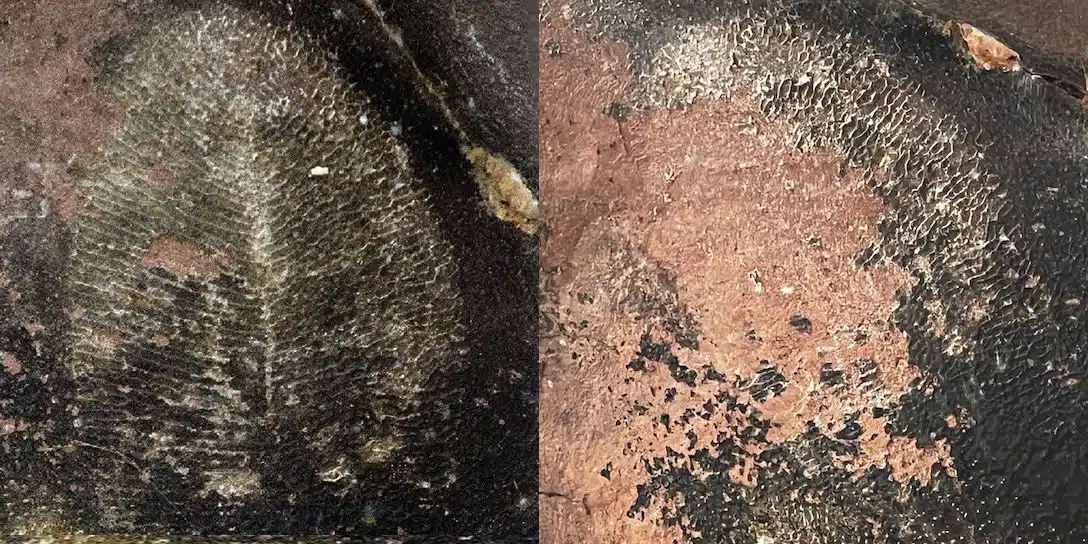
However, the excitement was short-lived. When geologists revisited the site in 2022, they found the fossil had decayed significantly, leading to suspicions that something was amiss. Joseph Meert, a geologist from the University of Florida, noticed the specimen was peeling off the wall and appeared in an unusual position, nearly vertical.
“As soon as I looked at it, I thought something’s not right here,” Meert said. “The fossil was peeling off the rock.”
New Evidence Points to a Beehive, Not a Fossil
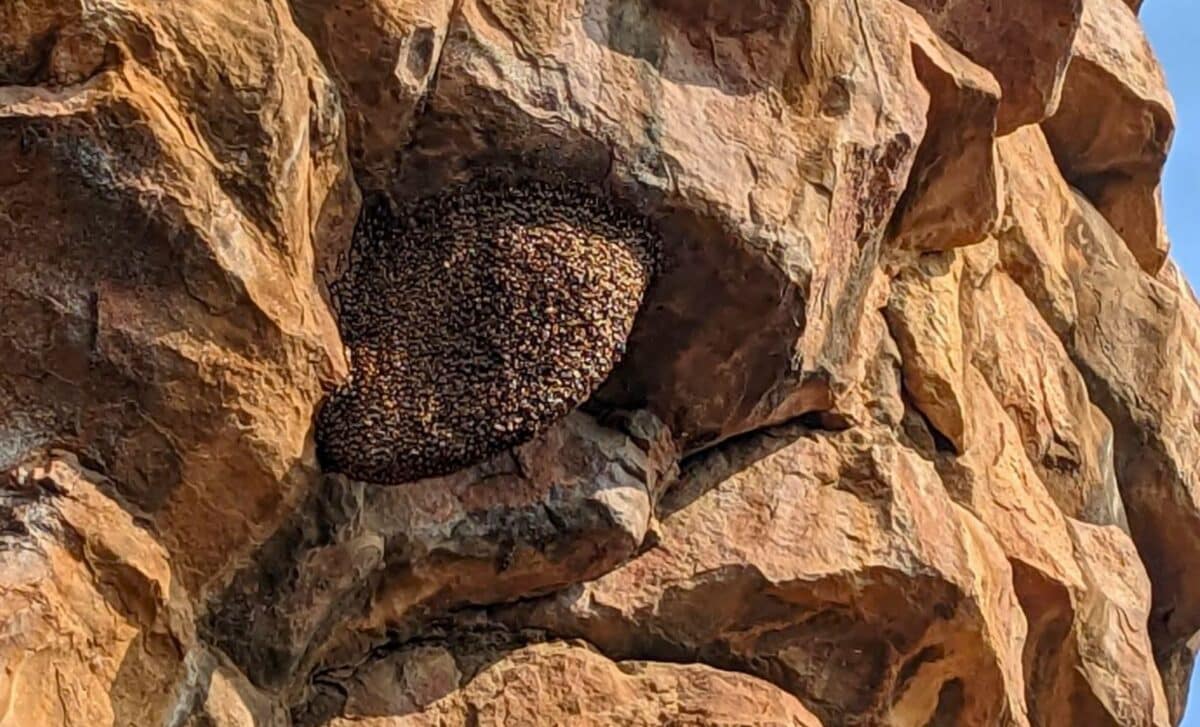
The research came when the experts discovered several other similar structures in the caves—giant beehives.Upon closer examination, the “fossil” was identified as the quickly decaying remains of a beehive, not an ancient species.
The researchers found that the dark staining around the supposed fossil matched that of propolis:
the sticky “brown-colored material composed of a mix of beeswax, saliva, and plant resins used as ‘glue’ to repair and give integrity to the hive.”
It became clear that the material, which had been mistaken for the fossilized remnants of Dickinsonia, was consistent with what one might expect to see in the remains of an active hive.
The Age of the Caves: A New Perspective
Previous dating of tiny zircon crystals surrounding the caves suggested the area could be up to a billion years old, an age that aligns with the magnetic signatures of nearby rock formations. With the Dickinsonia fossil dismissed, the dating of the rock shelters becomes an even more critical task for geologists and paleontologists alike.
The confusion over the fossil’s identity highlights a crucial aspect of scientific discovery: the ongoing process of revision and refinement. While the researchers who initially believed they had found the Dickinsonia fossil have acknowledged their mistake, they emphasize that science works through continuous testing and re-evaluation. Gregory Retallack, a paleontologist at the University of Oregon, who contributed to the earlier study, remarked:
“It is rare but essential for scientists to confess mistakes when new evidence is discovered.” This openness is key to advancing our understanding of the world, even when it means overturning previous conclusions.
First Appeared on
Source link






