


The 5 subtle warning signs of lung cancer this survivor initially brushed off
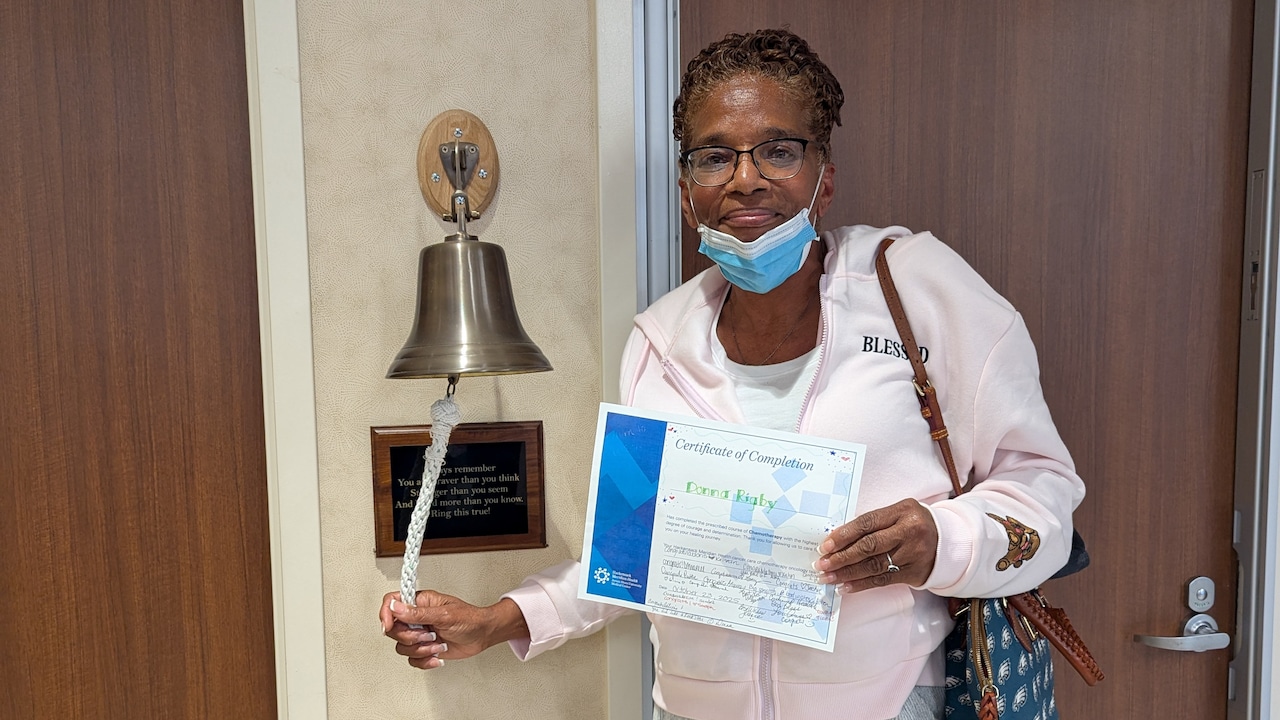
When Donna Rigby began feeling short of breath, she brushed it off. It was springtime, and she figured allergies were to blame. A nagging cough came and went, and sometimes she felt winded just walking from her car to the door.
“I wasn’t sick, just tired,” said Rigby, 65, of Asbury Park. “I thought maybe I was out of shape. It never crossed my mind that something serious was going on.”
That’s the quiet danger of lung cancer, said Dr. Thomas Bauer, chief of thoracic surgery at Hackensack Meridian Health‘s Jersey Shore University Medical Center.
“Lung cancer often doesn’t have symptoms,” he said. “When it does, they can show up as a cough, a little blood in your mucus, or mild chest pain. People don’t think twice about it.”
Nationally, 281,893 new cases of lung cancer were reported in 2022, according to the Centers for Disease Control and Prevention (CDC).
In New Jersey, 2,675 men and 3,128 women were diagnosed with lung cancer. Rates were highest among Black males.
Research shows that people of color in the U.S. with lung cancer are less likely to be diagnosed early, less likely to receive surgery and more likely to receive no treatment at all compared to white individuals. Socioeconomic disparities and racial bias contribute to poorer outcomes for Black individuals with lung cancer according to the Journal of Thoracic Disease.
The subtle signs
Bauer said the signs of lung cancer can include a persistent cough or hoarseness, shortness of breath or wheezing, chest pain, fatigue or unexplained weight loss and coughing up small amounts of blood.
“Rigby’s story is not uncommon,” Bauer said. “About 10% of people who develop lung cancer have never smoked. That makes early detection especially challenging because those individuals aren’t looking for it.”
He added that about 90% of lung cancer cases occur in smokers, many of whom already have breathing issues.
“A smoker may assume their shortness of breath is just from years of smoking, when in fact something more serious is happening,” he said.
Rigby wasn’t smoking at the time that she was diagnosed with lung cancer, though she said she’d smoked about five cigarettes a day from her teens until 15 years ago. She had no family history of lung cancer.
“I was shocked when my doctor suggested a scan,” she said. Her physician insisted on a precautionary CAT scan after her symptoms persisted. That scan revealed a small tumor in her lung.
Power of early detection
Lung cancer screening has become a vital tool for catching the disease early, before symptoms appear.
The U.S. Preventive Services Task Force recommends yearly low-dose CT scans for adults ages 50 to 80 with a significant smoking history, which is defined as at least one pack a day for 20 years or more. This includes people who currently smoke or who quit within the past 15 years.
“It’s a simple, low-radiation test that saves lives,” Bauer said. “The challenge is getting people to do it. Only about 15% of those who qualify actually get screened.”
From scans to solutions
Rigby’s cancer was caught early, so she had more options. Once lung cancer is detected, doctors use imaging to determine its stage and extent.
“A CAT scan gives us the structure of the lung,” Bauer said. “A PET scan shows us activity inside the body. It uses a tiny amount of radioactive sugar to find areas where cells are working harder than normal, like cancer cells. When we combine the two scans, we get a clear picture of where the cancer is and how it’s behaving.”
In Rigby’s case, her tumor was confined to one section of her lung, making her an excellent candidate for surgery.
“When I trained in the 1990s, patients needed a large incision and a week in the ICU,” Bauer recalled. “Now, with robotic-assisted surgery, we can remove the tumor through tiny incisions, and patients often go home the next day.”
Rigby said her recovery was remarkably smooth.
“I couldn’t believe it. They told me I’d be home in 24 hours — and I was,“ she said. ”I took pain medicine for a few days and then I was walking around the house like nothing happened.”
The road to recovery
Bauer said beyond surgery, treatment options for lung cancer continue to evolve.
“We now have targeted therapies that focus on specific genetic mutations,” he said. “And newer immunotherapy drugs help the body’s own immune system fight the cancer. These have dramatically changed outcomes for patients with advanced disease.”
Still, Bauer emphasized that prevention and early detection remain the best medicine.
“Every choice has consequences,” he said. “If someone chooses not to treat or not to screen, that’s a choice too, but it comes with a cost. When we catch cancer early, we can cure it.”
Today, Rigby said she feels better than she has in years. Her experience changed her lifestyle and her mindset.
“I eat better, I exercise, I take my health seriously,” she said. “Before, I assumed if I didn’t smoke, I was safe. Now, I know it’s not that simple.
“I never thought it could happen to me,” she said. “But because we found it early, I get to keep living and breathing like nothing ever happened.”
If you purchase a product or register for an account through a link on our site, we may receive compensation. By using this site, you consent to our User Agreement and agree that your clicks, interactions, and personal information may be collected, recorded, and/or stored by us and social media and other third-party partners in accordance with our Privacy Policy.
First Appeared on
Source link






