


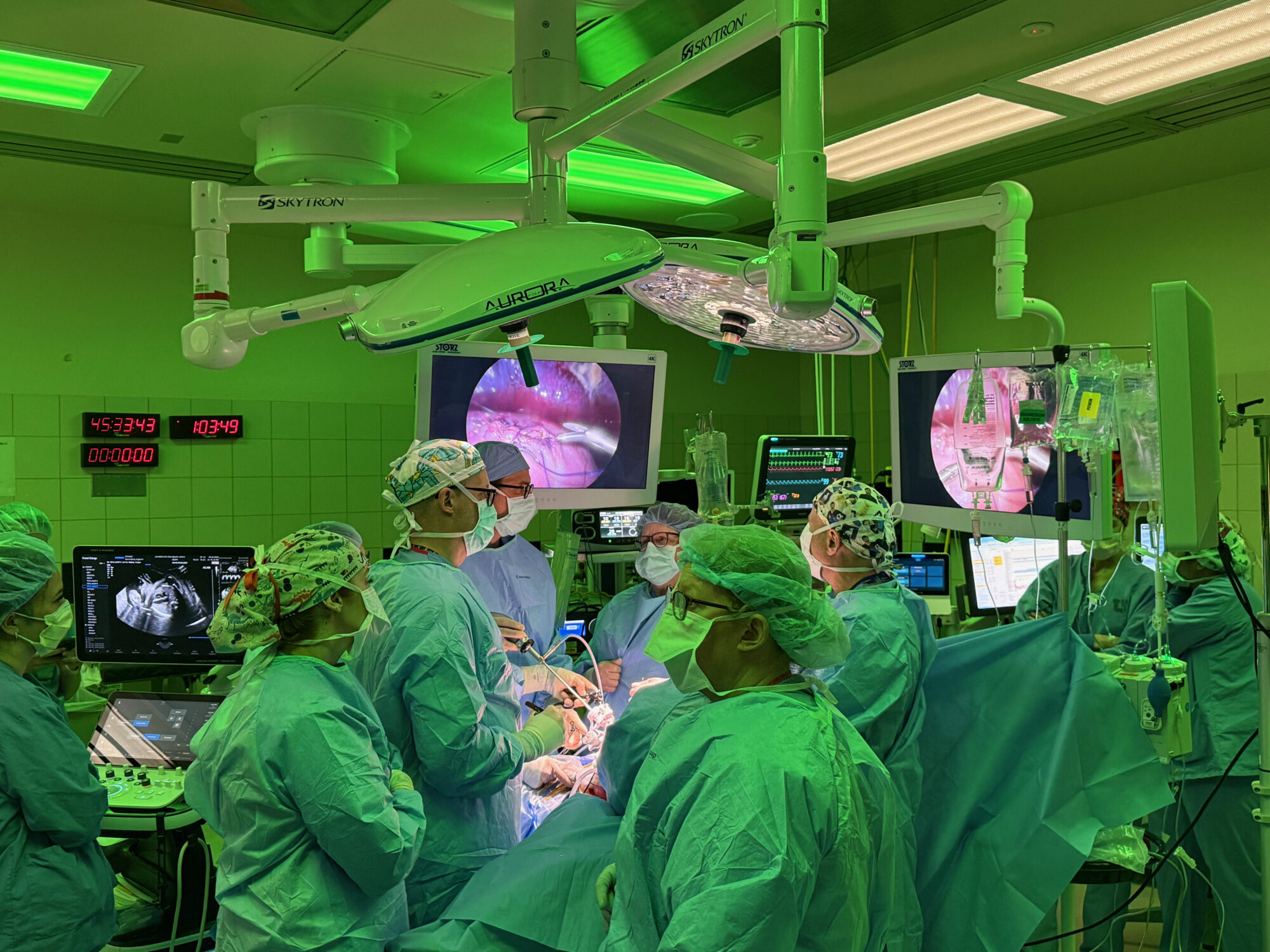
New in-utero surgery gives babies with spina bifida a healthier start
SALT LAKE CITY — When Angela Ibarra-Garcia went in for her 20-week ultrasound, she expected a routine checkup. Instead, she learned her baby girl, Daniela, had spina bifida — a condition where the spine doesn’t form properly and can lead to paralysis and lifelong medical challenges.
“I was worried that she wouldn’t be able to walk and do all those things,” she said.
Doctors at the Grant Scott Bonham Fetal Center at Intermountain Primary Children’s Hospital offered her an option she never expected: a surgery before her baby was even born.
“We didn’t even think about it. We said, ‘Let’s do it,’” she said.
Five years ago, the Fetal Center began performing in-utero spina bifida repairs — a complex surgery only done at a few centers nationwide.
But this year, the team started using a new, minimally invasive technique called a fetoscopic MMC repair. Using three tiny incisions in the uterus, a camera, and precise instruments, surgeons can repair the baby’s spine inside the womb. The approach is not only better for the baby — it’s safer for moms and improves their chances for future healthy pregnancies.
Daniela was the first baby to receive the new fetoscopic spina bifida repair in Utah. (Angela Ibarra-Garcia)
“This demonstrates that we have the capabilities of handling all things fetal,” said Dr. Stephen Fenton, pediatric surgeon and director of the Fetal Center. “We’ve seen very good outcomes with our moms and babies and know that this is a game changer for this state and the region.”
Doctors carefully screen each patient to make sure both the mom and baby qualify for the surgery.
“It doesn’t necessarily cure spina bifida, but it can certainly increase their quality of life for both them and their families,” Fenton said.
At 25 weeks, Ibarra-Garcia became the first mom in Utah to undergo the fetoscopic repair. Now four months old, baby Daniela is in therapy to strengthen her legs and feet — and her mom is happy she was given the chance for a better outcome.
“Her chances were a lot better than doing it after she was born,” she said. “I’m very grateful that the technology has advanced to where it is an option,” she said.
Since Ibarra-Garcia’s surgery, doctors have completed several more and plan to offer the procedure to even more families.
First Appeared on
Source link






