


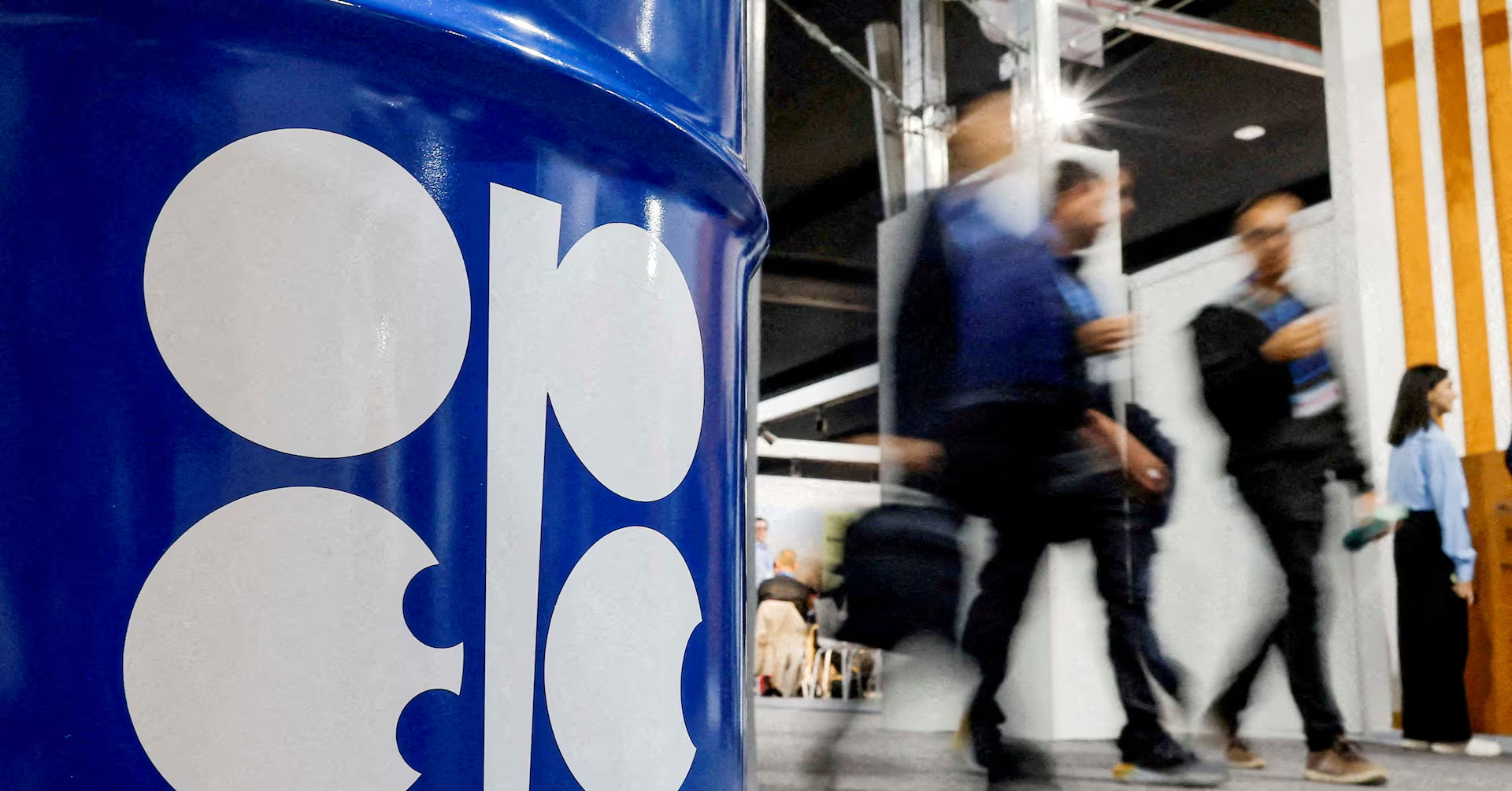
OPEC+ holds oil output steady, agrees capacity mechanism
Sign up here.
If the peace deal fails, Russia could see its supply curbed further by sanctions. OPEC+ groups the Organization of the Petroleum Exporting Countries and allies led by Russia.
Brent crude closed on Friday near $63 a barrel, down 15% this year.
“The message from the group was clear: stability outweighs ambition at a time when the market outlook is deteriorating rapidly,” said Jorge Leon, a former OPEC official who now works as head of geopolitical analysis at Rystad Energy.
OVER 3 MILLION BPD OF OUTPUT CUTS STILL IN PLACE
These comprise a 2 million bpd oil output cut by most members which is in place until the end of 2026, and the remaining 1.24 million bpd of a 1.65 million bpd reduction that the eight members started to return to the market in October.
CAPACITY ASSESSMENT TO BE DONE BETWEEN JANUARY AND SEPTEMBER
The assessment will be done between January and September 2026, sources said after the meetings, in time for 2027 output quotas to be decided.
One company will assess capacity of 19 of the 22 OPEC+ members, the sources said. Capacity in countries that are under sanctions will be assessed either by a separate company or by using an average of their oil output figures for August through October 2026.
Among the OPEC+ members, Russia, Iran and Venezuela are under Western sanctions.
OPEC+ has been discussing the production capacity and quotas issue for years and it has proved difficult because some members such as the United Arab Emirates have increased capacity and want higher quotas.
Other members such as African countries have seen declines in production capacity but are resisting quota cuts. Angola quit the group in 2024 over a disagreement about its production quotas.
Reporting by Ahmad Ghaddar, Alex Lawler and Olesya Astakhova; Writing by Dmitry Zhdannikov; Editing by Kirsten Donovan, David Holmes and Emelia Sithole-Matarise
Our Standards: The Thomson Reuters Trust Principles.
First Appeared on
Source link






