


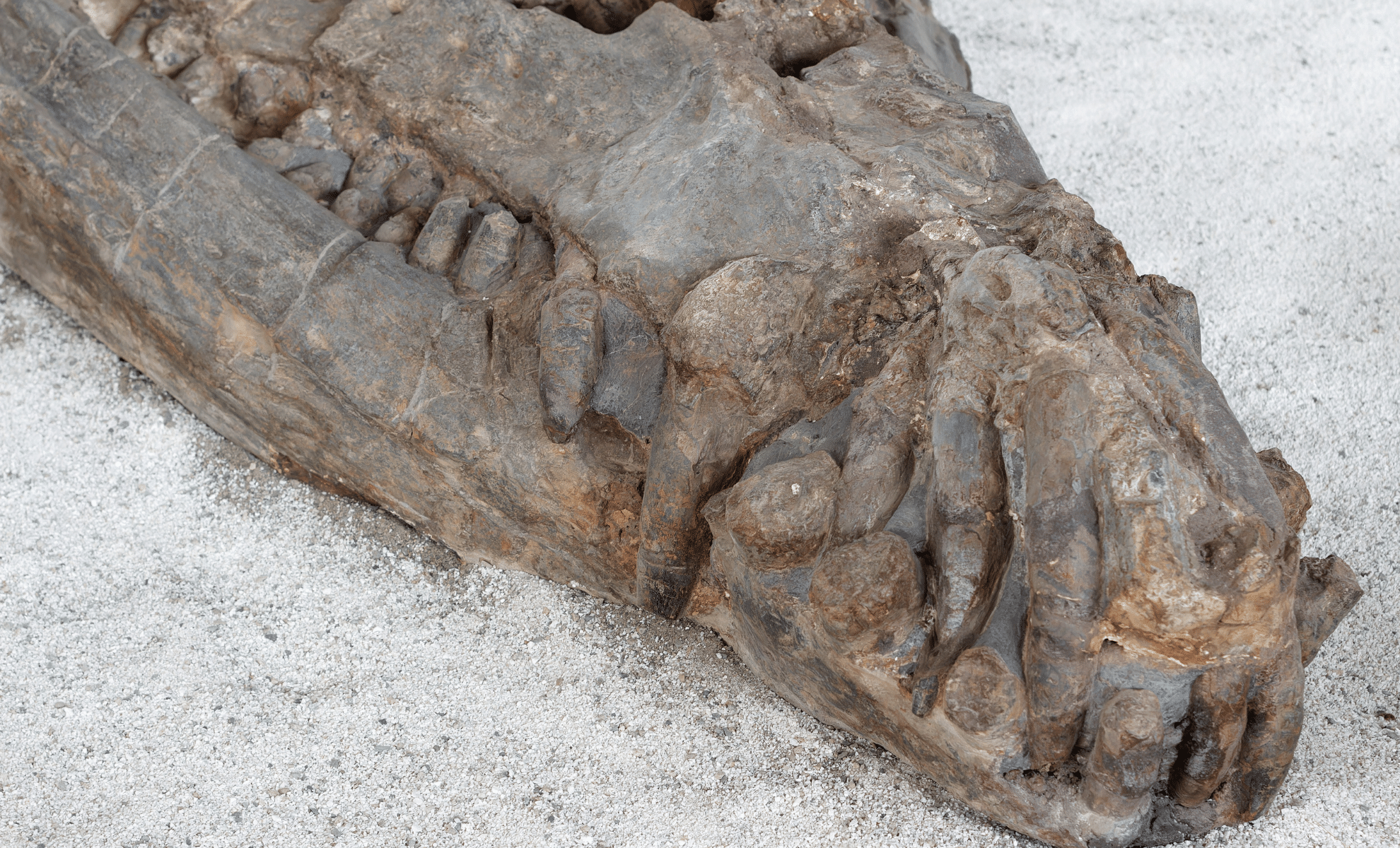
Massive Dinosaur Discovery in Texas Shakes Up Early Cretaceous History!
A recent discovery of a Tenontosaurus fossil in West Texas has reshaped our understanding of early dinosaurs in the Southwest. The study, published in the New Mexico Museum of Natural History and Science Bulletin, details the southernmost record of this herbivorous dinosaur, which lived approximately 115 million years ago during the Early Cretaceous period. This breakthrough discovery fills a significant gap in the fossil record and provides new insights into the ecosystems of ancient North America. The research, led by geologist Dr. Jason W. Ricketts, highlights the importance of detailed geological mapping in revealing hidden paleontological treasures.
The Significance of the West Texas Discovery
The discovery of Tenontosaurus fossils in the Indio Mountains of West Texas represents a pivotal moment for paleontology. Historically, Tenontosaurus fossils have been found in regions like Montana, Wyoming, Arizona, and North-central Texas, but the recent find pushes the species’ known range hundreds of miles south. The bones were located within the Yucca Formation, a Lower Cretaceous rock unit that records the ancient river systems of what is now West Texas. This findings, published in the New Mexico Museum of Natural History and Science Bulletin, suggests that Tenontosaurus, a plant-eating dinosaur, may have adapted to a wider range of environmental conditions than previously thought.
“I wasn’t out looking for fossils that day. We were studying the rocks in the area when I noticed fragments weathering out of soft shale,” said Dr. Ricketts.
This accidental finding emphasizes the value of fieldwork and how careful attention to detail can lead to groundbreaking discoveries. The fossils, fragments of tail vertebrae and the end of a femur, were enough to provide significant clues about the dinosaur’s behavior and its environment, confirming the Southern extension of its range during the Early Cretaceous.
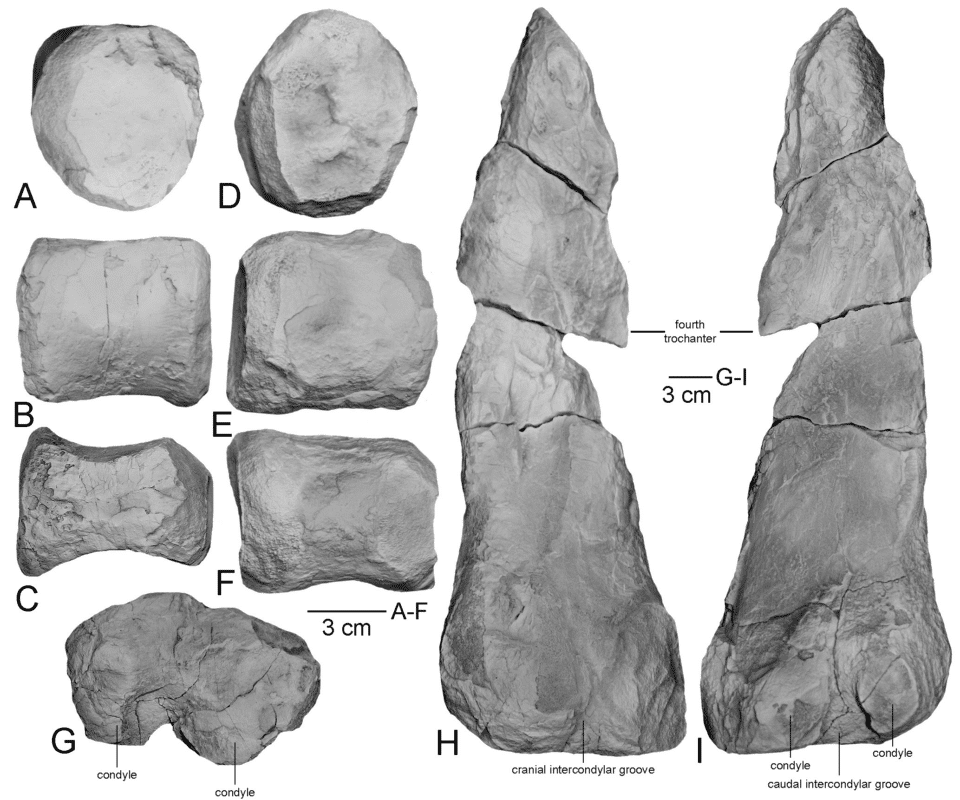
Paleontology Division collection. A, D, anterior views. B, E, F, lateral views. C, dorsal view. G, distal view. H, cranial view. I. caudal view. Scale bars (A–F, G–I) are 3 cm. Credit: New Mexico Museum of Natural History and Science Bulletin
Fossils Provide a Snapshot of Cretaceous Life
The Tenontosaurus fossils found in West Texas are not just important for their geographical implications; they also provide a snapshot of the Cretaceous period. Tenontosaurus was a herbivorous dinosaur that could grow up to 20 feet long, and it shared its world with large predators like Deinonychus and Acrocanthosaurus, as well as smaller herbivores. The fossil site in West Texas reveals that Tenontosaurus likely lived in a landscape filled with river systems, lakes, and abundant vegetation, environments that would have supported large herds of plant-eating dinosaurs.
The bones found at the site show distinctive features that match known Tenontosaurus skeletons from other parts of North America. Despite the fragmentary nature of the fossils, careful analysis has allowed paleontologists to confirm that these bones belong to Tenontosaurus, even though they do not include all the diagnostic features typically used for identification. The precise identification of these bones as part of the Tenontosaurus species significantly extends our understanding of how this dinosaur interacted with its ecosystem in a broader geographical area.
The Impact of the Discovery on Paleontological Understanding
The West Texas discovery has profound implications for our understanding of dinosaur ecosystems during the Early Cretaceous. Previously, fossil records from this period in North America were limited, especially in terms of complete skeletons. Most early Cretaceous fossils are fragmented, making it difficult to form a complete picture of life during this time. However, the Tenontosaurus fossils found in West Texas provide new data that allows scientists to draw comparisons between different dinosaur populations across North America.
The comparison of the West Texas fossils with other Tenontosaurus skeletons from regions like Montana and Wyoming can provide insights into the species’ distribution patterns. By examining the fossils’ age and anatomical features, researchers can determine whether the southern Tenontosaurus lived in different climatic conditions, had access to different plants, or interacted with different predators compared to its northern counterparts. This new information could ultimately reshape the way we understand the evolution and migration patterns of early dinosaurs across North America.
First Appeared on
Source link






