


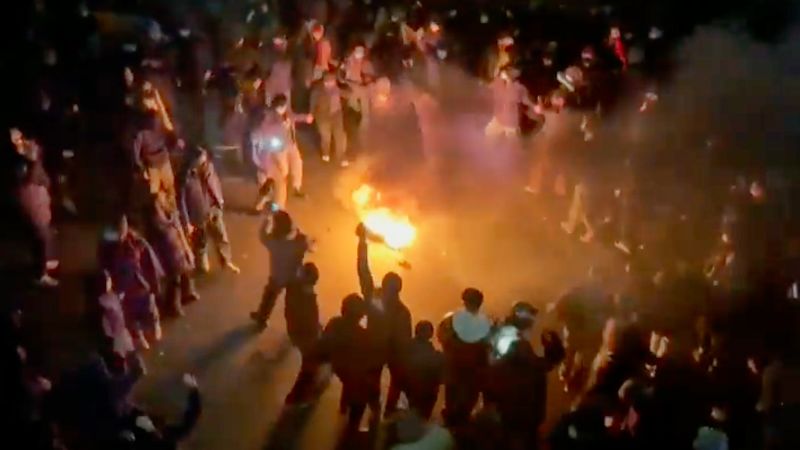
Live updates: Iran ‘prepared’ for war but open to US talks as hundreds reported killed in protests
More than two weeks into the nationwide protests in Iran, the country’s fractious social fabric has led multiple opposition groups to call on demonstrators to take to the streets against the regime.
Iran has a diverse population, including Persians, Azeris, Arabs, Baloch and Kurds. Under Supreme Leader Ayatollah Ali Khamenei’s decades-long rule, the Islamic Republic largely managed to contain civil and ethnic unrest, despite mistreatment faced by some groups.
In a joint statement released last week, seven Kurdish groups expressed “full support” for the protesters.
Kurds make up some 10% of Iran’s population and are mostly settled along the borders with Iraq and Turkey.
They have been subject to “deep-rooted discrimination,” according to Amnesty International. A Kurdish rebellion in Iran would also be a major concern for neighboring Iraq and Turkey, both of which have large Kurdish minorities that have sought independence.
Other groups in Iran include Azeris, who make up around 16% of Iran’s overall population of 92 million, according to Minority Rights Group, along with four million Arabs and five million Baloch citizens.
The Balochistan People’s Party, an Iranian Baloch political group, called last week for nationwide protests and strikes.
Another exiled group that has garnered support from US conservatives is the Mujahadin-e Khalq (MeK), a shadowy dissident group that was once a US-designated terrorist organization but today counts prominent anti-Iran politicians as key allies.
Iran accuses it of terrorism, saying it carried out a series of attacks in the 1980s. The MeK denies those charges. The MeK has been supportive of recent protests.
First Appeared on
Source link






