


Scientists Connect This Lethal Poison to the Origin of Life on Earth, and Possibly Beyond
Hydrogen cyanide, or HCN, is typically associated with poison capsules and spy thrillers, where it acts swiftly by cutting off oxygen to cells. In concentrated form, it can kill a human within minutes. Yet, as recent findings indicate, this same chemical may have served as a foundation for life’s earliest chemistry.
the research team, led by scientists from Chalmers University of Technology, discovered that HCN behaves in unexpected ways when frozen. Its icy surfaces become unusually reactive, promoting the formation of polymers, amino acids, and nucleobases, all essential to DNA and proteins. These reactions occur even in extremely cold environments, suggesting that frozen cyanide could have helped spark the first steps toward life.
When Ice Becomes a Lab for Life’s Chemistry
The core of the study lies in the behavior of HCN crystals under freezing conditions. Using detailed computer modeling, researchers found that frozen hydrogen cyanide can transform into hydrogen isocyanide, a far more reactive compound. This shift opens up two chemical pathways for HCN to interact with water and produce key prebiotic molecules.
“We may never know precisely how life began,” said Martin Rahm, one of the study’s co-authors, in a statement, “but understanding how some of its ingredients take shape is within reach.” The findings suggest that even in cold, harsh settings, cyanide-based chemistry can thrive, adding a new dimension to the search for life beyond Earth.
A Cosmic Trail of Cyanide
Hydrogen cyanide isn’t just an Earthbound phenomenon. According to the study, the compound is widely distributed throughout the solar system, showing up on comets, in planetary atmospheres, and on distant moons. Notably, Neptune contains a distinct “cyanide belt” in its upper atmosphere, and Titan, Saturn’s largest moon, holds a similar layer formed by sunlight interacting with hydrocarbons.
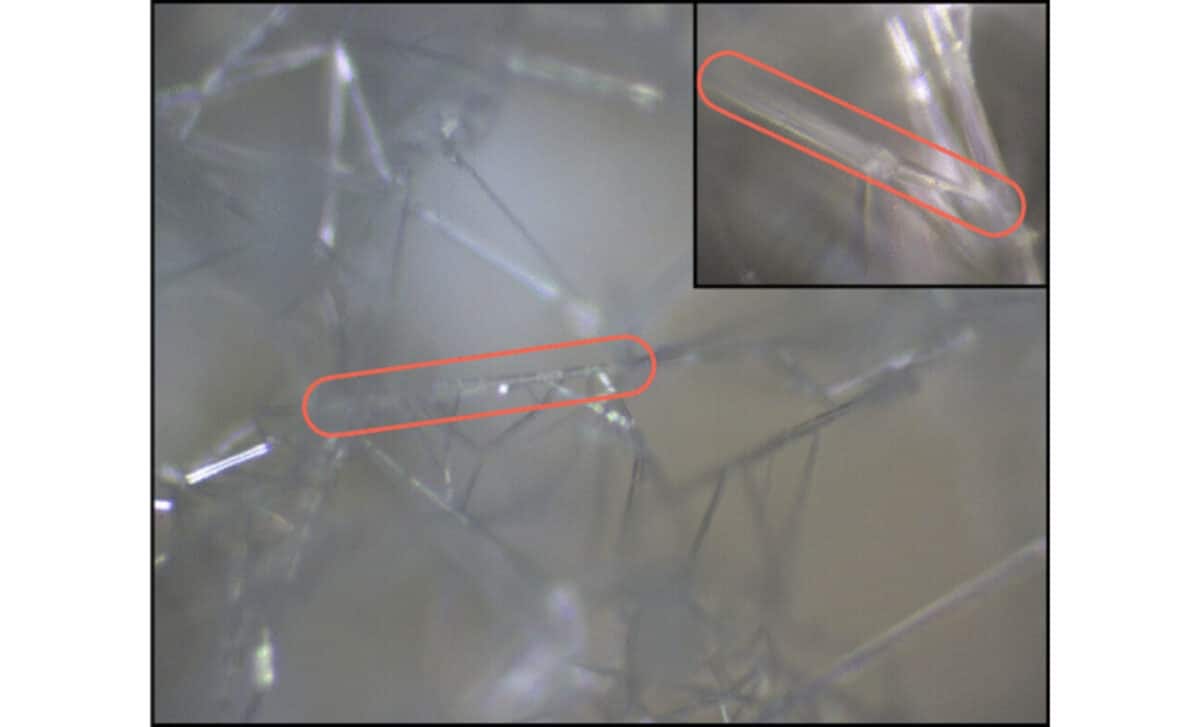
This abundance makes cyanide a key focus for astrochemistry. The authors emphasized that mapping the structure and behavior of HCN ice on Titan could shed light on both the moon’s chemical and geological evolution. These insights may also help narrow the hunt for microbial life in places once dismissed as too cold or hostile.
Not the First Time Cyanide Made History
The idea that cyanide might support life isn’t entirely new. In the 1950s, the landmark Miller–Urey experiment recreated early Earth conditions and showed that electrical sparks could help cyanide form nucleobases. This experiment became one of the first to suggest that life’s components could emerge from simple chemical reactions.
More recently, a 2023 study from South Dakota State University found that small amounts of HCN still play roles in neurotransmission, cell metabolism, and immune response in the human body. These levels are kept in check by the enzyme rhodanese, which safely converts cyanide into excretable salts. As Popular Mechanics notes, this supports the idea that “the dose makes the poison”, and that even toxic molecules can have life-sustaining effects.
First Appeared on
Source link






