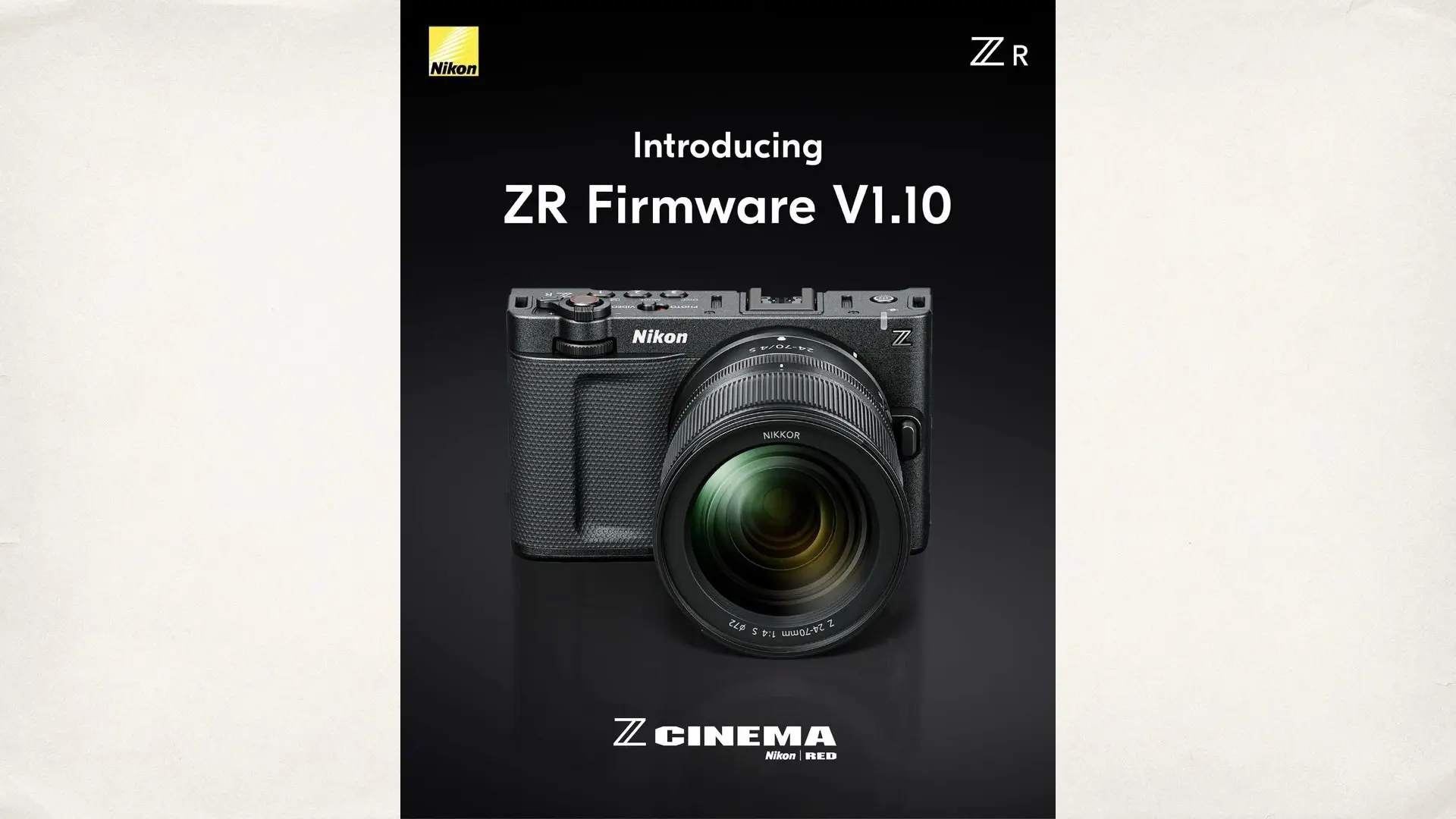
Nikon ZR Firmware 1.10 Pushes the Camera Deeper Into Cinema Territory
Nikon just released firmware version 1.10 for the Nikon ZR, and while the announcement is understated, the implications are anything but. This update arrives only months after launch and fundamentally reshapes how the ZR behaves on real productions. Long takes, multi-camera sync, cleaner exposure control, and smarter data handling are now baked into the camera. Nikon is responding directly to how the ZR is actually being used in the field.
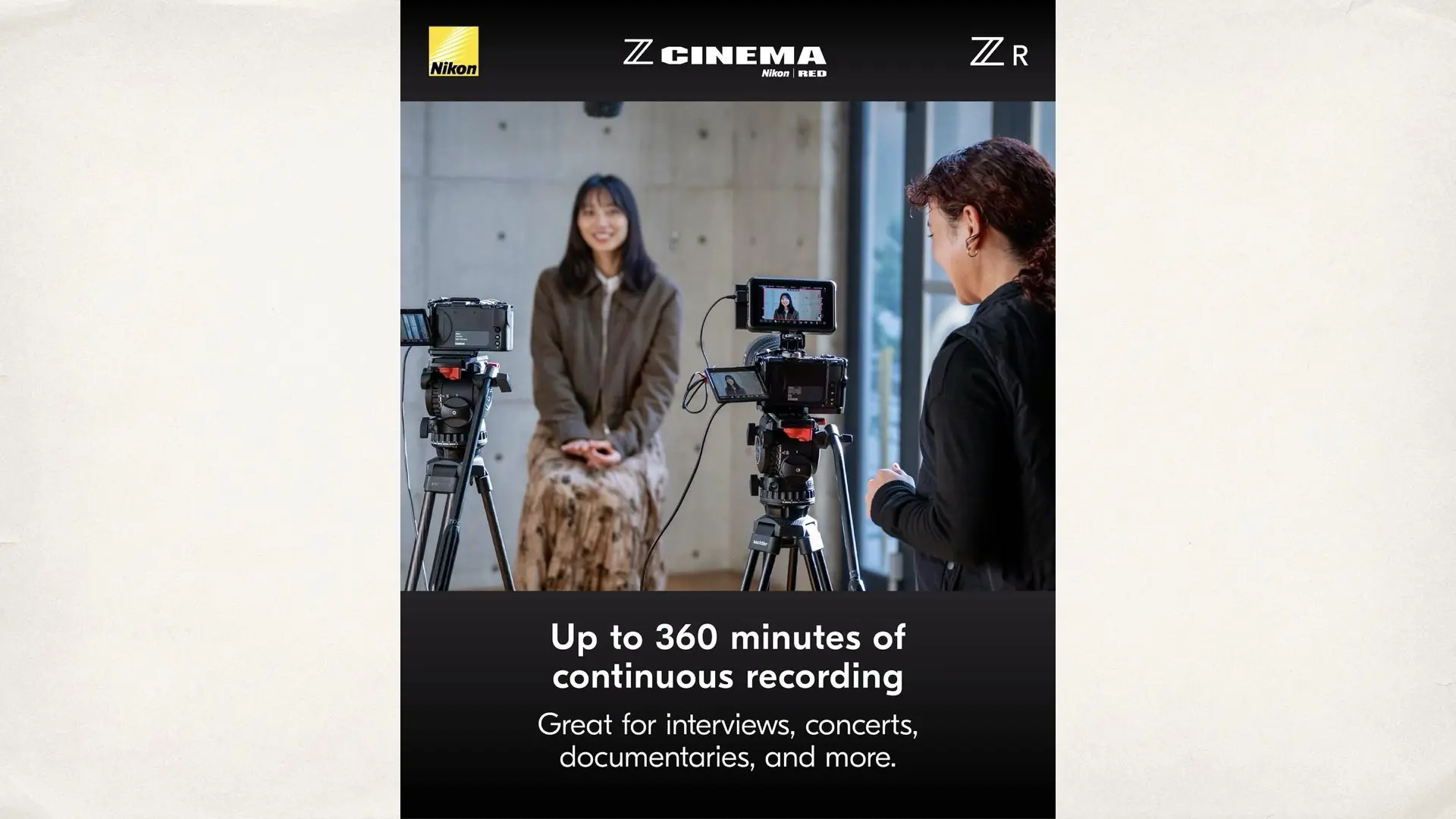
The headline change is the extension of continuous recording time from 125 minutes to up to 360 minutes under supported conditions. That single change removes one of the biggest psychological barriers for filmmakers considering the ZR for documentary, interview, or event work. Six hours of continuous recording puts the ZR into territory normally reserved for dedicated cinema bodies. Concerts, conferences, locked-off B cameras, and long observational shoots now become realistic use cases rather than theoretical ones. With external power and proper thermal settings, the camera stops behaving like a hybrid and starts behaving like a production tool. This also strengthens Nikon’s position as the ZR continues to gain visibility in the market, especially after its recent performance as an Amazon bestseller, as discussed here.
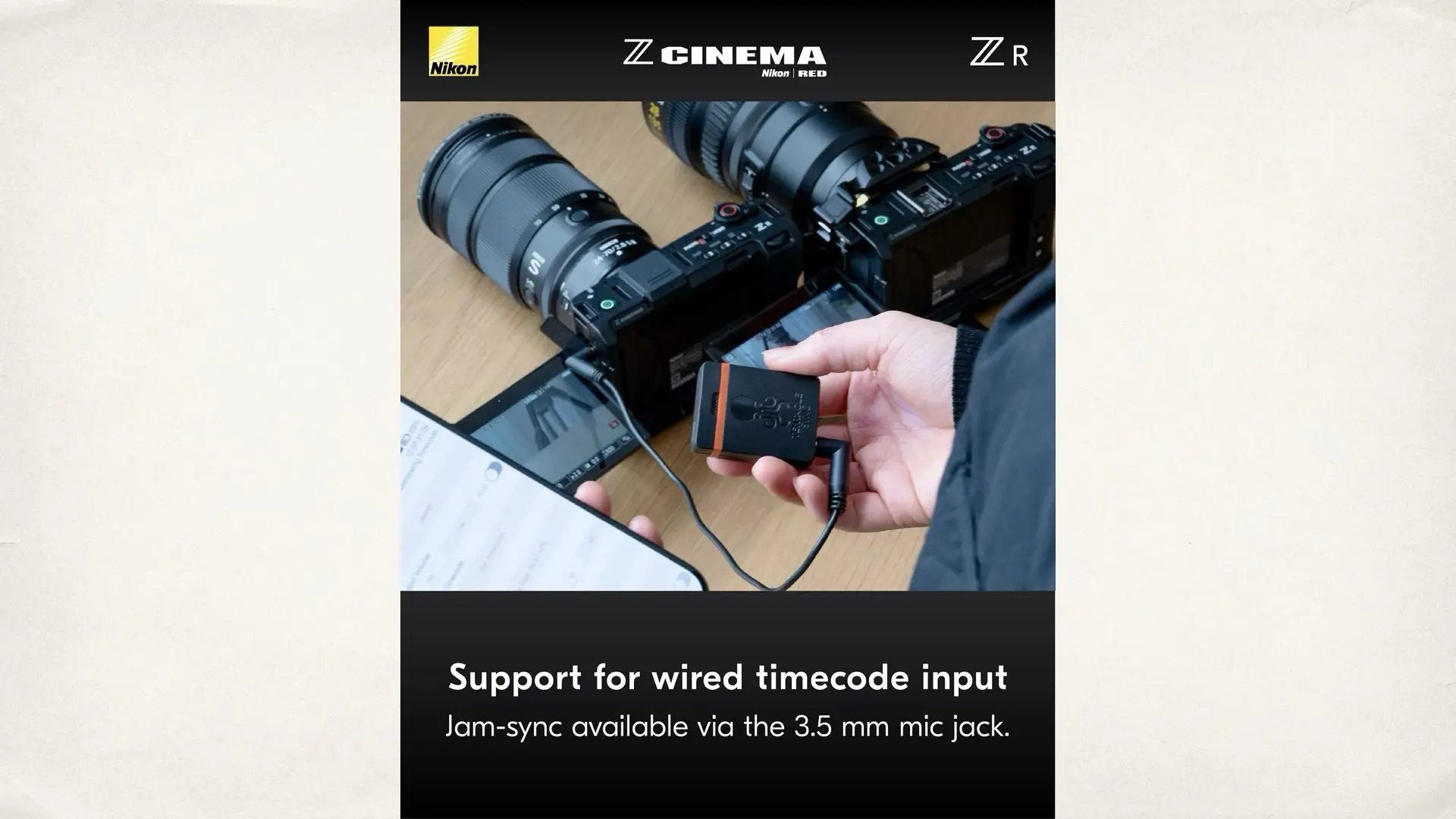
Firmware 1.10 adds wired timecode input via the microphone line connector, alongside existing Bluetooth options. This is a critical distinction. Wired LTC is the standard on professional sets for a reason. It is stable, predictable, and trusted. The inclusion of jam sync behavior is equally important. Once synchronized, the ZR continues running timecode even after the generator is disconnected. That is how cinema cameras are expected to behave. This makes the ZR far easier to integrate with external audio recorders and multi-camera setups without constant resyncing. For productions that previously saw the ZR as a solo operator camera, this update meaningfully expands its role.
One of the quietest but most impactful changes is the adoption of a RED-style file-naming convention. This prevents duplicate filenames and introduces video-specific naming logic that scales properly when multiple cameras are involved. For editors, DITs, and assistants, this matters more than specs. Cleaner ingest, fewer relinking issues, and faster organization all translate directly into saved time and fewer mistakes. Nikon clearly understands that post-production efficiency is part of camera design. This move also reinforces the philosophical link between the ZR and RED workflows, something explored in depth here.
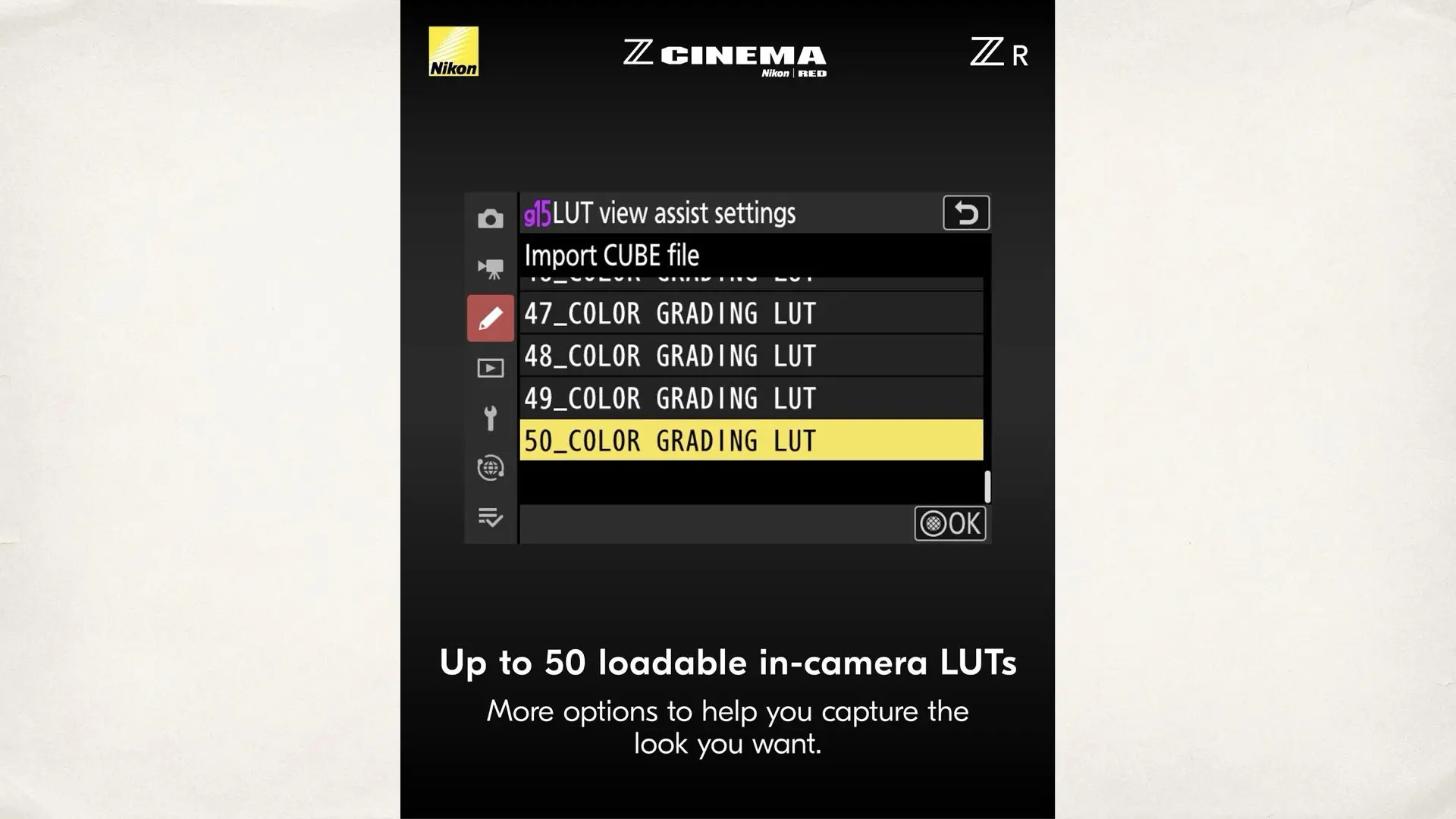
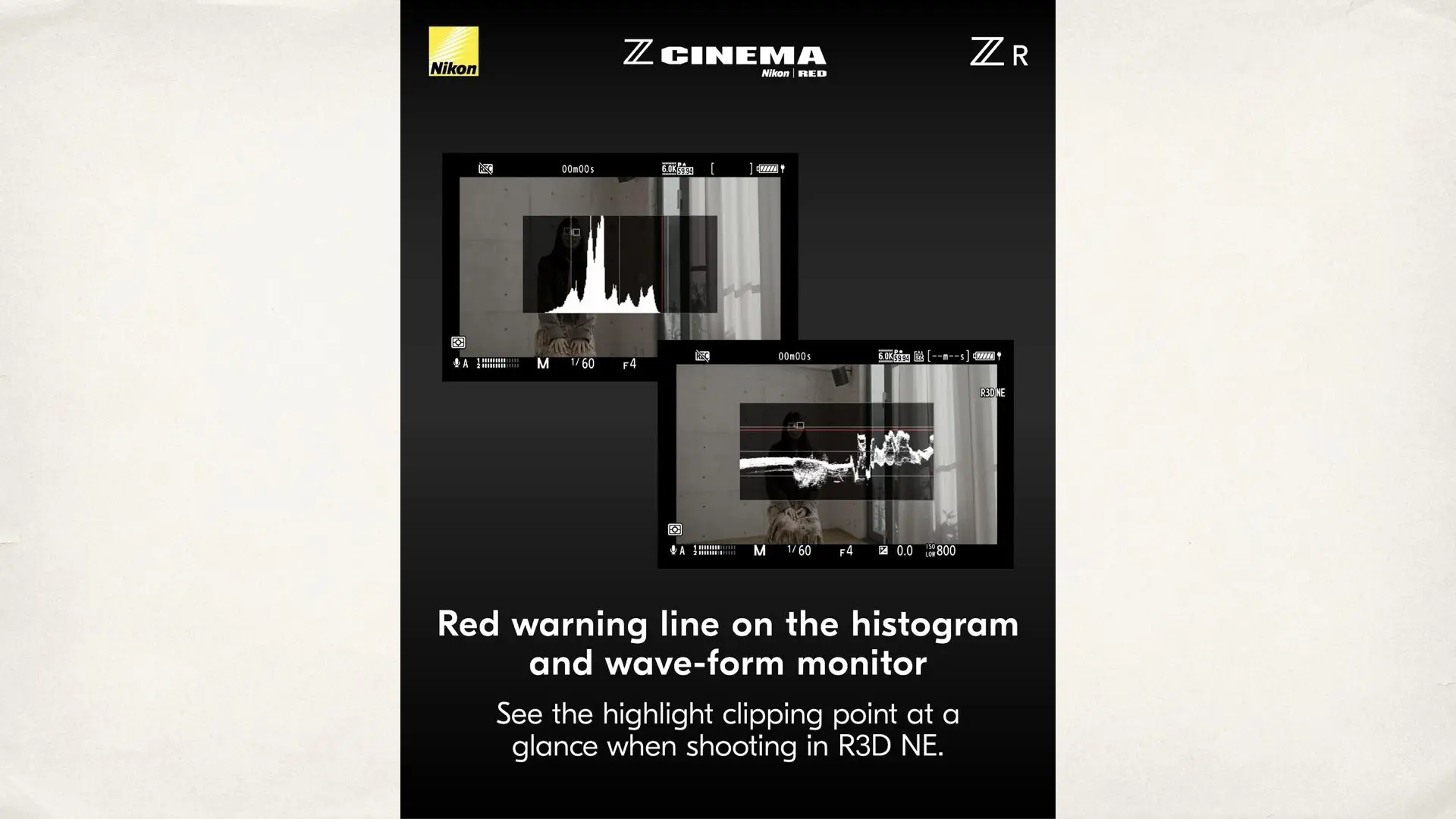
Shooting R3D NE in Log3G10 demands precision. Firmware 1.10 introduces a maximum brightness warning line in the histogram and waveform that adapts based on ISO sensitivity. This is not a generic zebra overlay. It is a contextual exposure aid designed for cinema-style highlight management. For operators working fast or in uncontrolled lighting, this reduces guesswork and helps protect highlight latitude. It is the kind of tool that prevents ruined takes rather than fixing them later. Alongside this, Nikon increased the number of importable LUTs from 10 to 50. That may sound minor, but on set, it allows for multiple looks, client previews, and creative flexibility without constant card swapping.
Nikon also addressed a surprisingly common issue. Accidental battery drain. A new power on lamp energy saver option makes it easy to confirm camera status even with the monitor closed, reducing the risk of pulling a dead camera out of a bag right before a shoot. The ability to select R3D NE 12-bit even in AUTO mode is another subtle but telling change. It lowers friction without removing control, allowing faster setup while still capturing maximum image data. These are solutions to problems users actually encounter.
What makes firmware 1.10 notable is not any single feature, but the direction it signals. Nikon is clearly committing to the ZR as a living cinema platform rather than a static product. This aligns with broader trends seen in Nikon’s recent momentum, including its strong showing in Amazon sales toward the end of last year, covered here. The ZR is being shaped through firmware into something closer to a disciplined cinema camera than a mirrorless hybrid with video ambitions. Firmware 1.10 turns the Nikon ZR into a far more confident long-form and multi-camera cinema tool. Extended recording, proper timecode support, smarter file handling, and refined exposure aids all point in the same direction. This is Nikon listening, responding, and building credibility where it matters most. For installing Firmware 1.10 click here.
As an Amazon Associate, Y.M.Cinema earns from qualifying purchases. If you purchase through the Amazon links above, Y.M.Cinema may earn a small commission at no additional cost to you. This helps support our work.
Nikon RED Z Cinema | ZR Cinema Camera
First Appeared on
Source link