


Something Strange Is Happening on the Seafloor, Scientists Watched for 10 Years and Saw Nothing
This isn’t just an odd quirk of the ocean. Scientists warn it’s a disturbing sign of a broader environmental breakdown in progress. As climate change pushes more areas of the deep sea into low-oxygen “dead zones”, key species that help recycle nutrients are disappearing, and with them, the balance of life on the ocean floor.
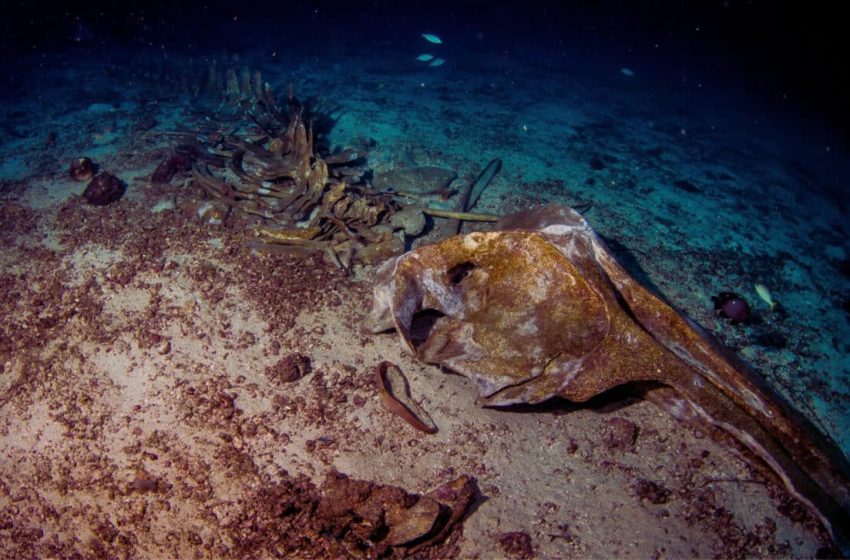
The study, led by marine ecologists Craig R. Smith and Fabio C. De Leo, used the NEPTUNE cabled observatory to monitor how animal life responds to sunken organic material over time. These materials, whale bones, wood, and carbonates, typically trigger a frenzy of activity among specialized deep-sea species. But in Barkley Canyon, nearly 900 meters underwater, the results were unexpectedly quiet. The researchers deployed high-resolution video and followed the site for over a decade, hoping to observe natural decomposition. What they saw instead was a void.
The Usual Guests Are Missing
Under normal conditions, a whale carcass on the seafloor becomes a deep-sea feast. Scavengers like sleeper sharks and hagfish arrive first, stripping away soft tissues. But the second wave, the ecosystem engineers, includes species like Osedax, also known as “zombie worms”. These bone-eating annelids dissolve bone with the help of bacteria, accessing the fats inside and opening the remains up to a range of other organisms.
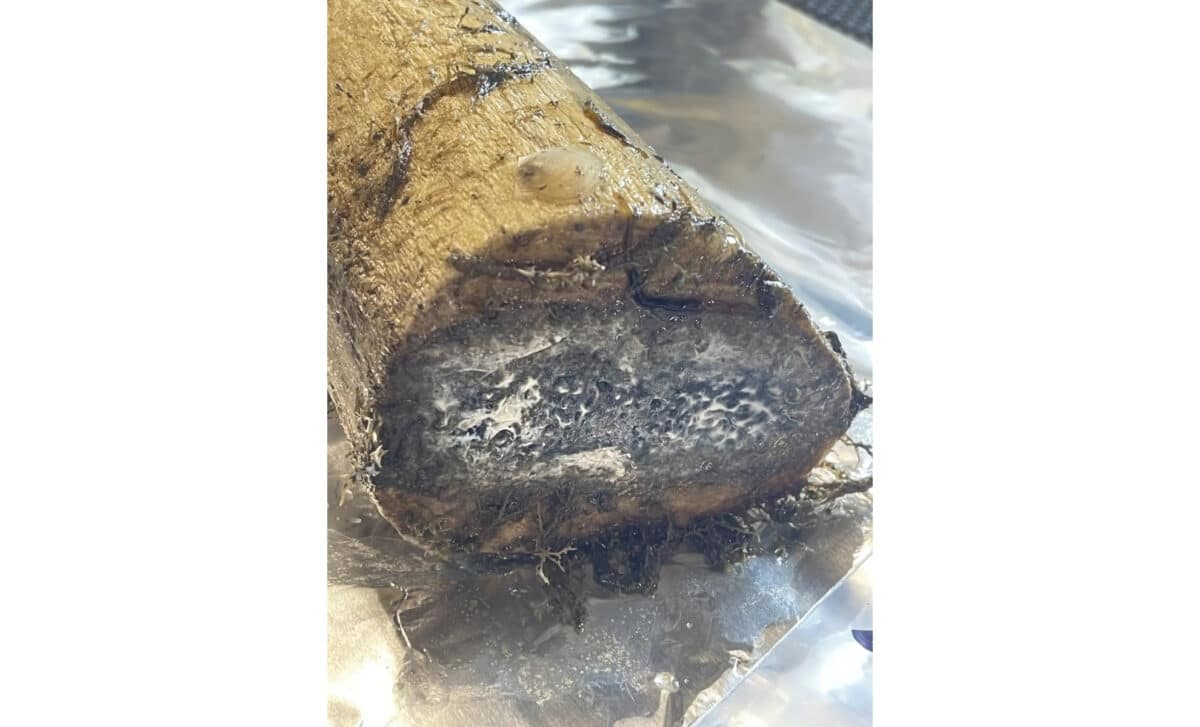
In this experiment, scientists placed three humpback whale ribs and a block of Douglas fir on the ocean floor and began observations that lasted eight months and continued periodically for nearly ten years. According to ZME Science, Osedax never appeared on the bones, not after eight months, not even after 9.2 years.
As for the wood, wood-boring clams of the Xylophaga genus typically begin colonizing logs within a year. Here, they didn’t reveal even their siphons until after two years had passed, suggesting a delayed or weakened response. These delays are far from normal, and they suggest deeper disruptions in the local ecosystem.
Oxygen-Poor Zones Are Spreading
The research site in Barkley Canyon is located within an Oxygen Minimum Zone (OMZ), an area of the ocean where dissolved oxygen levels are so low that many marine species cannot survive. While larger scavengers can still visit briefly for a meal, the more delicate and specialized decomposers like Osedax appear unable to withstand these conditions.
According to the researchers, this lack of activity may be directly tied to a phenomenon known as “ocean deoxygenation”. As reported by the same source, rising atmospheric temperatures are causing ocean surfaces to warm. This reduces their capacity to retain oxygen and limits mixing with deeper, colder layers. The result is a growing number of suffocating habitats in the deep sea.
This matters because the deep ocean relies on organisms like Osedax and Xylophaga to recycle organic material. Without them, organic debris stays locked away, uneaten and unprocessed, reducing nutrient availability for other life forms. These species aren’t just part of the ecosystem, they’re the recyclers that keep it functioning.
A Vital Recycling Chain Is at Risk
The absence of decomposers is more than a biological curiosity, it hints at a collapse in the deep-sea nutrient cycle. According to the study, the so-called “biological pump” depends on organisms that turn hard-to-reach carbon sources like bones and wood into biomass and waste. This process feeds entire communities and helps regulate the flow of carbon in the marine environment.
Without the worms and clams that kick off this recycling, those organic materials remain on the seafloor, inert and inaccessible. As these “habitat islands” fail to attract their usual residents, a once-lively patch of ocean floor becomes a barren landscape.
The implications ripple far beyond the immediate site. When decomposition slows or stops, the food web starts to unravel, from the tiniest microbes to the commercial fish populations humans rely on. And if OMZs continue to expand, this pattern may not stay isolated to Barkley Canyon for long.
First Appeared on
Source link






