


Archaeologists Stumble Upon 1,400-Year-Old Tomb in Mexico
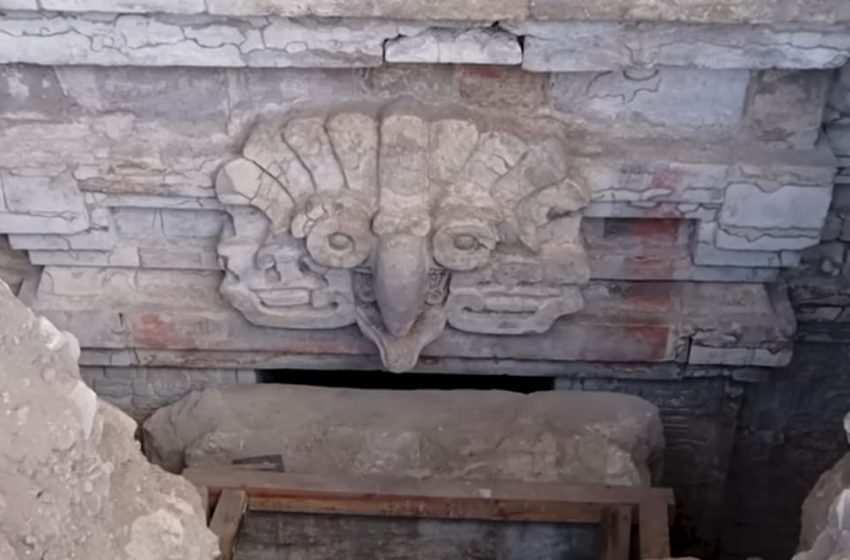
Archaeologists have uncovered a 1,400-year-old Zapotec tomb in southern Mexico. It has been hailed by Mexico’s President Claudia Sheinbaum as “the most important archaeological discovery of the past decade.” The burial site, located in San Pablo Huitzo, Oaxaca, dates back to around the year 600 and showcases the intricate artistry of the Zapotec civilization, according to Mexico’s National Institute of Anthropology and History (INAH). The tomb’s entrance features an owl sculpture, inside whose beak sits a carved human head—likely representing the individual buried within. Owls held deep significance for the Zapotec, symbolizing night and death. Surrounding the burial chamber are multicolored murals and carvings, including two human figures at the doorway holding ceremonial artifacts, possibly acting as tomb guardians. Inside, an elaborate mural in ocher, white, green, red, and blue depicts a procession carrying copal, a resin used in ritual incense. A multidisciplinary INAH team is currently working to preserve the site by stabilizing the fragile murals, which have been damaged by tree roots, insects, and fluctuating environmental conditions.
First Appeared on
Source link






