


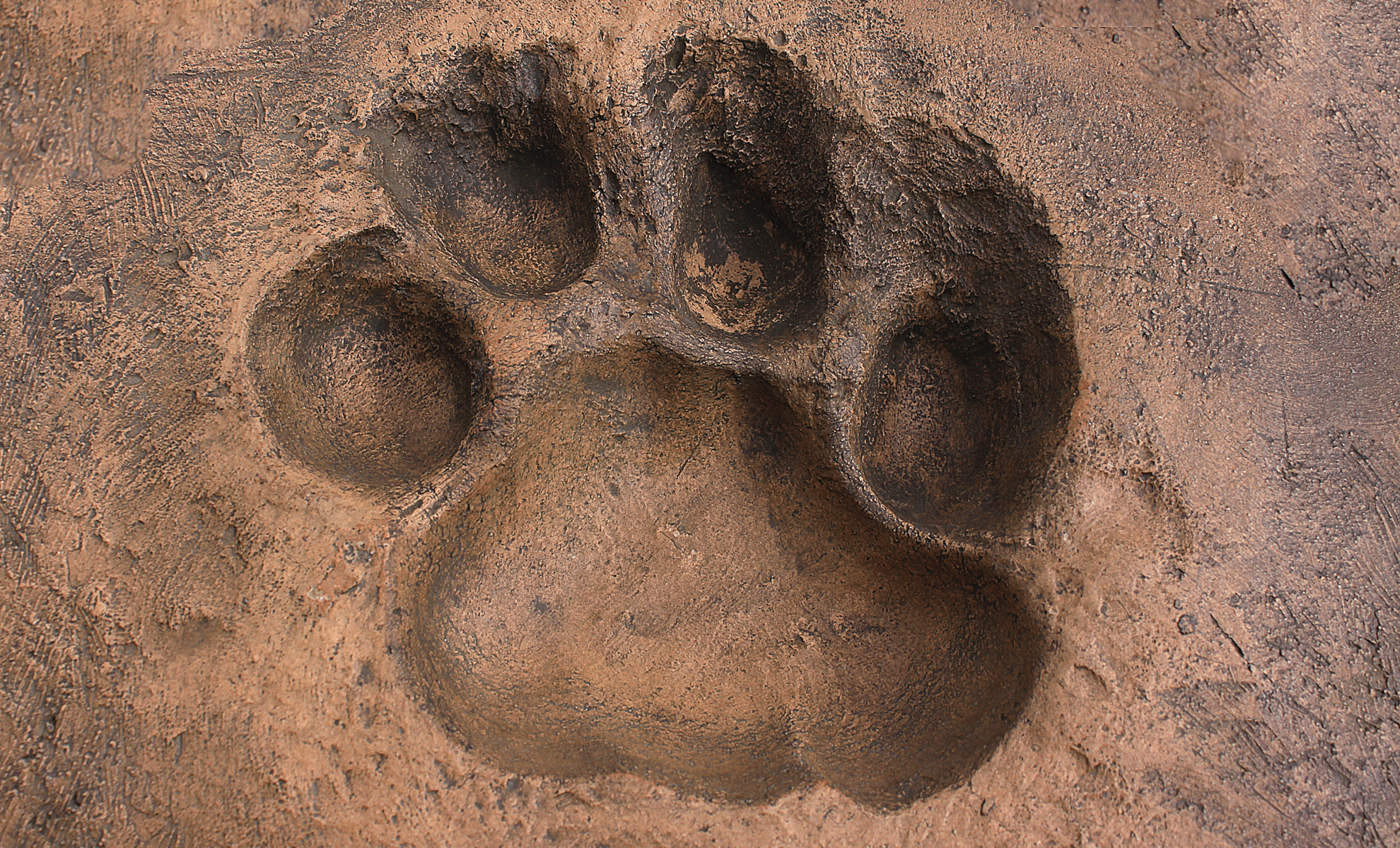
29-Million-Year-Old Saber-Toothed Predator Tracks Found in Volcanic Ash Offer Rare Glimpse Into Prehistoric Life!
Deep within the volcanic landscape of Oregon’s John Day Fossil Beds, an unexpected fossil discovery has provided fresh insight into life millions of years ago. Scientists have unearthed tracks that belong to a cat-like predator, revealing fascinating behavioral details preserved in volcanic ash. A recent study, published in Palaeontologia Electronica, sheds light on these ancient traces and offers an invaluable glimpse into the creatures’ movements and actions. The discovery offers an intriguing look at how volcanic eruptions, once thought to destroy, actually preserved life in remarkable detail.
The Discovery: A Snapshot of Ancient Life
In a groundbreaking study, researchers from Utah Tech University revealed the results of their analysis of four sets of fossilized footprints at the John Day Fossil Beds National Monument. Among these were tracks belonging to a bobcat-sized predator that roamed Oregon 29 million years ago. The absence of claw marks in the footprints immediately drew attention, hinting that this creature—likely an extinct carnivore with saber teeth—had retractable claws, a feature common in modern cats. This subtle detail allows researchers to explore not just the creature’s size and shape, but also its behavior, specifically its quiet, stealthy movements.
The volcanic ash preserved these delicate tracks with astounding precision, providing a rare look at the behavioral patterns of prehistoric creatures. Unlike bones, which only provide anatomical information, these trace fossils offer insights into how the animals moved, fed, and interacted with their environment. As lead researcher Conner Bennett explains,
“Trace fossils are really key in helping us to better understand,” emphasizing how even the smallest marks in stone can reveal crucial details about ancient life.
The Importance of Trace Fossils in Paleontology
Fossils, generally, are the key to unlocking the secrets of Earth’s ancient past. However, trace fossils, which include footprints, burrows, and other signs of activity, provide a unique window into the everyday lives of prehistoric creatures. The study, published in Palaeontologia Electronica, highlights the importance of these traces in understanding not only the organisms themselves but also their behaviors and environments. While body fossils, such as bones and teeth, can tell us about an animal’s structure, trace fossils go a step further by revealing how these animals moved, what they were doing, and even their hunting or feeding patterns.
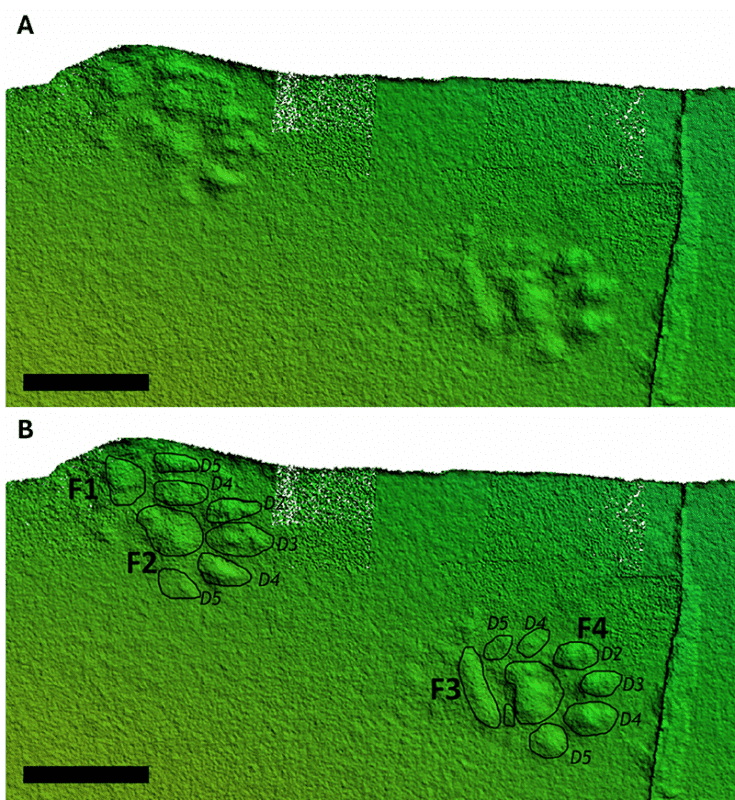
The preserved footprints at John Day are a perfect example. Researchers used cutting-edge techniques like photogrammetry to create 3D models of the tracks, which allowed them to preserve and study the prints without handling the fragile rock. This innovative approach enables scientists to revisit and reanalyze these ancient tracks long after their discovery, providing new insights over time. The preservation of these trace fossils in volcanic ash also serves as a reminder of the extraordinary ways nature can safeguard life’s smallest details.
How Volcanic Eruptions Help Preserve Fossils
The preservation of footprints in volcanic ash may seem like a rare and accidental phenomenon, but it’s one that has happened with remarkable frequency in certain areas of the world. In the case of the John Day Fossil Beds, it was volcanic eruptions that created the ideal conditions for preserving these delicate traces. When fine ash settled on the ground, it created a smooth, soft surface that easily captured the footprints of animals. Over time, the ash hardened, and additional layers sealed the prints, creating a fossilized record of life in action.
As the layers of ash continued to accumulate, minerals replaced the original sediment, slowly turning the footprints into stone. This process is what allowed these ancient tracks to survive for tens of millions of years, providing a snapshot of life in a long-lost ecosystem. The preservation of these traces is a testament to the power of volcanic eruptions—not just as destructive forces, but as incredible preservers of history.
Behavioral Insights From Fossilized Tracks
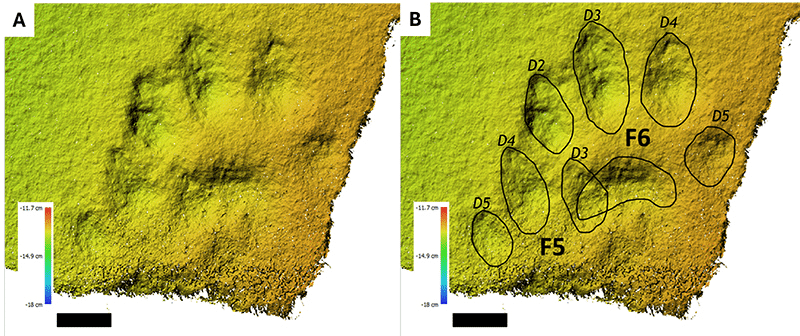
One of the most intriguing aspects of the tracks discovered in Oregon is the insight they provide into the behaviors of ancient creatures. The tracks are believed to belong to a creature similar to Hoplophoneus, an extinct, bobcat-sized predator. The lack of claw marks in the tracks suggests that this animal, like modern cats, kept its claws retracted most of the time—likely to maintain their sharpness for hunting. The tracks also show that the animal moved with a level of stealth and precision, possibly stalking prey in the same way modern felines do.
These behavioral clues extend beyond just the cat-like predator. The study also includes tracks from birds and lizards, which show how they foraged and moved across the landscape. For example, the bird tracks indicate a foraging style similar to modern shorebirds, while the lizard tracks provide evidence of rapid movement, likely in response to slippery surfaces. These behavioral insights help paint a fuller picture of life in prehistoric Oregon, offering a rare opportunity to understand not just what animals looked like, but how they interacted with their environment.
The Digital Age of Paleontology: Preserving Fossils for Future Generations
In addition to the traditional methods of fossil analysis, researchers have begun to embrace modern technology to enhance their studies. The John Day tracks were meticulously documented using photogrammetry, a technique that allows scientists to create detailed 3D models of the fossilized footprints. This approach enables them to study the tracks in greater detail than ever before, even making measurements of toe spacing and pad size without physically handling the fragile rock. The use of digital tools also means that the tracks can be preserved for future generations, ensuring that the valuable information contained in these fossils is not lost.
As technology continues to evolve, paleontologists are finding new ways to unlock the secrets of ancient life. The study of these 29-million-year-old footprints is a prime example of how digital imaging and innovative techniques can complement traditional fieldwork, providing a deeper understanding of our planet’s distant past.
First Appeared on
Source link






