


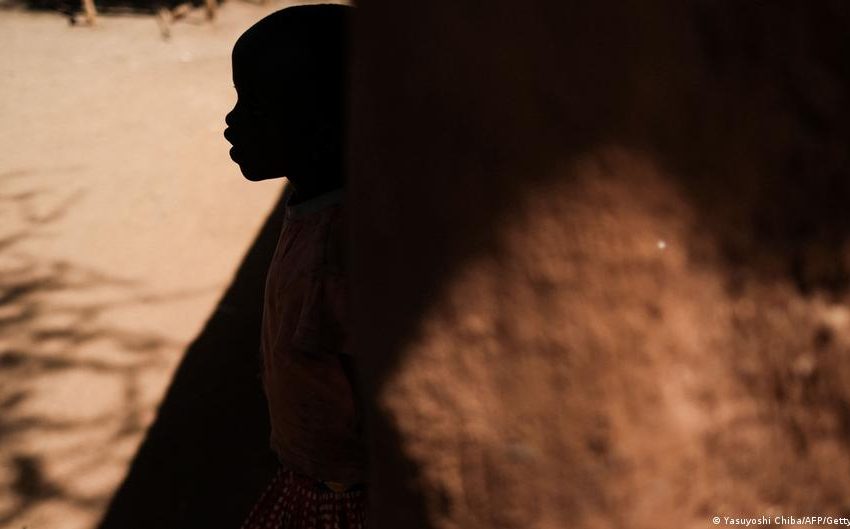
4.5 million girls at risk of genital mutilation in 2026
An estimated 4.5 million girls worldwide are at risk of undergoing female genital mutilation this year, the United Nations warned on Friday.
Many of the girls at risk are under the age of five, the UN’s children’s agency UNICEF and the World Health Organization (WHO) said in a joint statement that was issued on the International Day of Zero Tolerance for FGM.
What is female genital mutilation (FGM)?
FGM involves the total or partial removal of the external female genitalia. It is practiced in some parts of Africa, the Middle East and Asia on religious or traditional grounds.
Children under the age of five are sometimes victims of the practice, which can lead to severe, life-long consequences, according to UN Women.
The procedure is usually carried out on young girls before they reach puberty, based on unfounded claims that it ensures girls’ virginity.
Some 230 million women and girls around the world are survivors of FGM, the UN says.
“Female genital mutilation is a violation of human rights and cannot be justified on any grounds,” the UN agency heads said.
“It compromises girls’ and women’s physical and mental health and can lead to serious, lifelong complications.”
Progress reported in ending FGM
In the statement, the leaders of the WHO, UNICEF and several other UN agencies condemned the practice and reaffirmed their commitment to end FGM “for every girl and every woman at risk.”
The UN agencies said efforts to increase awareness, education and community engagement in recent decades were having a positive impact.
“After decades of slow change, progress against female genital mutilation is accelerating: half of all gains since 1990 were achieved in the past decade, reducing the number of girls subjected to FGM from one in two to one in three,” WHO and UNICEF leaders said.
They also called for continued support for survivors by “ensuring they have access to comprehensive, context-tailored health care, psychosocial support, and legal assistance.”
But the agencies warned that severe cuts to international aid funding, as well as “growing systematic pushback on efforts to end” FGM, are hindering efforts to combat and prevent the practice and provide support to survivors.
“Without adequate and predictable financing, community outreach programmes risk being scaled back, frontline services weakened, and progress reversed — placing millions more girls at risk at a critical moment” in the push to meet the Sustainable Development Goal of ending female genital mutilation by 2030, the UN agencies said.
Edited by: Zac Crellin
First Appeared on
Source link






