


4,000 Meters Below Sea Level, Scientists Uncover “Dark Oxygen” Where Sunlight Has Never Reached
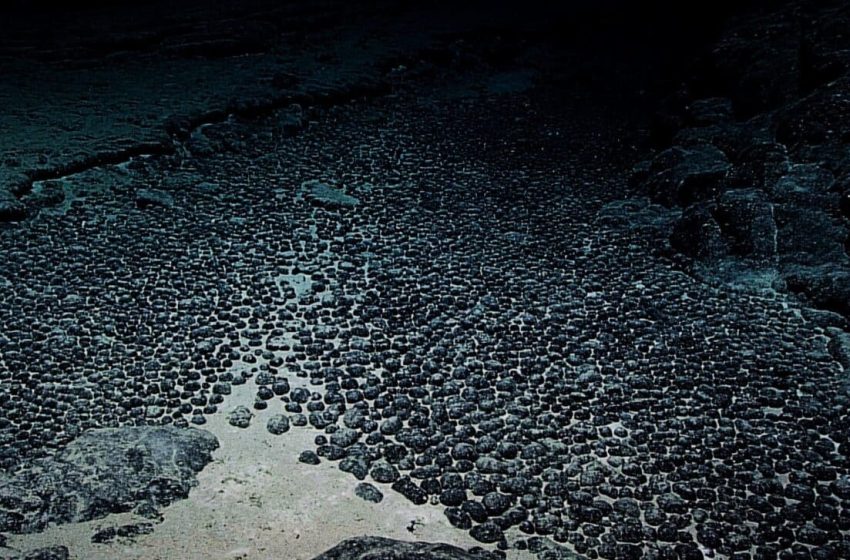
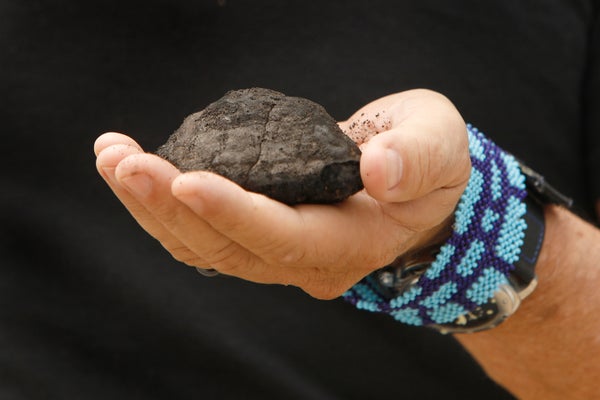
More than 4,000 meters below the surface of the Pacific Ocean, the water is permanently black and near freezing. No sunlight reaches this depth, and the seafloor stretches across vast plains that appear almost motionless. Scattered across that landscape are millions of rounded rocks, each about the size of a potato, resting quietly in the sediment for millions of years.
These rocks, known as polymetallic nodules, have drawn growing international interest. They are rich in manganese, nickel, and cobalt, metals used in batteries and renewable energy systems. The largest known concentration lies in a remote region called the Clarion-Clipperton Zone, an enormous expanse between Hawaii and Mexico that has become central to discussions about future deep-sea mining.
Until recently, scientists studying this region focused on how life survives in such a nutrient-poor and lightless environment. Oxygen at these depths was assumed to drift down slowly from surface waters, replenished by circulation from above. The seafloor itself was considered a place where oxygen is consumed, not created.
That assumption shifted after researchers detected something unexpected: dark oxygen, a term used to describe oxygen produced without sunlight or photosynthesis.
An Experiment Meant to Measure Oxygen Loss
The discovery comes from work led by Andrew Sweetman of the Scottish Association for Marine Science. Sweetman and his colleagues were not searching for a new source of oxygen. Their goal was to measure how much oxygen deep-sea organisms consume on the seabed of the Clarion-Clipperton Zone.
To do this, the team deployed instruments known as benthic chambers, which seal off a patch of seafloor and track chemical changes in the enclosed water over time. These chambers are routinely used to measure respiration rates in marine sediments. Based on decades of research, scientists expected to see oxygen levels steadily decline inside the sealed units.
Instead, the instruments recorded the opposite trend. Oxygen concentrations increased over the course of the experiments, in some cases exceeding the levels in the surrounding seawater. The results were detailed in a July 2024 paper published in Nature Geoscience, which described repeated measurements showing consistent gains under controlled conditions.
The researchers then examined the nearby polymetallic nodules more closely. According to the study in Nature Geoscience, voltage measurements taken directly from the nodules reached nearly one volt. That observation led the team to consider whether natural electrical gradients within the rocks could drive electrolysis, splitting seawater molecules into hydrogen and oxygen even in total darkness.
Rocks That May Act Like Geobatteries
The hypothesis centers on the unusual chemistry of polymetallic nodules, which form slowly as layers of manganese, nickel, and cobalt accumulate around small fragments on the seafloor. Over millions of years, these layers build up through interactions between seawater and sediment. The resulting structures are chemically complex and electrically conductive.
If tiny electrical potentials exist between different mineral layers, they could create localized conditions capable of triggering electrolysis. That process requires voltage but does not require sunlight, which separates it from photosynthesis, the biological pathway responsible for most of Earth’s atmospheric oxygen. The idea that rocks could generate measurable oxygen without life challenges long-standing assumptions in marine chemistry.
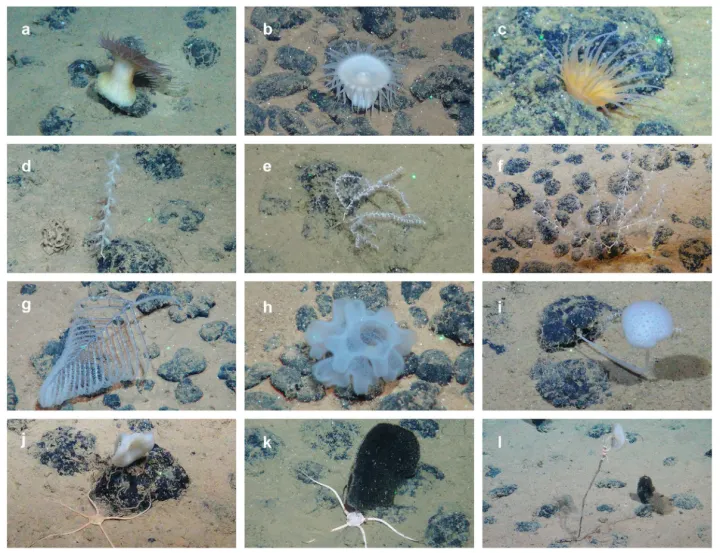
Environmental groups, including the Deep Sea Conservation Coalition, have highlighted the finding as evidence that the deep ocean hosts chemical processes that remain poorly understood. The coalition notes that polymetallic nodules grow at extremely slow rates and that their ecological role may extend beyond serving as habitat for marine species.
A Discovery Amid Mining Plans
The Clarion-Clipperton Zone is widely regarded as one of the most resource-rich seabed regions on Earth. Industry briefings such as one from Ocean Mining Intel describe the area as containing vast quantities of manganese, nickel, and cobalt, making it central to future deep-sea mining proposals.
Companies interested in harvesting polymetallic nodules argue that the metals could support large-scale battery production. At the same time, marine scientists continue to study how removing nodules might affect ecosystems that evolved around them. The possibility that the nodules may also contribute to dark oxygen production introduces a new scientific variable into an already complex debate.
Some industry representatives have questioned whether the recorded increases reflect natural production or measurement artifacts. The authors of the Nature Geoscience study emphasize that their experiments were repeated and carefully controlled, but they also state that additional research is needed to confirm the exact mechanism behind the observed oxygen rise.
First Appeared on
Source link






