


6 Radical Watches That Will Make You Look at Time Differently
Readtime: 8 min
Every product is carefully selected by our editors and experts. If you buy from a link, we may earn a commission. Learn more. For more information on how we test products, click here.
What we once considered a timepiece—telling hours and minutes—is going through a major reimagining. Once upon a time (sorry, there may be a few of those in this piece) clocks and watches did a fairly routine task: they told time. Built on the shoulders of ancient Egyptians and Babylonians from 2,000 BC who gave us our iconic and still useful duodecimal system based on 12 and the water clock.
They passed that legacy down to the late 13th century mechanical clocks from Italy and Germany who along with the Swiss (long winter boredom is a horologist’s best friend) created wrist watches with le grande complications ala haute horlogerie.
Alarms, double chronographs or rattrapante, perpetual calendars, minute repeaters, Tourbillons and dozens more from brands like Breuget, Patek Philippe, Vacheron Constantin, Blancpain and other horological legends.
However, leave it to newer upstarts to question what the nature of time is, to frame the discussion as time pieces, not watches. Disrupters that ask that existential question “Is it time to rethink time?”
Six timepieces that are challenging what we know about watchmaking
The Slow Jo tells the whole day as a continuum, not a segment of moments; Danish brand STUND functions as a Pomodoro mindfulness wearable; The Bradley Timepiece uses magnetic ball bearings in your fingers to feel time, not see it. Even ultra luxury pieces like the Urwerk x Ulysse Nardin UR-FREAK combine high horology with wandering satellites to reference time in a whole new way. Check out the full list.
1. Slow Jo by SLOW
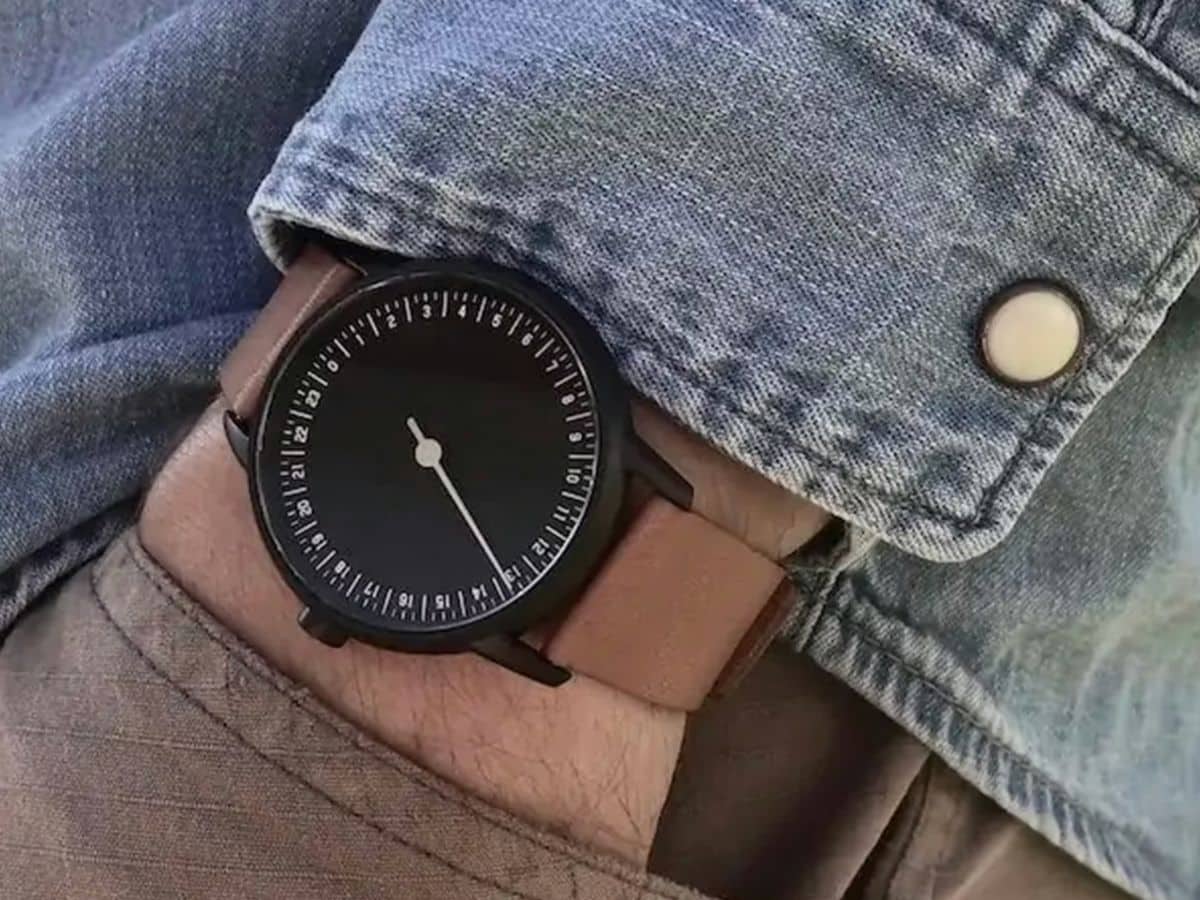
With a slogan of “Slow is not a speed, it’s a mindset” the brand was created by four friends in 2012 to create a mentality rather than a functionality to their time pieces. It’s functionally a Swiss precision GMT movement that actually has 4 hands and a date (the Ronda 505.24 Swiss Made), but to keep it focused they simply left out the other 3 hands to make their point that a day is a sweeping motion, not incremental segments. Stop chasing, stop being distracted, go with the flow.
Best for: The ‘Zen Minimalist’ who wants to stop obsessing over minutes and view their day as a single, flowing journey.
Slow Jo key stats
- Movement: Ronda 505.24 Swiss Made Quartz (24h single-hand modification)
- Case Material: 316L Stainless Steel
- Case Size: 38mm wide (fits like a 40mm round watch)
- Functions: 24-hour display (one hand represents the entire day)
- Price: €290
2. STUND Naerwear
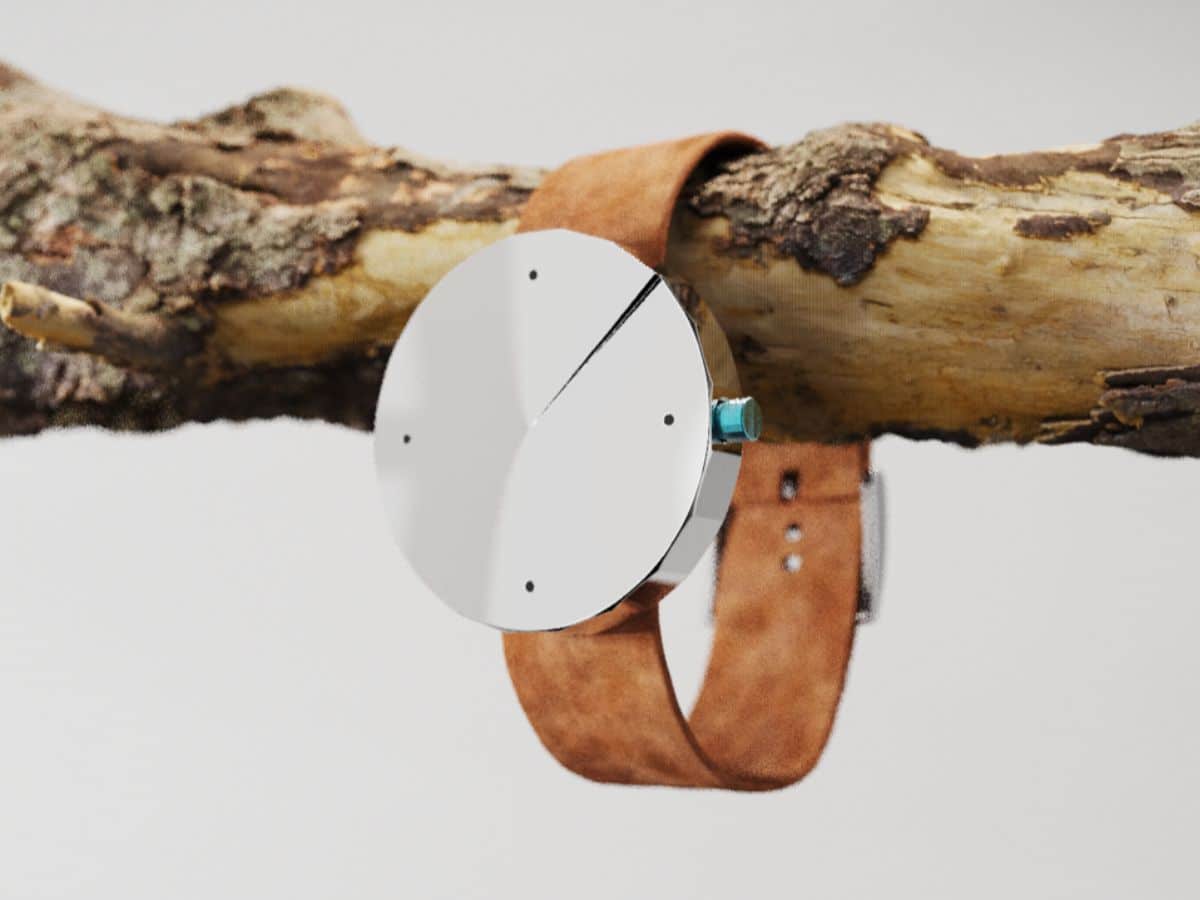
A new Danish design company that’s emerging from Copenhagen, a place where life is to be appreciated like a nice warm cinnamon bun on a crisp winter morning, this timepiece shows the new direction that these rebels expound. STUND is based on a Pomodoro productivity principle that focuses the mind into task intervals and eliminates any digital noise, creating both mindfulness and focus. Be in the now, not the next. With a beautiful and thoughtful design, STUND definitely is the cool kid of these alternative timepieces.
Best for: The deep work specialist who uses the Pomodoro technique to stay focused and present without the distraction of a digital screen.
STUND key stats:
- Movement: Proprietary Haptic Engine (vibration-based)
- Case Material: 316L Sandblasted Stainless Steel
- Case Size: 41mm diameter
- Functions: Mindfulness haptic intervals (5, 15, 30, 60 mins)
- Price: ~$310 AUD
3. Urwerk x Ulysse Nardin UR-FREAK
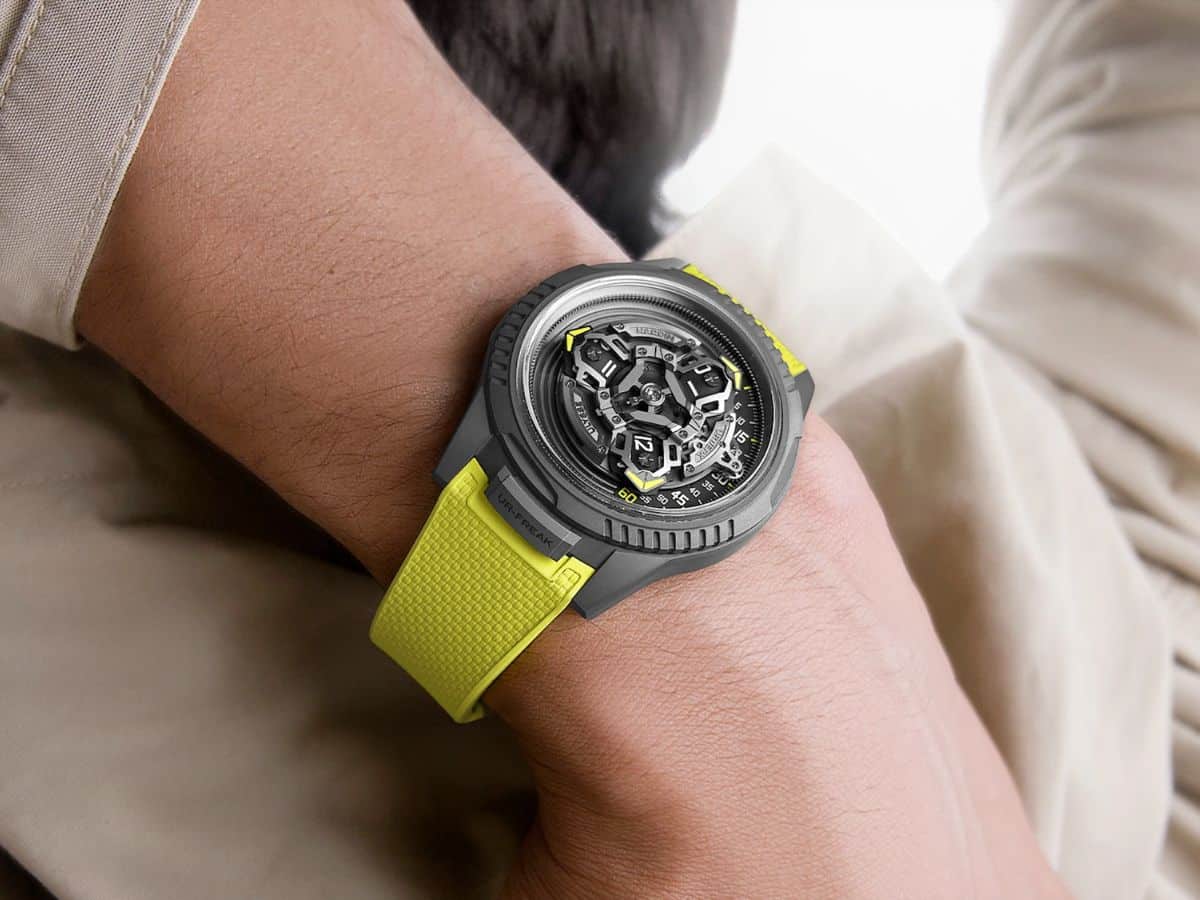
Talk about radical collaboration in all senses of the word, Felix Baumgartner—you know, the guy who jumped from space and parachuted into earth’s stratosphere at the speed of sound?—takes his project Urwerk and teams up with horological heretics Ulysses Nardin’s FREAK to make a wild time piece. The value-add by Urwerk is to bring their wandering hours satellite display indicator to the FREAK. Invented in the 17th century, wandering hours are a type of horological complication that display the hours using a system of satellites that gravitate along a minute scale arranged in the form of an arc. Not for the financial faint of heart, it’s nonetheless an amazing rendering of time.
Best for: The avant-garde collector with deep pockets who views high-end horology as a piece of futuristic, wearable engineering.
Urwerk x Ulysse Nardin UR-FREAK key stats
- Movement: Calibre UN-241 Automatic (Grinder® winding system)
- Case Material: Sandblasted Grade 5 Titanium
- Case Size: 44mm diameter
- Functions: Wandering hour satellites on a 3-hour rotating carousel
- Price: $131,000 USD
4. Bradley Timepiece by EONE
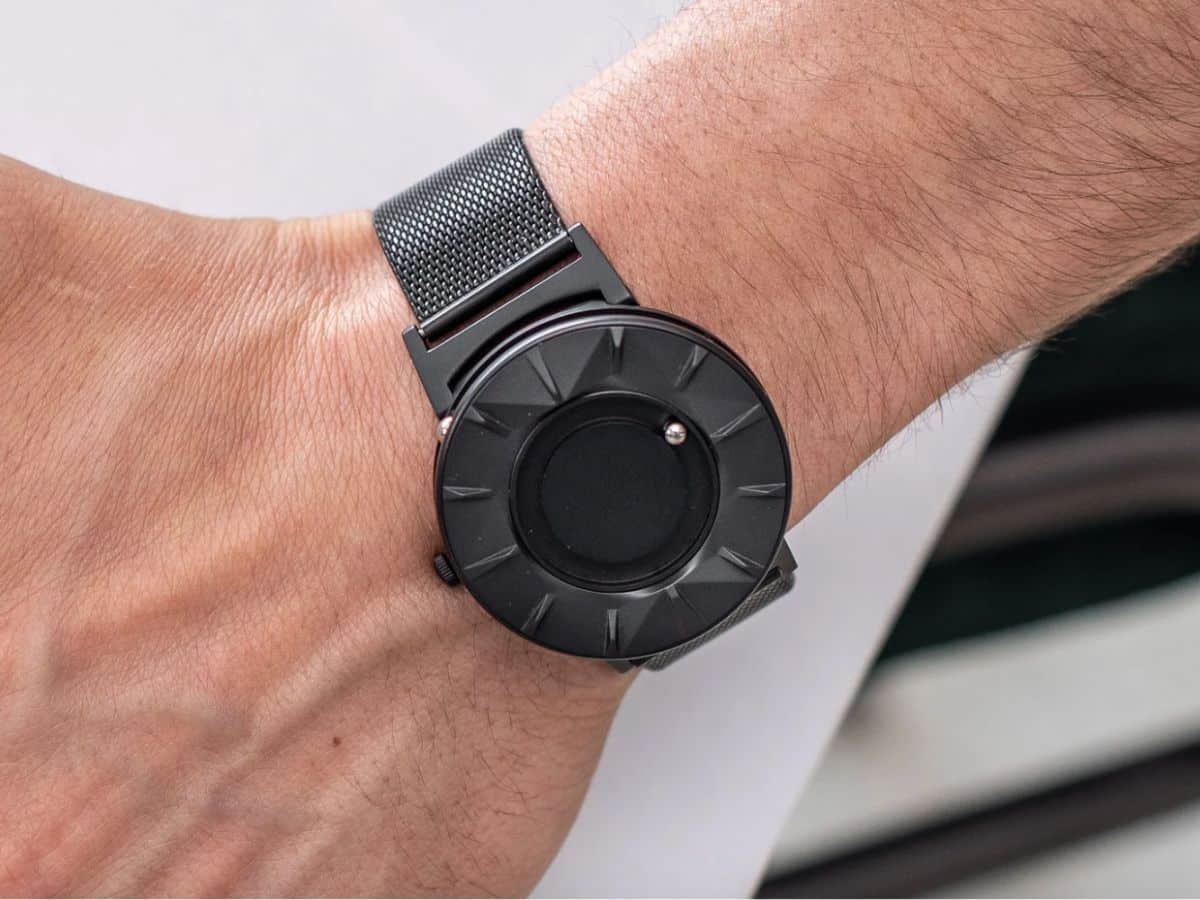
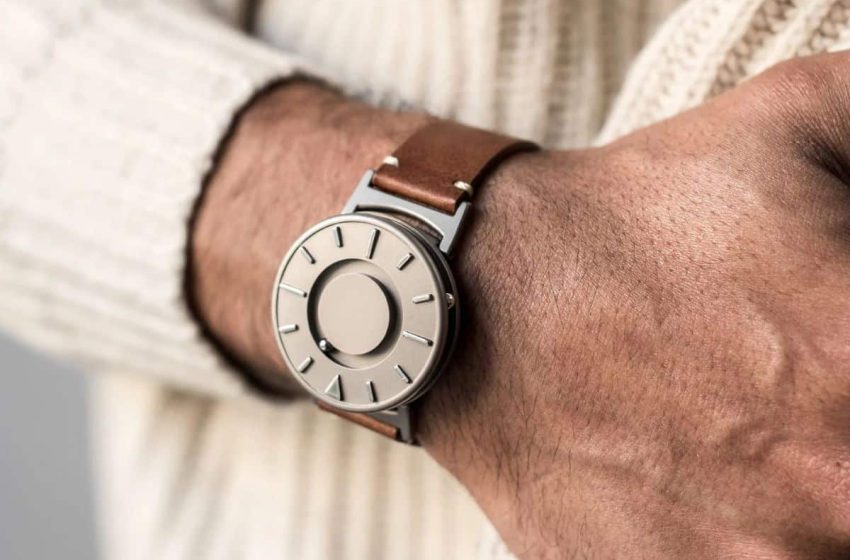
What would it be like to not see time but instead feel it? That’s the challenge that a young MIT student, Hyungsoo Kim, encountered when his blind friend told him of the need for a better, non-verbal way to understand time. That spawned the creation, the Bradley Timepiece, named for blind swimmer Paralympian Bradley Snyder who lost his sight in Afghanistan while defusing bombs. Driven by the product philosophy of universal design that allows the greatest number of humanity to access their time pieces, the Bradley and the company EONE has a magnetic ball that rotates around the bezel as another goes across the crown. By touching both you’d know the hour and minutes.
Best for: The ‘inclusive design advocate’ who values a sleek, tactile aesthetic that is as accessible as it is beautiful.
Bradley timepiece key stats:
- Movement: Ronda Quartz (Swiss parts)
- Case Material: Grade 5 Titanium
- Case Size: 40mm diameter
- Functions: Tactile time via magnetized ball bearings (Front: Minutes / Side: Hours)
- Price: $285 USD
5. Type 1 Ressence
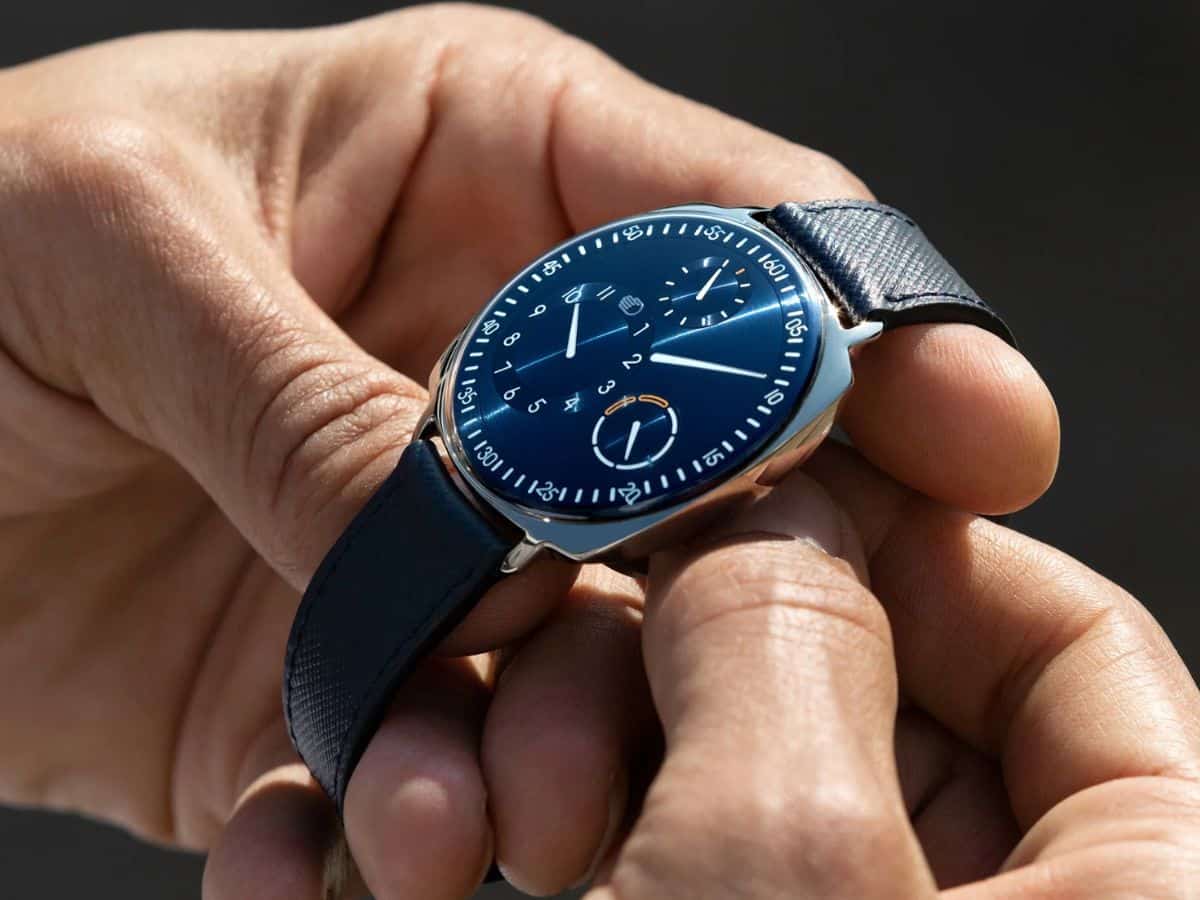
We’ve covered the story of Ressence watches in detail previously. Ressence is free to craft watches that are in a league of their own, both in terms of their innovative design and their immaculate execution.
In some sense, the Type 1 is a more traditional watch in that it does tell time, still, its bi-dimensional format by means of the Ressence Orbital Convex System (ROCS), allowing hours, minutes, seconds and days to orbit each other is very counter-intuitive to say the least and earns a spot at the table by turning time on its head.
Best for: The industrial design purist who appreciates “liquid” ergonomics and a clock face that defies every traditional rule of mechanics.
Type 1 Ressence key stats
- Movement: ROCS 1.3 (Ressence Orbital Convex System) on ETA 2892 base
- Case Material: Grade 5 Titanium
- Case Size: 42.7mm diameter
- Functions: Hours, minutes, seconds, and day orbiting on a flat plane
- Price: €24,150
6. The Last Laugh by Mr Jones Watches

Though the amazing Tikker watch—one that calculated your health and other lifespan critical data to give an approximation of your impending death—is no longer with us, RIP, we nonetheless love the momento mori idea of it. Its more commercially viable descendent is the The Last Laugh, a timepiece that literally grins its rotting teeth and skull dial face at our petty pursuit of the time of day. What difference does being late to my lunch appointment make when the dish being served is cooked by the Grim Reaper?
Best for: The ‘eclectic philosopher’ who likes their fashion with a side of memento mori and doesn’t take the concept of being “on time” too seriously.
The Last Laugh key stats
- Movement: Seagull ST1721 Automatic Mechanical (20 jewels)
- Case Material: 316L Stainless Steel
- Case Size: 37mm diameter
- Functions: Jump Hour (hours on upper teeth, minutes on lower teeth)
- Price: $645 AUD
Common questions about uncommon watches
It’s a different cognitive process, but surprisingly quick to learn. For single-hand watches like the Slow Jo, you stop looking for “10:42” and start seeing “nearly 11:00″—it’s about a general sense of place in the day. For complex systems like Ressence or Urwerk, the minute hand usually still rotates 360° over an hour, providing a familiar spatial reference even if the hour markers are “wandering” or orbiting.
Yes. While the Slow Jo and Bradley use modified Swiss Quartz movements that any high-end jeweler can battery-swap, the Ressence and Urwerk are mechanical marvels. Because they use proprietary systems (like the oil-filled ROCS in Ressence), they generally must be sent back to their respective ateliers in Belgium or Switzerland for a full service every 3 to 5 years.
Despite using magnets and vibration motors, they are built for the real world. The Bradley Timepiece, for instance, uses Grade 5 Titanium and a clever magnetic “catch” system—if you accidentally bump the ball bearing out of place, a simple flick of the wrist snaps it back to the correct time. The STUND, being a digital/haptic wearable, is built like a modern smartwatch but without the fragile glass screen, making it quite robust for office and gym environments.
First Appeared on
Source link






