


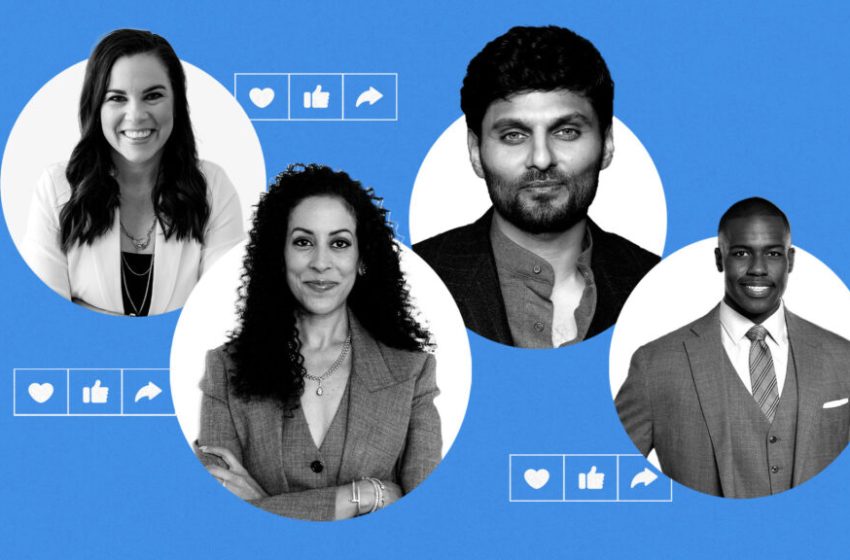
9 wellness influencers shaping public opinion – for good and bad
The era of wellness content — and its frumpier, under-resourced sibling health education content — has arrived in the online influencer space with aplomb. Tune into a “Call Her Daddy” podcast episode on getting through a breakup and you’ll receive a special discount code for online therapy. Watch the world’s most popular YouTuber pit 50 of his colleagues against one another for a cash prize, only to realize you’ve walked into an ad for wearable health tech.
At the same time, as health educators compete for attention against TikTok’s ruthless algorithms and Substack’s top echelon of popular writers, their content often mimics entertainment content — with varying degrees of success. Family physician and creator Mike Varshavski, who has accrued over 14 million YouTube subscribers for his medical education and entertainment videos, told STAT that the absence of “evidence-based voices online” leaves open “a gap filled by grifters” eager to capitalize on people’s confusion. The distinctions between entertainment, wellness sponsorships, and genuine health information are collapsing in on themselves, leaving consumers to parse through what’s real or not on their own.
STAT gathered nine of the biggest voices in the health influencer space worth keeping an eye on. Some work full time as scientists and physicians, drawing from years of clinical experience and medical expertise to communicate health information to the public. Others have no relevant credentials to speak of, and frequently disseminate pseudoscience. And under the second Trump administration, a select few have become prominent voices in the Make America Healthy Again movement, with their large social platforms operating in symbiosis with federal health policy to amplify and influence skepticism in vaccine policy, or steak-forward dietary guidelines.
Irrespective of factual accuracy, these online creators all play a leading role in shaping people’s understanding of health and medicine.
The scientists and physicians
Katelyn Jetelina
Katelyn Jetelina’s newsletter, “Your Local Epidemiologist,” was born at the onset of the Covid-19 pandemic in March 2020. Jetelina, who is currently a professor at the Yale School of Public Health, wanted to help people make sense of the global health crisis, and pulled from her master’s in public health, Ph.D. in epidemiology and biostatistics, and former role advising the White House and the Centers for Disease Control and Prevention to distill a deluge of news updates into a few key takeaways.
With people hungry for clear, evidence-based public health information, “Your Local Epidemiologist” became a breakout hit during the pandemic, and has continued to grow in the years since, now reaching over 425,000 readers across 132 countries. Now, Jetelina has a whole cast of scientists and journalists contributing to the newsletter, which has expanded to explain a wider swath of public health issues outside of Covid-19, including gun violence casualties, pharmaceutical ads, and of course the MAHA movement. “This publication exists for one reason — to provide an independent source of health information that helps people make evidence-based decisions,” Jetelina wrote on Instagram shortly after the start of Trump’s second term. “We’ll keep moving forward with empathy, transparency, and a shared commitment to a healthier future for all.”
Morgan McSweeney
Better known by his screen name dr.noc, Morgan McSweeney divides his time between a full-time job in biotech and producing explanatory science videos for his millions of viewers on Instagram, TikTok, and YouTube. McSweeney, a researcher with a Ph.D. in pharmaceutical sciences and immunology, offers succinct, often humor-laden answers to common health questions about reducing cancer risk, “forever chemicals” in food packaging, and more. Lately, he’s started making videos directly addressing false health claims pushed by health secretary Robert F. Kennedy Jr. and other members of the Trump administration, pointing people to specific studies on Tylenol or vaccines that have been misrepresented by political leadership.
In a STAT First Opinion essay, McSweeney stressed the urgency of making accurate scientific information accessible to a wider public audience. “Initially, I had fears about whether making content online amounted to ‘dumbing down’ complex scientific concepts. Over time, however, I’ve come to realize that clarity and simplification are not the same as dilution,” he wrote. “Today, more than ever before, we need more scientists and professionals to share their humanity and share their knowledge on social media without fear of judgment from within the scientific community.”
Darien Sutton
Darien Sutton has accrued over 2 million TikTok followers since he first started sharing educational health videos, but his social media presence is actually a relatively small slice of his work as a medical authority. Sutton is an emergency medical physician as well as a medical correspondent for ABC News, where he can be found explaining everyday health issues such as identifying measles symptoms and how to limit microplastic exposure to a general audience.
In his online videos, Sutton shares medical education content, but also showcases more of his personal life, highlighting his daily routine as a practicing physician, his philosophy on racial biases in medicine, and even his cousin’s spooky car. He urges his viewers to “keep asking questions” about medical issues they don’t understand, and has said previously that he sees health literacy as a crucial barrier to better patient outcomes. “We often talk about risk factors in terms of blood pressure and cholesterol, but I think it’s so important to make a note of someone’s understanding,” he said in a 2025 interview. “If a patient doesn’t understand what’s going on, their chances of ‘complying’ with your plan are slim to none.”
Jessica Knurick
Despite being one of the most prominent evidence-based critics of the MAHA movement, dietitian Jessica Knurick told STAT that people are right to be concerned about the U.S. food supply and rising rates of chronic disease — and that her videos and newsletter debunking health pseudoscience are never intended to shame others. “I want to engage in a genuine conversation with people,” she said. “A lot of people just have never had the opportunity to hear a different perspective before, because they got caught in these algorithms.”
Knurick draws from her Ph.D. in nutrition science, dietitian background, and personal experience as a mother navigating pregnancy misinformation online to create videos addressing health anxieties from everyday consumers. She cites multiple clinical research studies to back up her statements, whether she’s discussing Europe’s health system or infant formula ingredients, and refuses sponsored partnerships with supplement companies (a bar that might seem low but is in fact high for influencers).
Critically, Knurick is always careful to outline exactly how wellness misinformation relies on flawed reasoning or cherry-picked evidence. “Pseudoscience often sounds convincing because it starts with something true and then strips away the context,” Knurick said in one video debunking Alex Clark’s claims that fruit makes people fat. “We really have an issue with podcasters … cosplaying as nutrition experts confidently spreading pseudoscience and confusing and misleading people.”
Jessica Malaty Rivera
Jessica Malaty Rivera is an infectious disease epidemiologist and doctoral student at Johns Hopkins University Bloomberg School of Public Health. She also serves as a senior science communication adviser for the de Beaumont Foundation, where she specializes in making health information more accessible to the public.
For years, Rivera has targeted her social media content to reach people who do not work in health or medicine. Her Instagram-friendly slideshows address everyday life situations that intersect with public health, including how to talk about rising autism cases with skeptical family members and explain holes in anti-vax logic. She uses straightforward, simple language to define scientific terms like “antigens” and clinical trial “endpoints,” and instructs readers to engage with all online health content with a critical eye.
“Ask yourself: does this content or its claims and conclusions make [you] feel reactive?” Rivera writes in a newsletter issue titled, “Two Things Can Be True Without One Causing the Other.” “Ask yourself who wrote this, who they are, and why they might have written it. Look for trustworthy sources … who base their conclusions on evidence-based research.”
The generalists
Andrew Huberman
Since the launch of his “Huberman Lab” podcast in 2021, Andrew Huberman has accrued tens of millions of listeners across YouTube, Instagram, and podcast platforms for his discussions on how to optimize healthy living. Huberman, who has a Ph.D. in neuroscience, is a professor of neurobiology and ophthalmology at Stanford whose research has focused on visual circuitry and regeneration. However, his podcast covers a much broader array of health topics, such as the scientific importance of morning sunlight exposure, how to regulate your dopamine levels, and symptoms of metabolic dysfunction.
A blend of both legitimate clinical research and hyperbolic or unverified claims, “Huberman Lab” broadcasts interviews with physicians, psychologists, and scientists to millions each week and has been ranked as one of the most popular podcasts of 2025 on Apple and Spotify. In addition to his podcast, Huberman’s LinkedIn lists him as a scientific adviser for the wellness drink company AG1, supplement company Momentous, wearable maker Whoop, sleep optimization device company Eight Sleep, and nutrition and wellness company Function Health.
In 2024, Huberman faced heavy scrutiny after a New York magazine investigation reported that he lived in Los Angeles, hundreds of miles away from his purportedly operational lab at Stanford, and that he had affairs with five women simultaneously.
Jay Shetty
Take a look at the “health” category of most podcast platforms, and you’ll see Jay Shetty’s “On Purpose” and “Huberman Lab” trading places each week in the No. 1 spot. Like Huberman, Shetty uses “On Purpose” to dispense mental health guidance to an audience of millions across social media, and is also involved in multiple entrepreneurial ventures, including his own adaptogenic tea line and life coaching program. Shetty, however, has a distinctly more spiritual bent to his branding, one that has made him somewhat of a guru to Hollywood stars like Jennifer Lopez and Will Smith.
With the tagline, “The place you come to become happier, healthier, and more healed,” Shetty’s podcast has a loose and broad interpretation of what constitutes healing: He’s covered topics such as depression, anxiety, finding motivation, sleep hygiene, ADHD, dating, weight loss, gut health, cancer prevention, financial planning, narcissism, manifestation, and telepathy. Interview guests have ranged from Bill Gates to Khloe Kardashian to Casey Means, and any sweeping health claims made on-air are accepted without fact-checking or pushback from Shetty.
Shetty himself has no medical credentials or professional mental health experience. The wellness influencer claims to derive his wisdom from a stint living as a monk in India — though it’s unclear how much of his monk experiences are actually true. Still, none of these details have stopped Shetty’s ascent; just this past year, the podcast host wrapped a North American tour, gave a commencement speech at Princeton University, and brought his tea brand to Whole Foods nationwide.
The Mighty MAHA
Alex Clark
Alex Clark, a former radio host, launched her podcast “Culture Apothecary” in 2024, with the intention of pivoting away from the conservative political commentary that made her a breakout star at Charlie Kirk’s right wing media network, Turning Point USA. While Clark says that “Culture Apothecary” is about health and wellness, and that she aims to “make almost every episode nonpartisan,” her fans call themselves “cuteservatives,” and Clark herself echoes numerous Make America Health Again talking points against pharmaceutical companies and untrustworthy “three-letter” federal agencies. A significant portion of the 32-year-old’s episodes are geared toward young women and new moms, whom she warns to avoid Tylenol while pregnant, beware seed oils and harmful pesticides, and nag their husbands less to uphold godliness.
Recently, Clark’s influence has started directly reaching federal leadership. On “Culture Apothecary,” Clark has interviewed FDA Commissioner Marty Makary, health adviser Casey Means, and other prominent figures in the MAHA sphere. In September 2024, she was part of an expert panel who spoke to the Senate about food and health issues, and earlier this year she attended Kennedy’s MAHA conference, which she recapped for fans in a YouTube vlog.
Eric Berg
With a doctor of chiropractic degree on his resume, Eric Berg entered the public spotlight after espousing the life-affirming benefits of the keto diet, a high-fat, low-carbohydrate regimen that a 2024 NIH study review warns against maintaining long-term without medical supervision.
Today, Berg is a Renaissance man for the age of wellness misinformation. He shares unsubstantiated health-related soundbites with fear-mongering captions (eg. “This food is horrible for your gut,” “The #1 most dangerous thing for your skin”) to millions of social media followers; he’s written books on the principles of fat burning, recipes for keto dieters, and “body type quizzes”; he sells Dr. Berg-branded vitamins, supplements, and an intermittent fasting coaching program; his app, “Dr. Berg Junk Food Meter,” calculates a food’s “junk food” score based on its starch, sugar, and seed oil content.
Berg is a crucial player in the MAHA movement’s media ecosystem. After the think tank MAHA Action called upon its supporters to back Kennedy earlier this year, Berg said, “He actually needs us to help him with putting public pressure on various things. We need to dominate the narrative.”
First Appeared on
Source link






