


A 512-Million-Year-Old Fossil Site in China Reveals Strange Sea Creatures From an Ancient Underwater World
In a quarry nestled in the hills of southern China, paleontologists have uncovered a fossil bed unlike any previously found from its time. The discovery, quietly developing over the past five years, has now drawn global scientific attention for what it captures, and the timing it represents.
Preserved in fine-grained shale, thousands of fossilized marine organisms, many with delicate internal features still intact, are offering a rare glimpse into a world that existed just after a devastating extinction event. This site does not merely record isolated species but reveals an entire ecosystem, highly organized and biologically diverse.
Researchers report the fossils originate from a narrow window in deep time: roughly 512 million years ago, immediately following the Sinsk Event, a mass extinction that erased a significant portion of marine life. Few other fossil records exist from this transition, and none approach the completeness of what has now surfaced in Huayuan County, Hunan Province.
Fossil Jackpot Reveals Life’s Comeback After Collapse
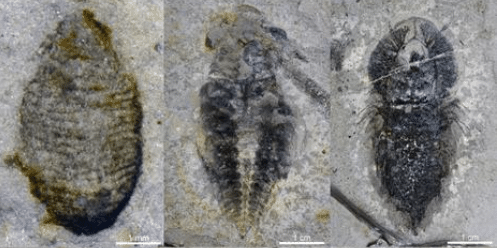
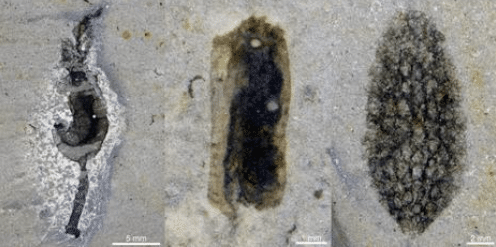
The Huayuan biota, as the site has been named, comprises over 50,000 fossil specimens, with 8,681 formally classified into 153 distinct species. Nearly 60 percent of these taxa have no prior representation in the scientific record. The fossils span at least 16 phylum-level groups, including arthropods, priapulids, lobopodians, cnidarians, and early deuterostomes.
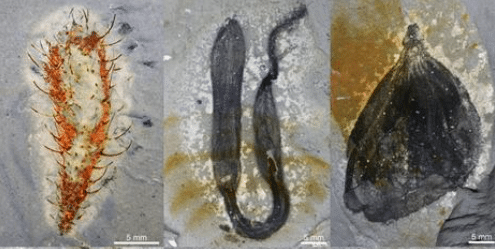
Unlike most Cambrian fossil sites, which capture only hard-bodied organisms, Huayuan preserves soft tissues in exceptional detail. SEM imaging and micro-CT scans revealed gut structures, nervous systems, pharynxes, respiratory surfaces, and other internal anatomy in multiple lineages. These findings were detailed in the peer-reviewed article published in Nature, which includes comprehensive imaging data and comparative ecological analyses.
Among the species are radiodonts, interpreted as apex predators of early Cambrian seas, along with pelagic tunicates, deposit feeders, suspension feeders, and scavengers. This diversity suggests that marine life rapidly reorganized into complex food webs shortly after the extinction. Quantitative comparison with other Burgess Shale-type sites shows the Huayuan ecosystem represents a distinct stage in biological recovery.
A news release from the Chinese Academy of Sciences emphasizes the significance of this ecological structure, describing it as “a deep-water faunal community with a complex food web and fully functional biological carbon pump mechanisms.”
Closing the Black Hole in Earth’s Early Fossil Timeline
The Sinsk Event, dated to approximately 513 million years ago, marks the first mass extinction of complex animals in the Phanerozoic eon. It abruptly ended the rapid diversification known as the Cambrian Explosion. The causes remain uncertain, with hypotheses ranging from ocean anoxia to tectonic shifts and climate perturbations.
Until recently, the fossil record from the immediate post-Sinsk interval was largely incomplete, dominated by organisms with mineralized skeletons. The Huayuan biota provides the first detailed view of soft-bodied life from this time. Deposited within the Balang Formation, the fossils are preserved in fine shale typical of deep marine shelf environments, a setting thought to offer relative stability during environmental crises.
Researchers noted morphological similarities between several Huayuan taxa and organisms previously known only from the Burgess Shale and Qingjiang biotas, raising the possibility of transoceanic dispersal driven by early Paleozoic ocean currents. These biogeographic patterns add to the growing evidence that long-distance exchange of marine species occurred much earlier than once assumed.
Geochemical data from the fossil layers support the interpretation that these offshore environments may have acted as refuges, allowing species to persist through extinction bottlenecks and later recolonize shallower ecosystems.
Fossils Freeze Early Evolution in Motion
The preservation of internal anatomy across a wide array of taxa enables high-resolution reconstructions of evolutionary traits and developmental pathways. Several specimens show detailed nervous systems and digestive structures, offering rare insights into Cambrian body plan innovation.
Comparative analysis of the Huayuan ecosystem with other well-known fossil assemblages was conducted using taxonomic and ecological matrices. These results, presented in the Nature study, place Huayuan in a distinct position among Cambrian communities, indicating a global ecological restructuring following the extinction event.
Beyond paleontology, the site contributes to integrative stratigraphy and time-scale calibration for early Cambrian stages. Its fossil composition allows for precise correlation with other regional formations, improving the resolution of biodiversity and climate models.
All specimen records and digital imaging datasets have been archived through the Science Data Bank, providing access to fossil imagery, stratigraphic profiles, and taxonomic classification files for ongoing research.
First Appeared on
Source link






