


Smallpox killed 300 million people last century. One man helped stop it.
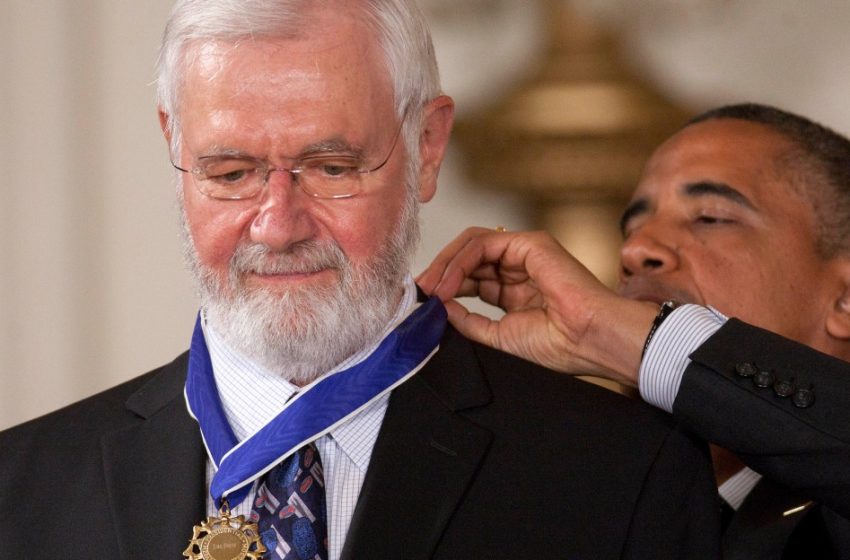
Had William Foege been a military general or a CEO or a politician, his death on January 24 would have been bold-type, front-page news. Elementary schools and highways would have been named after him.
Instead, Foege’s passing registered the way the deaths of many public health giants do: as a quiet tremor among the people who know what they did, and a barely-noticed headline for the rest of us.
Which, perhaps, is the perfect epitaph for his life’s work. Foege’s greatest accomplishment was that we don’t have to think about his greatest accomplishment: developing the ring vaccination strategy that helped eradicate smallpox from the face of the Earth.
It makes sense if you’re only passingly familiar with smallpox. The disease was declared eradicated in the US in 1949, and Americans haven’t been routinely vaccinated against it for more than 50 years. But smallpox was one of the deadliest viruses in human history, killing an estimated 300 million people in the 20th century alone. For centuries smallpox was simply a background fact of civilization, the way “flu season” is a background fact now — except with grotesquely higher stakes.
The eradication of smallpox, which was formally declared on May 8, 1980, is a civilizational achievement I’d put on par with any other, all the more so because it was a collaborative global effort. Humanity took a disease that had been killing us for thousands of years, one so merciless that it single-handedly destroyed empires, and eliminated it forever. If you asked me to identify the height of what human beings can do when they work together on a single goal, I would point to this.
The cruel irony, though, is that Foege’s death comes at a moment when the US government is turning its back on vaccination, and standing idly by while long-conquered diseases like measles come roaring back. And it’s happening in part because we’ve mistaken the quiet of victory — the victory won by Foege and his colleagues — for proof that there never was a war.
We couldn’t be more wrong.
Smallpox had been killing human beings for at least 3,000 years; the mummified head of the Egyptian Pharaoh Ramses V, who died 1157 BCE, shows evidence of the distinct, bumpy rash that made smallpox so horrifyingly visible. Three in 10 people who contracted the highly contagious disease died, while survivors were often left scarred and even blinded.
So terrifying was smallpox, which was caused by the variola virus, that many religions and cultures had the equivalent of a “smallpox demon,” like India’s Shitala Mata. Smallpox was particularly dangerous to children, and in 17th-century England children were even not considered full members of the family until they had survived their smallpox infection.
The war against smallpox is almost as old as the disease itself. A thousand years ago, people in Asia were practicing a kind of vaccination-lite called variolation, deliberately infecting people with a mild case of the disease to guarantee immunity, though the process came with the risk of developing severe smallpox. And smallpox was the first disease to have a formal vaccine: in 1796 the British doctor Edward Jenner developed what he would call a vaccine from cowpox, a very mild version of the disease found in cows, which had the benefits of variolation without the risks.
Yet just having an incredibly effective vaccine wasn’t enough to fully defeat the disease, especially in poor countries. As late as 1967 — nearly 200 years after Jenner’s discovery — there were an estimated 10 to 15 million smallpox cases and as many as 2 million deaths per year. Even as some human beings were preparing to go to the moon, others were dying of the same disease that had killed pharaohs — and few people thought that would ever change.
That very same year, a previously abandoned World Health Organization effort to eradicate smallpox was revived. Its chances of success, however, seemed slim. Scientists believed that at least 80 percent of every population had to be vaccinated to achieve herd immunity, but in high-density or war-torn areas like India or Nigeria, that seemed an impossible task.
William Foege made it possible. He was serving as a Lutheran missionary doctor when he began working for the effort in eastern Nigeria, where he and his team struggled to control outbreaks in isolated rural areas and with limited supplies of vaccine. But those limitations inspired him to change tactics. Instead of aiming for mass vaccination, his team prioritized finding people with smallpox, isolating them, and vaccinating their contacts and nearby communities.
The strategy became known as “ring vaccination,” and it was essential to the ultimate success of the smallpox eradication campaign. Foege’s team could stop an outbreak in its tracks by vaccinating as little as 7 percent of the population, simply by ensuring they were vaccinating the right 7 percent. Suddenly a goal that had seemed impossible — a world without smallpox — became realistic.
There were other advances that made eradication possible, like the bifurcated needle, which made vaccination campaigns cheaper and easier to deploy, as well as the development of a heat-stable, freeze-dried vaccine that could be stored without refrigeration. And very much unlike today, the smallpox campaign saw geopolitical enemies work together. The Soviet Union supplied freeze-dried vaccine that became foundational to eradication efforts in China and India, while the CDC’s Donald Henderson directed the international program.
In 1977, just 10 years after the intensified program was launched, a hospital cook in Somalia named Ali Maow Maalin became the last person on Earth to naturally contract smallpox. (The final person to die was Janet Parker, a medical photographer in the British city of Birmingham who tragically contracted the disease in a lab accident in 1978.) On May 8, 1980, after enough time had passed to be sure, the World Health Assembly declared that “the world and all its peoples had won freedom from smallpox.” A virus that had haunted humanity for thousands of years was gone.
Foege’s career didn’t end with smallpox eradication. He would serve as CDC director under Presidents Carter and Reagan, and he was instrumental in pushing for global campaigns around childhood immunization. At each stop he was motivated by the belief that, with enough effort, infectious diseases could be rolled back.
As he once wrote: “Humanity does not have to live in a world of plagues, disastrous governments, conflict, and uncontrolled health risks. The coordinated action of a group of dedicated people can plan for and bring about a better future. The fact of smallpox eradication remains a constant reminder that we should settle for nothing less.”
But today, that “better future” seems further off than ever. The Trump administration has overhauled the childhood immunization schedule in the name of “aligning with peer countries,” shifting some shots away from routine recommendations and into murkier, more discretionary territory — the kind of ambiguity that reliably leads to fewer kids getting their shots. As of January 29, the CDC had counted 588 measles cases already in 2026, with the vast majority linked to outbreaks that started last year; meanwhile, kindergarten measles vaccine coverage has fallen to 92.5 percent — well below the roughly 95 percent level that keeps measles from finding oxygen.
We are going in reverse, in part because we’ve forgotten the past we once lived with.
The point of smallpox eradication — the point of vaccination itself — is that when it’s working, nothing happens. No outbreaks, no headlines, no scars, no funerals. But “nothing happening” is not nature; it’s deliberate and difficult maintenance. If we want to honor William Foege, we don’t need to rename a highway. We need to defend the quiet he helped win — and refuse to relearn, the hard way, what the world looked like before people like him made it safer.
A version of this story originally appeared in the Good News newsletter. Sign up here!
First Appeared on
Source link






