


Mamdani resists ‘sweeps,’ opens stalled NYC shelter as death toll in brutal cold climbs
The city announced Tuesday it will open a long-stalled shelter for more than 100 street-homeless New Yorkers in Lower Manhattan, as Mayor Zohran Mamdani faces mounting pressure to move people out of public spaces and stop a rising cold-related death toll.
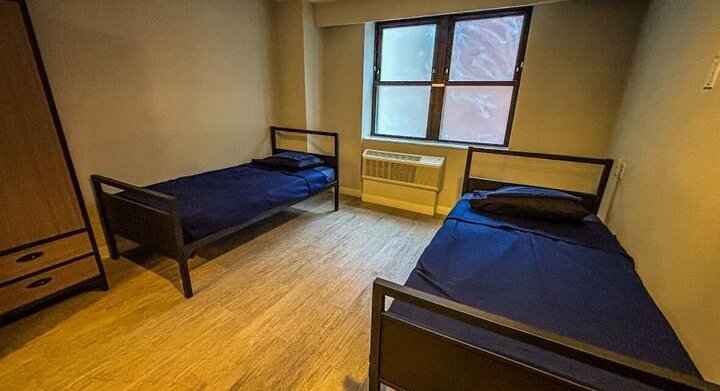
The new shelter on Pearl Street is located in a former hotel and features 53 units with two beds each. It was first proposed in early 2024 under then-Mayor Eric Adams, but a community group’s lawsuit and a judge’s ruling last year delayed the process. The facility is one of New York’s “safe haven” shelters that don’t have curfews or other restrictions and provide on-site services.
The city hastened its opening after at least 16 people died since temperatures first plunged below freezing on Jan. 23, and snow and ice blanketed the five boroughs.
The crisis has prompted local elected officials, leading business groups and newspaper editorial boards to urge Mamdani to take more aggressive action and revive the “sweeps” policy, where police and sanitation workers trash tents and other makeshift encampments set up by homeless New Yorkers sleeping outdoors as part of an effort to compel them to move inside.
“It’s a policy that needs to be revisited,” said Steve Fulop, the new head of the influential business lobbying group Partnership for NYC. “Allowing ever-expanding homeless encampments is just not a productive policy for the individuals living in the homeless encampments or for the broader public.”
Mamdani resisted those calls in an interview with Gothamist at the new shelter Tuesday afternoon. He said none of the people found dead were staying in encampments during the cold.
“I want to be very clear that we have no information that would suggest any of the New Yorkers who lost their lives did so at an encampment,” Mamdani said. “The question of encampment policies is something that is separate from what we’re seeing right now in this moment.”
He called the sweeps policy a “failure,” given that few people targeted end up in permanent housing or with long-term support. The city conducted roughly 4,100 sweeps from January 2024 to June 2025, and people moved into shelters about 260 times during that span. None moved into permanent housing.
After sweeps, many people move back to the same locations in a matter of days or hours.
Mamdani said he has continued a policy of “involuntary removal” that advocates say can violate people’s basic rights if used too broadly, but that proponents say is essential for protecting people who are in danger. He said police and emergency workers took 18 people to hospitals for mental health treatment against their will over the past week.
“That policy continues as it was under the previous administration,” he said. “Some examples are if a New Yorker is seen not adequately clothed in this kind of winter, if a New Yorker’s behavior is that which is threatening to others around them.”
But he said forcible removal is a “last resort” as outreach workers and city officials attempt to encourage street homeless New Yorkers to move into shelter units with fewer restrictions.
Dave Giffen, head of the Coalition for the Homeless, said he agreed with Mamdani’s approach so far. He said involuntary removal was at times necessary but that call for sweeps is an “opportunistic misframing of a terrible tragedy to try to get the administration to try failed approaches of the past.”
Many homeless New Yorkers staying on the streets say they have had terrible experiences in the city’s traditional shelter network, including attacks and robberies, and want more privacy.
The city has roughly 4,000 “safe haven” and similar “stabilization” beds for homeless New Yorkers after the Adams administration expanded their use. The facilities have on-site services and provide meals, but don’t have curfews or require people to go through an intake process at one central location, and some offer individual units.
But Department of Social Services Commissioner Molly Park said nearly all of the beds are currently in use, necessitating the Lower Manhattan site and another facility in Upper Manhattan that the city opened on Sunday.
Park said the new site will provide temporary shelter to “older adults and medically frail individuals” and that people will begin moving in on Wednesday.
But the saga of the new facility shows how fraught the process for opening one of the shelter sites can be. The Adams administration first awarded a contract for the shelter to the organization Breaking Ground in 2024, with an opening date scheduled for fall of that year. The choice of location near a grade school provoked furious opposition from a local community group that sued to block it.
In court filings, the group cited the shelter’s proximity to the school and accused the city of not conducting a thorough “fair share” review detailing how many other similar facilities were in the area. Local Councilmember Christopher Marte sided with the group, telling the news site Tribeca Citizen that the shelter plan “raises legitimate concern” due to a need for more police in the area around the school.
In August 2025, Judge Arthur Engoron issued a ruling that blocked the shelter, likening the group’s arguments to “two 800-pound gorillas in the room.”
He instructed the city to file a new analysis that took into account how many shelters are located in the area. A spokesperson for the Department of Social Services said it had conducted the analysis and was legally allowed to open the facility.
Marte, the councilmember who opposed the shelter, attended the tour with Mamdani Tuesday but declined to comment.
PeckSlip Advocates for School Safety, the community group that opposed the shelter, did not immediately respond to a request for comment.
“We’re urging the mayor to stop this Adams-era plan, respect the court ruling, and reconsider both the site and shelter model,” the group wrote on its website.
The shared units could appeal to couples who do not enter shelters because they want to remain together.
But people staying in streets and public spaces who spoke with Gothamist over the past week said they really want permanent apartments — not tents or temporary units with roommates.
Andrew Chappotin, 41, said he has moved into shelters on multiple occasions, only to share rooms with people who attacked him or made him feel unsafe and with little hope of quickly finding an apartment he could afford. Chappotin, a carpenter and member of the organization Safety Net Project, said he and other street homeless New Yorkers need a clear path to permanent housing
“All I want is a shot, an opportunity,” Chappotin said. ”I’m 41 years old and I never signed a lease. I’ve never had a chance, never came close to it.”
First Appeared on
Source link






