


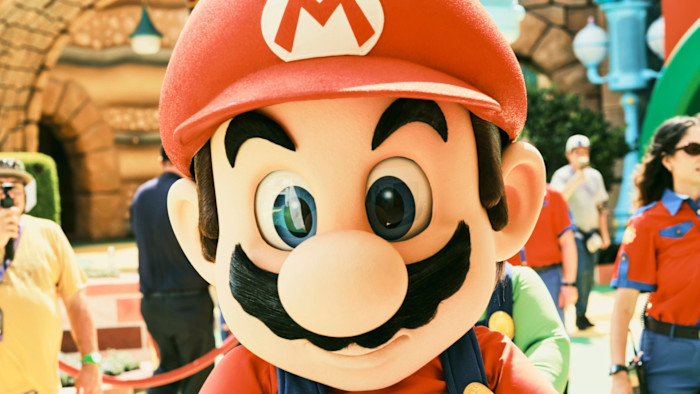
Super Nintendo — the Japanese gaming company that became a global giant
Unlock the Editor’s Digest for free
Roula Khalaf, Editor of the FT, selects her favourite stories in this weekly newsletter.
Few corporations appear as loveable as Nintendo. Its games are classy, family-friendly and environmentally inspired. There’s a focus on craft, virtue, cross-discipline creativity, lateral thinking, even humanism; a kind of Bauhaus of gaming.
Nintendo’s approach seems to be “less is more”, but it hides layers of complex ingenuity for gamers to discover, to their delight. This philosophy has helped keep the Japanese company at the forefront of its industry, with an annual revenue of more than ¥1tn ($6.5bn), while former rivals such Sega and Atari have fallen away as competitors in gaming hardware.
Lovability, however, is a problem for a biographer. Nothing deflates tension and interest like affability. It’s a difficulty that Keza MacDonald fails to overcome in an otherwise competent and heartfelt survey. MacDonald, who is video games editor at The Guardian, covers many of Nintendo’s major games, developers and characters — Mario, Zelda, Donkey Kong, etc — and she deserves kudos for gaining access to a notoriously private organisation, even if her questions are largely set to easy mode.
There are touching personal moments, such as tributes to departed developers concealed within games. MacDonald has an eye for trivia — dream-eating tapirs, Pokémon manhole covers or monitors that allow Tetris blocks to fall in sync with a player’s heart rate.
Intriguing side quests arise but are rarely pursued: the 19th-century playing cards and yakuza-adjacent origins of Nintendo are passed over too quickly; so too the influence of Japanese folklore and Shinto animism. There is scant mention of the titanic battle with Sega, or the real-life dramas encountered by users of Pokémon Go.
The tone of Super Nintendo is effervescent but insufficient. Enthusiasm alone is not enough to distract from grating clichés (“Show me a better multiplayer game. I’ll wait”) or banalities such as the observation that human beings like to connect and have fun. There are wild claims such as “In 2020, New Horizons saved the whole world from loneliness”, but little consideration that screens might have compounded a societal dislocation that did not end with lockdown.
For all the talk of fun, there’s a strange medicinal feel. Nintendo-style gaming is good for you, partly because it is played by an approved kind of gamer; a sign perhaps of the infantilisation that gaming culture can encourage. The absence of criticism is glaring. MacDonald is correct that “Geek culture has become pop culture” but there’s no examination of the ensuing cynicism and exhaustion. It never occurs that geek culture, far from prevailing, has simply been hollowed out by pop culture.
Perhaps Nintendo does offer a more benevolent path than Silicon Valley, as MacDonald implies, with playfulness preferable to “exploitative algorithms or attention-hacking user design.” Nintendo luminary creator and designer Shigeru Miyamoto displays egalitarian humility in his belief that “if a customer fails to understand what to do, [Miyamoto] has failed” in contrast to the paternalistic contempt often shown to fanbases elsewhere.
It may feel harsh to be scathing about MacDonald’s labour of love for a company that has brought joy to millions. Yet what is at work here is not love but deference. It is as if there’s a fear of being cast out of Nintendo’s favour. Nintendo’s mistakes are defended as well-intentioned or too far ahead of their time. The praise is ubiquitous, fawning over an exceptional yet already self-referential corporation. If the gaming giant hides its genius for players to find, the book hides timidity and conformity beneath enthusiasm.
If it were a video game, Super Nintendo would have few glitches but likewise few surprises. Indeed, there would be little gameplay at all, given that most gameplay requires conflict. MacDonald claims the early Mario games were “wildly weird”, a quality that is needed here. It is a decent pixelated hagiography but, given the brilliance of the subject, a missed opportunity. An endless sunny cutscene, inoffensive but interminable.
Super Nintendo: How One Japanese Company Helped the World Have Fun by Keza Macdonald, Faber £20/Knopf $32, 304 pages
Join our online book group on Facebook at FT Books Café and follow FT Weekend on Instagram, Bluesky and X
First Appeared on
Source link






