


Workforce Directive: Restoring NASA’s Core Competencies
NASA Announces A New Directive
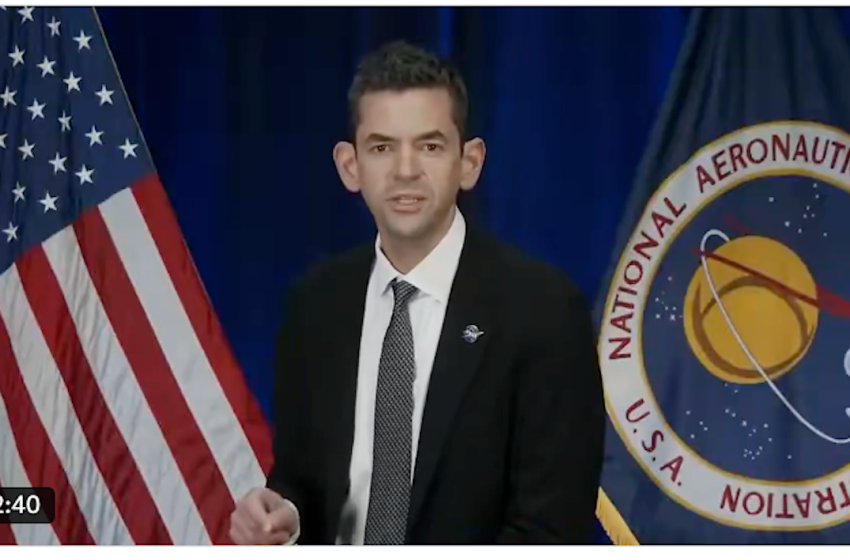
Update: Marcia Smith just tweeted a screengrab of part of the Directive – I got several copies of the full thing . See below: Keith’s note: As most of you probably know by now, Jared Isaacman visited every NASA center during his initial time on the job at NASA. Today his Twitter account at @NASAAdmin posted a video about this and about a “implementing a workforce directive to restore NASA’s core competencies”. They retweeted it to the globally visible @NASA account with 88 million+ followers. NASA PAO spent lots of time shooting video, editing it, etc. But true to form they announce something (a directive) but they won’t let you actually see what is being announced (i.e. the directive) – just a summary thereof. ‘Quasi-Transparency’, I guess. Here is a verbatim transcript created from the video by an AI bot: (more below)
Workforce Directive: Restoring NASA’s Core Competencies
Background
NASA’s ability to deliver on its mission has become increasingly dependent on external vendors and contractors for core functions and workforce talent—from engineering and operations to manufacturing and repair. While partnerships remain vital, this trend has eroded internal capabilities, increased program risk, reduced flexibility in addressing emergent technical challenges, and added well more than a billion dollars in annual overhead—diverting resources from science and discovery.
Factors contributing to this reliance include concerns over exceeding artificial civil servant hiring ceilings, and assumptions that outsourcing would provide greater workforce flexibility. Even if these assumptions hold in some cases, the overall effect deprives NASA of critical institutional knowledge, and limits resources essential for mission success.
As a result, it is not surprising that multiple programs have experienced suboptimal outcomes in cost and schedule. Multiple prime contractors, hundreds of sub-contractors, tens of thousands of contract employees, and duplicative layers of management create complexity and inefficiency. Variances in policies, tools, and systems across this spectrum further challenge budgets, timelines, and outcomes.
To achieve the President’s national space policy and maintain U.S. leadership in space exploration, NASA must urgently restore and retain in-house engineering, operational, and scientific excellence, and reclaim technical autonomy. This directive establishes actions to rebuild internal talent, strengthen contractual provisions, and foster a culture of technical resilience.
Vision
NASA will expand with a strong core of civil servants, staffed and equipped to lead the most complex engineering and operational challenges, ensuring expertise, resilience, agility, and innovation in every mission. This includes the ability to build and repair critical components to reduce external dependencies when necessary. Restoring and sustaining these core competencies is essential to steward taxpayer resources, align investments with agency priorities, and ensure mission success.
This foundation will be strengthened by contractors in non-core areas and for surge requirements, complemented by our extensive network of international and commercial partners. Together, we will deliver on NASA’s world-changing mission of science, exploration, and discovery.
(1) Directive Actions
NASA recognizes that contractors have and will continue to play a vital role in achieving mission objectives. This directive focuses on correcting over-reliance on outsourced engineering and staffing that diminishes NASA’s core competencies and resources essential to agency priorities. The future state aims to use contracted workforce primarily for limited-term assignments, surge staffing, and specialized functions outside NASA’s core competencies.
Within 30 days, Center Directors, Mission Directorate leadership, and the Office of the Chief Human Capital Officer shall:
- Conduct a Work Assessment: Identify engineering, operational, scientific, manufacturing, and other mission-critical work currently outsourced, and provide a proposal for what should be brought in-house, aligned with the workforce assessment.
- Conduct a Workforce Assessment: Identify outsourced or missing technical and operational expertise and provide a proposal to convert core roles to civil service. Categorize proposal by priority, mapping to core competency and current contracting mechanisms. Emphasize solutions that enable mission execution without introducing additional redundant layers of management.
Within 60 days, the Office of the Chief Human Capital Officer, Office of Procurement, and Office of the Chief Financial Officer shall:
- Develop Transition Strategy: Consolidate workforce assessments and create an implementation plan to convert or add targeted roles to civil service, addressing contract changes, renegotiations or terminations, timelines, and cost implications.
- Establish Rapid Onboarding Process: Implement streamlined process that ensures candidates can be rapidly brought into civil servant positions without disrupting operational capacity, minimizing gaps in mission-critical support.
- Strengthen the Talent Pipeline: In collaboration with the Office of Personnel Management, develop strategies to attract industry and academic talent and embed civil servants with industry partners to accelerate learning and knowledge transfer aligned with national space policy objectives.
- Enhance Training Programs: Assess and develop internal training and mentorship initiatives to ensure continuity of knowledge and technical depth across generations of
NASA engineers, operations personnel, and technicians. - Focus Internship Opportunities: Develop a plan to expand the current internship program with a focus on standardizing and enhancing experience, to develop in-house technical talent focused on the highest priority agency requirements.
(2) Strengthen Framework for Technical Autonomy
Within 30 days, the Office of Procurement shall:
- Ensure Repair and Operation Autonomy: Incorporate right-to-repair provisions in all future and applicable existing contracts, guaranteeing NASA access to specifications, parts, tools, schematics, software, and technical documentation necessary for internal manufacturing, repair, and operations.
- Remove Restrictive Clauses: Eliminate contract language requiring NASA-fabricated replacement hardware to be returned to vendors for inspection after delivery of out-of-spec hardware.
- Address Intellectual Property Barriers: To the extent reasonable under existing and ongoing procurements, review and propose modifications to eliminate IF restrictions that prevent NASA from performing internal repairs or redesigns, as needed to meet urgent Presidential space policy objectives.
Within 60 days, center directors shall:
- Propose Makerspaces at Each Center: develop plan to create a makerspace at each center to enable rapid prototyping and proposal development. Include an assessment of potential funding mechanisms, such as sponsorships from partners and critical vendors, to support implementation and sustainability.
This Directive does not reflect any intent or commitment, implied or otherwise, to take any action regarding any particular existing or future contract with the agency.
Jared Isaacman
NASA Administrator
Earlier post
Introductory text
After 50 days on the job, visits to every NASA center, a dozen town halls, and reviewing thousands of workforce submissions, it is clear there is much we can do to better empower our people and focus resources on the most pressing objectives.
Getting back to the Moon means getting back to the basics. NASA must regain its core competencies in technical, engineering, and operational excellence, and in doing so, we’ll save up to $1B a year to fund more missions of world-changing science and discovery.
With the directive issued today, we are strengthening the NASA team and executing urgently on the President’s national space policy.
Video Transcript
Today marks 50 days on the job, and in the lead up to two historic crewed launches, I’ve gotten to visit every single center.
At each of these stops, I was able to speak with you, the most talented workforce our nation has to offer.
I heard where the roadblocks are and what challenges you face, and now I’m taking what I’m learning and putting it into action. The list is long, but we have to start somewhere.
Today, I’m implementing a workforce directive to restore NASA’s core competencies. NASA has outright lost or outsourced many core competencies in engineering and operations that once enabled the agency to undertake the near impossible in air and space.
Many of you, approximately 75% of the workforce, are contractors working alongside multiple primes, hundreds of subcontractors, utilizing different systems with excessive management layers anchored by a small civil servant workforce.
Not only is this highly inefficient and leads to continuous program delays, but it’s costly to the tune of nearly $1.4 billion a year in needless expenses.
That funding could go to more astronauts in space, building a moon base, and launching more missions of science and discovery.
We are tearing down artificial civil servant hiring ceilings and bringing the teams we need back to NASA to execute on President Trump’s vision.
First, rebuilding internal talent. Within 30 days, every center and mission directorate will assess which technical and operational roles need to come back in-house. Within 30 days, every center and mission directorate will assess which technical and operational roles need to come back in-house.
Within 60 days, we’re implementing rapid onboarding. To ensure the funnel of new talent is always filled, we are supporting OPM’s TechForce initiative, bringing in term-based hires from industry and academia, and launching robust internship training and mentorship to develop the technical talent we require.
Second, we’re empowering you to get the job done. We are incorporating right-to-repair provisions in all future contracts, guaranteeing NASA access to specifications, parts, tools, and technical documentation. We’re eliminating restrictive clauses that prevent us from doing our own work and addressing intellectual property barriers that have tied our hands.
Third, fostering a culture of technical excellence, hands-on engineering, and continuous learning,recognizing technical contributions, and creating makerspaces at every center.
We’re restoring in-house engineering and operational excellence to reclaim technical autonomy and concentrating our resources on the most needle-moving objectives. This is how we achieve the President’s national space policy.
And if we succeed, returning to the moon and building a moon base will seem pale in comparison to what we’re capable of achieving in the years ahead.
First Appeared on
Source link






