


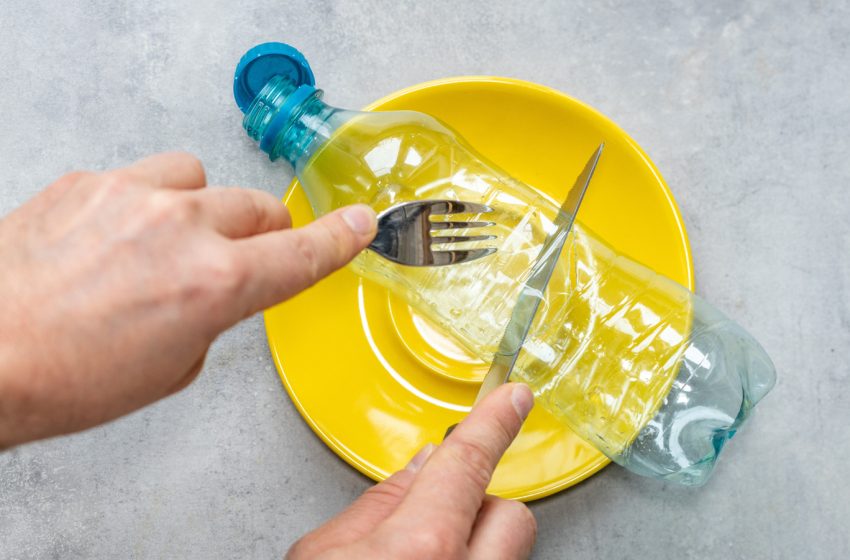
14 Foods That Contain The Most Plastic Pollution
If you keep even a casual eye on the news, then you’ve probably seen plenty of headlines spouting the dangers of microplastics. While two decades ago, just the word “microplastics” would’ve likely been a term you weren’t even familiar with, today, it seems to be something everyone is talking about, even if you’re not actively worried about the health risks.
Microplastics are exactly what they sound like: microscopic particles of plastic that measure up to 5 millimeters long. Microplastics are the result of plastic’s inability to truly, organically decay. Instead, it breaks down into these microscopic pieces that enter the environment in massive quantities, with the pollution spread by wind, and water, affecting everything it touches. Microplastics also leach out of products that you use every day, like toothpaste. As humans ingest or inhale microplastics, they face risks such as cardiovascular problems, allergies, autoimmune disease, cancer, and early dementia.
Still, researchers assure that there’s no need to panic. The best thing to do is to reduce microplastic exposure, knowing that it’s impossible to avoid eating or drinking microplastics altogether. One good place to start? Knowing which foods are highly likely to contain plastic contamination.
Salt
Salt is in just about everything, which makes it a little disheartening to learn that it often contains microplastics. A 2018 study conducted by Incheon National University and Greenpeace East Asia, and published by the American Chemical Society, “Global Pattern of Microplastics (MPs) in Commercial Food-Grade Salts: Sea Salt as an Indicator of Seawater MP Pollution,” found that, of the 39 international salt brands studied, more than 90% contained microplastics. However, the study also found that not all salt is the same when it comes to microplastics; sea salt, and salt sourced from Asia, are most likely to contain microplastics. Indonesian sea salt was the worst offender at the time of the study, which tracks when you consider that Indonesia is also considered responsible for emitting exceptionally large amounts of plastic pollution into the ocean.
Luckily, you can find many brands that specifically market their salt as microplastic-free. You can also choose salt that is terrestrially sourced from a salt deposit, rather than sourced from a body of water. Choosing salt that’s not packaged in plastic can also reduce exposure.
Seafood
If microplastic pollution in the ocean is contaminating sea salt, you’ve probably already worked out that it’s affecting fish, and other marine life, too. A 2024 study published by Frontiers in Toxicology, “From the ocean to our kitchen table: anthropogenic particles in the edible tissue of U.S. West Coast seafood species,” found that out of 182 tested seafood samples, 180 contained microplastics. Furthermore, out of the various types of seafood tested (which included shrimp, and five types of fin fish), the study confirmed that shrimp contained the highest levels of microplastics, and that most of those detected microplastics were derived from textiles. The researchers found that washing the seafood before consuming it, though, could reduce the amount of microplastics.
So, where’s all this plastic in the ocean coming from? Somewhat surprisingly, some of it could be coming from your own home. Multiple studies have pointed to the likelihood of plastic pollution from synthetic clothing working its way through the water system, and then to the ocean, every time you run a load of laundry.
Sugar
Just like salt, sugar contains a shocking amount of microplastics. In fact, when the researchers behind a 2025 study, “Evaluation of Microplastic Contamination in Table Sugar: What Does Sugar Have Besides Its Sweetness?”, looked at 100 samples of sugar sourced from all over the world, they discovered a whopping 100% contamination rate. Another study found 100% contamination in beet sugar samples, with still notable contamination in white granulated sugar, which contained higher levels of microplastics than both molasses, and brown sugar.
In sugar’s case, researchers theorize that most of the microplastic contamination occurs during manufacturing, and packaging. Sugar is highly processed, and over the course of extracting, purifying, drying, packaging, and more, the ingredient is likely to absorb a lot of microplastics along the way. Studies find that PVC is one of the dominant sources of microplastics in sugar — the same type of carcinogenic plastic that you’ll find in your flooring, and pipes.
Beer
Yes, it does seem like everything good in life is being marred by microplastics, including your nightly pint. Studies have found microplastics in beer, though some researchers aren’t entirely sure where those microplastics are coming from. While the obvious first guess would be the water sources that brewers use, a 2018 peer-reviewed study entitled “Anthropogenic contamination of tap water, beer, and sea salt” found that particular correlation could not be drawn.
Unfortunately, when you combine the amount of microplastics you get from beer, and from other common sources like the aforementioned sea salt, and even just tap water, it really adds up. A Pennsylvania State University researcher concluded that the average American, from just these three items, ingests nearly 6,000 particles of microplastics annually. However, one study, “A microscopic survey on microplastics in beverages: the case of beer, mineral water and tea,” claimed that it’s possible to find as much as 9,154 microplastic fragments in just 100 milliliters of beer.
Bottled water
Drinking water from a plastic bottle significantly increases the amount of microplastics you consume, with those who drink plastic-bottled water daily consuming 90,000 more microplastic particles annually, as compared to those who don’t. Additionally, it’s important to know that the microplastics in bottled water don’t just come from the bottles themselves. There are other factors that impact the quantity, and they include how you drink from the plastic bottle. For example, if you open and close the bottle multiple times while drinking, or frequently squeeze the bottle, or leave the bottle in the sunlight, you’re causing damage to the bottle. That damage may be indiscernible to the naked eye, but it ultimately makes the bottle shed more microplastic particles, as the plastic breaks down.
Don’t make the mistake of thinking that if you switch to a reusable plastic water bottle that you’ll be doing any better. A 2022 study out of the University of Copenhagen, “Non-target screening for the identification of migrating compounds from reusable plastic bottles into drinking water,” found that, after water sat in a reusable plastic water bottle for 24 hours, it newly contained more than 3,900 substances derived from either the plastic itself or dishwasher soap that had previously been used to clean the bottle.
Honey
Unfortunately, while honey may at first glance seem like a better option than refined sugar, at least if you’re trying to avoid microplastics, there’s bad news: There are many, many ways for microplastics to infiltrate honey, regardless of whether the honey is purchased at the grocery store or from your local beekeeper.
As plastic degrades in the atmosphere, microplastics can be transferred to nearby plant life via water, and wind. As honeybees visit those plants, they pick up the microplastics, and take them back to their hives, where they end up in the honey. Additionally, some beekeepers may use hive products made of plastic, which adds to the contamination. Then, if the honey is packaged in plastic, the rate of contamination increases further.
A 2024 study on native bees and their honey in Brazil found that 100% of honey samples contained microplastics. Prior to that, in Turkey, a 2023 study found microplastics in 75% of the study’s honey samples, while a Turkish study published in 2026 detected microplastics in 93% of honey samples.
Milk
Microplastics have been found in a swathe of dairy products, including milk. The microplastics make their way into the milk through a variety of avenues. In some cases, the microplastics come from the milk’s packaging, like a plastic bottle. In other instances, it’s theorized that the cows may be consuming microplastics in their feed, and the plastic is passed on to the milk. (This is a process that’s not relegated to dairy cows, either; research has found that humans can similarly pass on microplastics through breast milk.)
Not all milk is the same in terms of how much plastic it contains, however. When Consumer Reports analyzed the amount of plastic chemicals in a range of grocery store items, Tuscan Diary Farms whole milk in plastic packaging was found to contain 10,932 phthalates (plastic chemicals connected to a range of health issues) per serving, while ShopRite’s Wholesome Pantry organic whole milk in a carton contained a more palatable 4,620 phthalates per serving. While these amounts do not exceed the scant federal regulations regarding phthalates, Consumer Reports’ researchers stressed that the detected levels were “not okay.”
Cheese
Microplastics in dairy products don’t stop at milk. In fact, cheese typically contains more microplastics than milk, and even more microplastics than bottled water. Ripened cheeses — such as cheddar, parmesan, or gouda — contain more microplastics than fresh cheeses, like queso fresco or mozzarella. This is in part due to the fact that ripened cheeses undergo so much more processing, so there are more touch points, and opportunities for microplastics to contaminate the cheese.
If a cheese is stored long-term in a plastic container, that plastic can shed off into the cheese. During processing, the manufacturing line can shed plastic, and infiltrate the cheese. And sometimes, microplastics can simply be in the air, and make their way into a product.
Additionally, during cheese making, manufacturers remove the product’s whey, which concentrates its solids, and any microplastics are concentrated at this point as well. Likewise, as is the case with milk, the cows themselves impact how much plastic ends up a product, due to their own interactions with plastic. From plastic feed containers to plastic protective gear worn by agricultural workers, it can all create a chain reaction that leads to more plastic in your favorite cheeses.
Tea
It’s not necessarily the tea itself that’s a big deal when it comes to microplastics, though it’s probably safe to assume that tea leaves do contain at least some. Rather, the bigger issue here is the tea bag. The microplastics released by a tea bag during the brewing process can, depending on the type, amount to millions or even billions of plastic particles. Additionally, tea bags may contain other harmful substances such as mercury, lead, and nitrates. As the tea bag is exposed to the high levels of heat often necessary for making tea, it sheds that plastic, and those substances, into your morning cuppa.
In order to better avoid microplastics in your tea, consider shopping for tea brands that use plastic-free tea bags, such as those made from biodegradable materials like cotton or paper. Also avoid using plastic utensils like plastic strainers for loose-leaf tea, as well as plastic cups, which have been found to release their own microplastics into hot beverages.
Chewing gum
Your chewing gum may be injecting hundreds of microplastic particles into your saliva. In fact, a 2025 study out of UCLA found that if you regularly chew gum, you could be consuming tens of thousands of extra microplastic particles annually. The researchers discovered that both natural and synthetic chewing gums released similar amounts of microplastics, so you can’t work around the fact of the matter by purchasing chewing gums that tout all-natural ingredients. Additionally, the larger the piece of gum, the more microplastics, with most of the microplastics released into the chewer’s saliva within just eight minutes.
It’s further worth noting that, while microplastics sometimes end up in a food totally unintentionally — as is the case with, say, milk or cheese — that’s not the case with gum. Some manufacturers go out of their way to add plastic to their chewing game. Food-grade plastics like polyethylene, and polyvinyl acetate, are often used in gum as a stabilizer or for texture.
Produce
As microplastics make their way through the environment, traveling through the water system, and on the air, some of them inevitably end up in the soil where farmers grow your food. In fact, in 2023, it was estimated that farmland in Europe had become the world’s largest microplastic reservoir, with trillions of microplastic particles added to the farmland each year, in part through the use of sewage sludge as an organic fertilizer. Once they’re there, these particles can stick around for decades. Plus, pesticides can contain microplastics as well.
All these plastic particles in the soil, and on plants, then go on to contaminate food crops. Not all food crops are equal, though. When looking at fruit, apples and pears contain the most microplastic particles per gram. Among vegetables, broccoli and carrots are the leaders. One way to lessen the amount of microplastics consumed through produce is to purchase organic produce, which at least eliminates any microplastics that would’ve come into contact with the produce via a pesticide.
Coffee
Maybe you’re thinking that you’ll switch out your morning cup of tea for coffee, so you can avoid all those microplastics from tea bag. However, coffee comes with its own issues. In an expansive 2025 study entitled “Synthetic microplastics in hot and cold beverages from the UK market: Comprehensive assessment of human exposure via total beverage intake,” researchers compared a whopping 155 cold and hot beverages, and reported that coffee, in particular, contained a not-insignificant amount of microplastics.
Furthermore, the study found that hot coffee contains more microplastics than cold coffee beverages, as temperature impacts microplastic shedding. How the cup of coffee is made matters, too. Coffee made at home in older machines end up with more microplastics than coffee made in newer machines. Other research has indicated that the cup the coffee is served in matters quite a lot as well. All-plastic cups release more microplastics than paper cups with plastic liners, for example, and someone who regularly drinks 10 ounces of hot coffee out of an all-plastic cup could be consuming more than 350,000 extra pieces of plastic particles annually.
Rice
Do you eat a lot of rice? If so, you could be eating a lot of plastic with it, as rice fields — and the agricultural processes used within them — are a prime environment for microplastic contamination. For every 100 grams of rice (that’s about a half a cup of rice — not at all out of the question for a single meal) you consume , you’re likely also consuming about three to four milligrams of plastic. If you’re specifically eating instant rice, though, that number can quadruple. It all adds up to an estimated 1 gram of plastic consumed per person, annually, through rice alone.
The great news, though, is that if you wash your rice before cooking it, you can reduce the plastic in the rice by up to 40%. However, don’t worry about whether you purchased your rice in a plastic bag or a box. That’s been shown to not impact the overall amount of plastic in the rice.
Meat
We’ve already covered how seafood and dairy contain a lot of microplastics, but what about other protein sources? Unfortunately, research has shown that, when looking at all protein, including plant-based protein, nearly 90% of all samples contain microplastics.
While plastic pollution in the ocean obviously contributes to the plastic contamination of seafood, plastic-heavy food processing can lead to microplastic contamination in other forms of protein. The more a food’s been processed, the more plastic it likely contains, so keep that in mind the next time you’re trying to choose between chicken nuggets and chicken breast. As food comes into contact with plastic production equipment, workers’ plastic apparel or safety wear, or even airborne plastic in the form of dust, it picks up that plastic, and takes it with it.
However, a 2024 study entitled “Exposure of U.S. adults to microplastics from commonly-consumed proteins” did not find that packaging impacted the amount of microplastics in the protein sources examined. It also did not find that organic proteins contained fewer microplastics than conventional protein products purchased at a typical grocery store. Looking at the more than a dozen protein sources the study tested, researchers estimated that they’re solely responsible for Americans consuming 11,000 to 29,000 microplastic particles per year.
First Appeared on
Source link






