


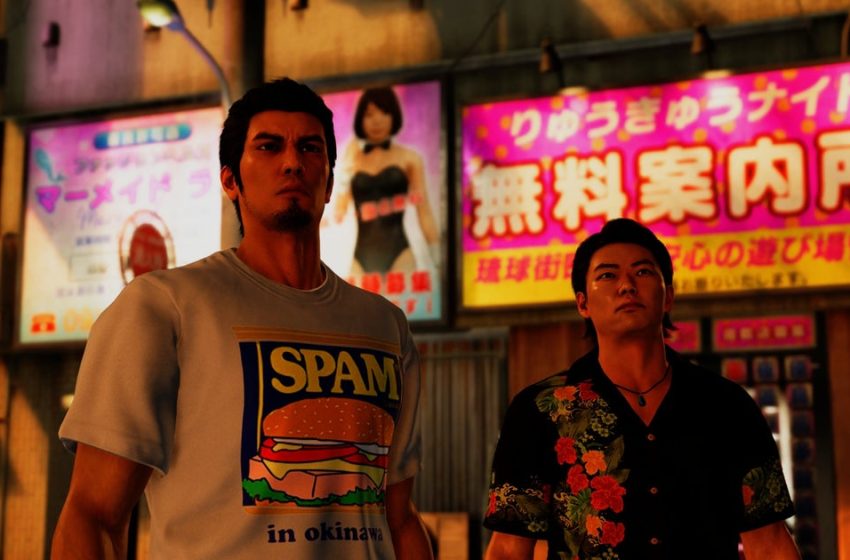
Yakuza Kiwami 3 & Dark Ties review – a stuffed remake defined by its own grim connections
Excuse me, coming through. I’m Kazuma Kiryu, and I’m on my way to speak to some gruff yakuza lads about what their local gang war means for my orphanage. You can tell I’m serious because I’m riding a prototype segway dressed in nothing but a swimming cap, goggles and shorts. Now move, I’ve goons to beat up at two, photos to take at three, a biker gang war to resolve at four, and I also need to somehow fit in time to run around town waving my flip phone at strangers.
Once that’s done, I’m all good to head home to the kids I’ve left unattended. There’s no time to kick back, though. Vegetables must be planted, fish caught, bags sewed, and homework helped with.
The early chapters of Yakuza Kiwami 3 feature a lot more busywork than the 2009 original. You are still playing ex-yakuza member Kazuma Kiryu coming out of retirement to protect his Okinawan orphanage. But you can barely move for introductions to minigames and sidequests. The main story beats are spaced out between hasty rundowns of the litany of extras developers RGG Studio have stuffed into the Yakuza 3 remake.
As with last year’s wonderfully-named spin-off Like A Dragon: Pirate Yakuza In Hawaii, a lot of these ancillary distractions are recycled from recent mainline entries Yakuza: Like A Dragon and Infinite Wealth. As with the piratical adventure, much of it doesn’t fit into Kiwami 3 seamlessly. While there are new activities that fit perfectly into Kiryu trying to establish and run an orphanage, sourcing the ingredients for the kids’ favourite foods or doing quizzes to help them with their homework, there’s also a generic biker gang war side quest that exists because every RGG game seemingly needs a gang battle mode and there was no excuse to get 16th century galleons involved this time.
The less-tailored additions aren’t all bad – the Aloha Links-style social network lifted from Pirate Yakuza and Infinite Wealth at least brings customisable flip phones you can cover in rhinestones and tacky stickers, which I very much loved. But the (infinite) wealth of additions makes for a more distracted game than the original Yakuza 3.
It’s a shame that, in remaking Yakuza 3, RGG Studio have added gubbins, but done little to correct the original’s weaknesses. While the plot remains more focused than Yakuza 4 and Yakuza 5’s multi-protagonist romps, the story pales in comparison to the emotional weight of the original Yakuza and Yakuza 6. Kiryu’s story plays out over six games, so it’s difficult for mushy middle entries like part three to stand out, but that’s something which could have been addressed here.
While the plot remains fairly so-so, individual characters and relationships still strike a memorable chord, such as Kiryu’s bond with his ally Rikiya Shimabukuro. As you battle to save the orphanage, the latter’s youthful impetuousness gradually wears down Kiryu’s stoicism, exposing the veteran brawler’s heart of gold.
I can’t say the same of Kiwami 3’s villains, who struggle to stand out because of their sheer numbers. Arch-baddie Yoshitaka Mine fights for screentime with secondary baddies Goh Hamazaki, Tsuyoshi Kanda, and Andre Richardson. The struggle leaves all four men as one-dimensional and underdeveloped, even if the well-stocked rogues’ gallery they make up helps the world feel like a proper nest of vipers.
The new prequel episode that comes paired with Kiwami 3, Dark Ties, is RGG’s attempt to remedy that issue in Mine’s case. The former-CEO-turned-corporate head of the Hahuko Clan is ripe for this attention because of how stark a contrast his approach to life and crime is to that of Kiryu, despite the parallels in their upbringings. He’s a funhouse mirror reflection of the family-oriented big Kaz, warped by lonely and cynical bitterness. Dark Ties is only a short romp compared to the main game. Set entirely in the uber-familiar Yakuza series stomping ground of Kamurocho – based on the real world Tokyo district of Kabukichō – the episode opens with Mine losing his position as CEO at his company and the start of his career in crime. You’ll help him climb the ranks of the Tojo Clan to become one of its most ruthless lieutenants, responsible for bringing in much of the organisation’s cash.

In practice, climbing the corporate criminal ladder naturally means beating up a lot of people. Mine’s fighting style is a satisfying mix of takedowns and heavy punches that gain power as you charge up the Dark Ties meter – which, with its chained heart graphic, is possibly the most My Chemical Romance-ish HUD element ever devised. Oh, and you’ll also be chucking about Yakuza 0-worthy sums of cash. Mine’s talent for making money and complete disregard for sentimental yakuza traditions – like honouring alliances – allow him to climb the ranks swiftly. There is much more depth to his character than we ever saw in Yakuza 3, with his relationship with Tojo Clan chairman Daigo Dojima framing the story. Mine grapples with seeing the value in trusting Daigo over sticking to his own well-honed instinct to use people purely for self-interest and personal gain. However, even with this extra focus, RGG Studio make missteps. The story frequently jumps forward by weeks and months, leading Mine’s attitude and outlook to dramatically shift without the cooldown time they might be afforded in a slower burn narrative. Overall, though, the goal of giving players a better view of what makes him tick has been accomplished.
I’m less sure the conclusions to both Kiwami 3 and Dark Ties match this newly developed Mine – but I’ll leave that spoiler heavy discussion for a separate feature that will pop up on the site soon. I’ll confirm that Kiwami 3’s ending has been changed, but not in a way that I see as fatally detrimental to that specific game’s story.
My main issue with Dark Ties is that Mine’s storyline comes with an expansion of Tsuyoshi Kanda’s role. A secondary antagonist in Yakuza 3 and Kiwami 3, Kanda is a one-dimensional, violent sexual predator, but in Dark Ties RGG Studio generally brush over the horrific aspects of his nature. Early in the episode, you prevent Kanda raping a woman in an alleyway, but from that point on he’s presented as a more palatable mixture of comic relief dumbass and treacherous manipulator desperate for power. While Mine spends 90% of the narrative treating Kanda with open disdain, usually expressed by thoughts delivered as bracketed asides which cut in during conversations between the two, you spend much of your time rehabilitating his image.
Fresh out of prison for sexual assault, Kanda wants to rise through the ranks of his clan, and for that he needs a better reputation. Mine, who’s intent on climbing the ranks himself, agrees to help him. The pair’s relationship grows more cordial as you work your way through the “bro time” bonding sessions unlocked via Kanda Damage Control, a mini-game that revolves around Mine doing good deeds under Kanda’s name to improve the odious gangster’s public reputation. Most of these good deeds are the sort of generic helping hand lending that Kiryu and other Yakuza goodies wouldn’t look out of place doing: go fetch this hungry worker a bento, beat up this rude salesman harassing passersby, hunt down a car burglar, expose some police corruption.

One of the longer good deed missions stands out from the rest, though.
You’re told that one of Kamurocho’s brothels has asked for help with an aggressive customer. Despite being banned, the customer keeps forcing his way in. The joke is that Mine’s almost certain from the outset that the customer in question will turn out to be Kanda. You head to the brothel and the proprietor gives you a description of the culprit which mirrors Kanda’s appearance. So, filled with dread, Mine takes on a shift as the place’s bouncer, choosing whether to let in customers. Eventually, a random man who looks exactly like Kanda turns up and Mine beats him up, relieved that he’s not going to have to stop his workmate and friend with a history of sexually assaulting women from doing so again. The entire mission is played for laughs with the typical wacky Yakuza substory tone, but left a bad taste in my mouth. Even putting any Kanda-specific issues aside, RGG’s choice to cast actor Teruyuki Kagawa in the role of Kiwami 3 antagonist Hamazaki despite a 2022 newspaper report accusing him of sexual assault adds an inescapable extra level of discomfort to instances like this in Yakuza Kiwami 3 and Dark Ties.
Even if RGG Studio somehow developed Kanda with the nuance necessary to turn him into a flawed ally you could comfortably spend “bro time” with in a Soapland brothel, there’s another barrier. Kanda’s role in Kiwami 3 doesn’t change. He’s still a power-hungry and sex-crazed punching bag for Kiryu. As Dark Ties takes place prior to those events, reforming Kanda wouldn’t mesh with his presentation in the mainline entry. Outside of totally rebooting the character – which the developers certainly could and I think should have taken this opportunity to do – you’re left with this spin-off arc which feels like it wants Mine to hang out with Kanda just so RGG can make jokes about the sex pest getting angry when women find his asexual business partner more attractive.
That Kanda/Kagawa cloud hangs over Dark Ties and Kiwami 3, and expanding Yakuza 3 with minigames taken from later Like A Dragon games does nothing to dispel it. One moment, you can be merrily mashing away at baddies in the biker battles as the co-boss of a girl gang – which would feel refreshingly progressive in any other Like A Dragon game – but in the next you might need to consider adding Kanda and Hamazaki to your squad in order to win the next scrum. Yakuza Kiwami 3 & Dark Ties is a serviceable remake in a vacuum, but it doesn’t exist in isolation. Quirky charm and moreish busywork can’t distract from RGG’s questionable attitude to sexual assault.
First Appeared on
Source link






