


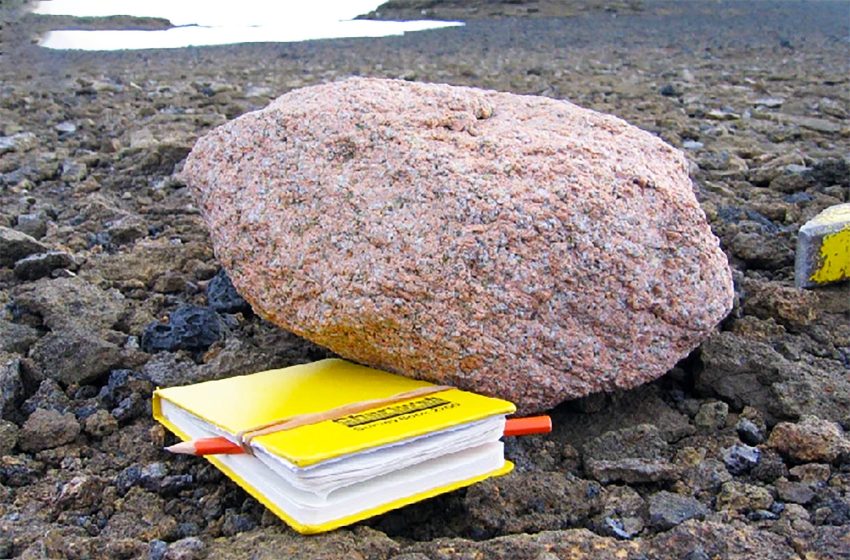
Pink rocks lead to the discovery of a massive structure in Antarctica
Antarctica looks like a clean white ice sheet from far away, but the important action happens deep down under the surface. There, the ice meets rock, water, and sediments. That contact zone controls how fast a glacier moves and how easily it can change speed.
Recently, scientists uncovered a big secret that Antarctica has been hiding – a giant granite deposit buried beneath the Pine Island Glacier.
What began as a mystery involving a few strange pink boulders turned into a major geological revelation.
The discovery not only answers old questions but also changes how we see the frozen continent’s past and its future.
Antarctica’s pink granite mystery
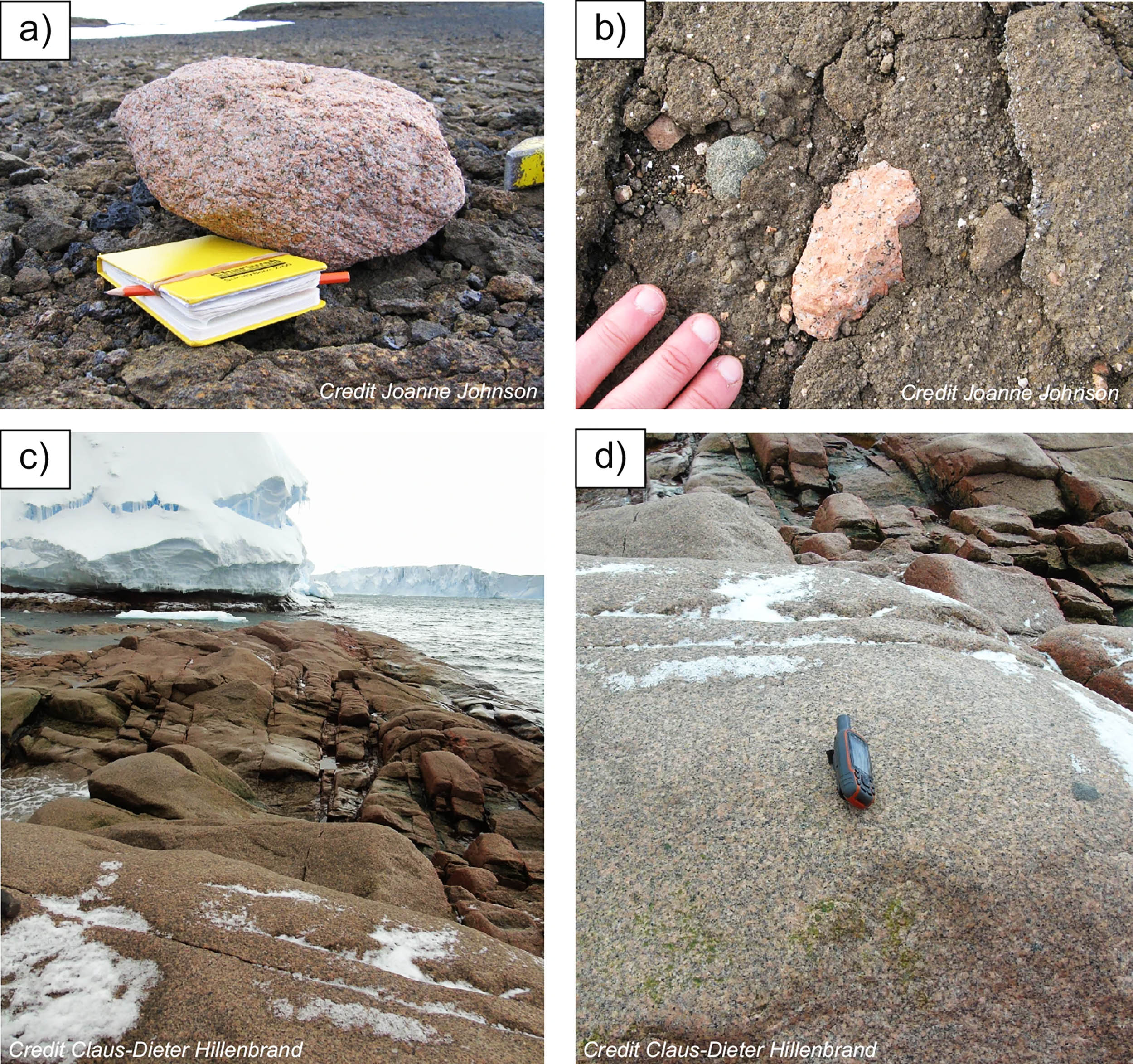
In the Hudson Mountains, pink granite boulders sit scattered among dark volcanic rocks. Their color stands out like a clue left behind. For decades, no one knew how these boulders ended up there.
A team from the British Antarctic Survey (BAS) decided to find out. By measuring radioactive decay inside tiny mineral crystals, the scientists discovered that the granites formed around 175 million years ago during the Jurassic period.
That explained their age but not their location. The boulders didn’t belong on those mountains. Something had moved them – something massive.
Giant rock formation under the ice
The answer came from above. Aircraft equipped with gravity sensors flew over Pine Island Glacier and detected a strange signal beneath the ice.
The data revealed a hidden granite deposit almost 100 kilometers (62 miles) wide and seven kilometers (4.3 miles) thick – about half the size of Wales. It lay buried deep beneath the glacier, unseen for millions of years.
“It’s remarkable that pink granite boulders spotted on the surface have led us to a hidden giant beneath the ice,” said Dr. Tom Jordan, lead author and geophysicist at BAS.
“By combining geological dating with gravity surveys, we’ve not only solved a mystery about where these rocks came from, but also uncovered new information about how the ice sheet flowed in the past and how it might change in the future.”
Those words capture the excitement of the find. The boulders weren’t random. They were fragments from this underground giant, carried to the mountains by ancient ice.
Glacier’s hidden strength
Thousands of years ago, during the last ice age, the Pine Island Glacier was thicker and far more powerful than it is today.
It tore rocks from the granite bed below, moved them across the landscape, and dropped them on the Hudson Mountains as the ice thinned. Each boulder now marks where the glacier once stood.
These clues help scientists rebuild the glacier’s history. They feed this data into computer models that predict how the ice might move in the future.
Accurate models matter because Pine Island Glacier is one of Antarctica’s fastest-melting regions. What happens there affects sea levels worldwide.
How pink granite shapes Antarctica
The buried granite doesn’t just belong to the past – it shapes the present too. The type of rock under a glacier determines how the ice moves and melts.
Granite can create friction that slows the sliding ice, while meltwater channels beneath it can make the ice flow faster.
Understanding this hidden foundation helps scientists explain why Pine Island Glacier is losing ice so rapidly.
This discovery also improves models that simulate future sea level rise. Each new piece of data makes predictions more reliable and gives coastal communities a clearer picture of what’s coming.
Boulders record our planet’s history
Dr. Joanne Johnson, a geologist at BAS and co-author of the study, helped collect the boulders during fieldwork in the Hudson Mountains.
“Rocks provide an amazing record of how our planet has changed over time, especially how ice has eroded and altered the landscape of Antarctica,” she said. “Boulders like these are a treasure trove of information about what lies deep beneath the ice sheet, far out of reach.”
“By identifying their source, we have been able to piece together how they got to where they are today, giving us clues about how the West Antarctic Ice Sheet may change in future – information that is vital for determining the impact of sea level rise on coastal populations around the world.”
Deep ice and pink granite
Pine Island Glacier sits in a region where small changes can trigger large responses. Ice flow depends on the slope of the bed, the roughness of the rock, the presence of water, and the type of sediment the ice grinds up.
Knowing whether the bed includes a large granitic block helps scientists narrow down those conditions.
This study shows how researchers find ways to conduct field work in places they cannot directly reach. They combined the physical samples that ice leaves behind with wide-area geophysical measurements.
Together, those tools improve the “under-the-ice map” that scientists rely on when they try to explain past glacier behavior and estimate what might come next.
Geology revealed the rocks’ origin, while geophysics uncovered the structure hidden below, turning a small mystery into a major discovery.
The pink granite boulders are more than chunks of stone on a frozen mountain. They connect Earth’s fiery beginnings to its icy present.
The study is published in the journal Communications Earth & Environment.
—–
Like what you read? Subscribe to our newsletter for engaging articles, exclusive content, and the latest updates.
Check us out on EarthSnap, a free app brought to you by Eric Ralls and Earth.com.
—–
First Appeared on
Source link






