


Politics Take Center Stage at the Berlinale as Social Media Backlash Looms
The Berlinale has always worn its politics proudly. Conceived in 1950 by American film officer Oscar Martay as a cultural bulwark in a divided city, the festival was designed as a “showcase of the free world,” a celebration of artistic freedom meant to stand in sharp contrast to life just beyond the Iron Curtain. Over the decades, Berlin has largely embraced that heritage — backing Iranian protesters during the Woman, Life, Freedom movement, condemning Russia’s invasion of Ukraine and offering a platform to Ukrainian filmmakers in exile.
This year, however, politics threatens to overwhelm the festival itself. In press conference after press conference, talent has found itself fielding questions less about their films than about Gaza, German state funding and the return of Donald Trump to the White House. What was once a forum for engaged — sometimes heated — debate has, critics argue, become a stage for viral confrontation.
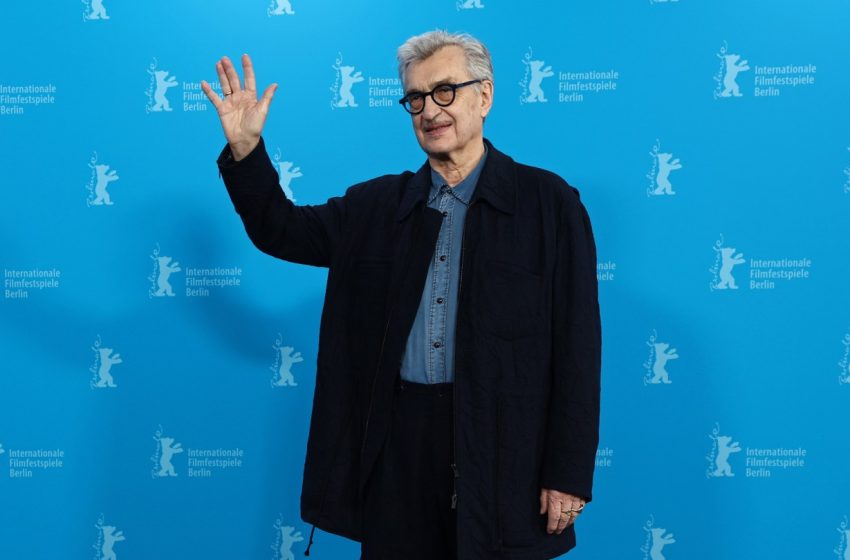
The flashpoint came at the first press conference on Thursday, when Berlinale jury president Wim Wenders was asked (by activist German blogger Tilo Jung) whether Germany’s support for Israel — and its financial backing of the Berlinale — compromised the festival’s freedom of expression. The premise: was the festival being muzzled?
“We have to stay out of politics,” Wenders replied. “If we make movies that are dedicatedly political, we enter the field of politics. But we are the counterweight to politics.”
The answer detonated almost immediately. Acclaimed Indian author Arundhati Roy pulled out of a scheduled Berlinale appearance, calling the jury’s remarks “unconscionable.”
“To hear them say that art should not be political is jaw-dropping,” Roy wrote. “It is a way of shutting down a conversation about a crime against humanity even as it unfolds before us in real time.”
Berlinale organizers said they “respect this decision” and “regret that we will not welcome her as her presence would have enriched the festival discourse.”
Wenders was hardly alone in trying to deflect political crossfire.
Honorary Golden Bear recipient Michelle Yeoh was pressed within minutes of her official press conference about the U.S. political landscape. “I don’t think I am in the position to really talk about the political situation in the U.S.,” she said, pivoting back to cinema.
Neil Patrick Harris, in Berlin with the Generation title Sunny Dancer, faced pointed questions about American democracy and healthcare systems. “While I have my own political opinions,” Harris said, “I never read this script as a political statement.”
Some embraced the politics. Finnish director Hanna Bergholm wore a watermelon pin in support of Palestine, at the press conference for Nightborn, her new feature starring Rupert Grint.
“As grown-up human beings, I think we have a responsibility to speak up against violence and against injustice, because not speaking up is also a choice,” she said.
For longtime Berlin observers, it’s not the presence of politics that feels new — it’s the framing.
“Politics is always fair game,” says Deborah Cole, Berlin-based correspondent for The Guardian. “But there is usually some relationship between the subject matter of the film and then the questions delving into the views of the cast and the director as to how they see issues related to the film that they’re presenting.”
In Wenders’ case, she notes, the question about German funding was built around the assumption that the festival was being silenced. “I don’t have the sense that free speech at the Berlinale this year is under attack,” she says. She compares the situation to 2024 when the Israeli-Palestinian documentary No Man’s Land, which chronicles Israeli settler violence against Palestinians in the West Bank, won the festival’s best documentary prize.
“Afterwards, you had politicians attacking the people who expressed their political views on stage. The directors, who had made the film about this subject. I found that to be beyond the pale,” says Cole. “This is not that.”
She argues the shift is partly technological. “It feels like a mix of technology and activism,” Cole says. “The idea is to produce short clips that go on social media and often without context. .. If you look at the aftermath, how [the Wenders clip] was posted and talked about on social media, there did seem to a gotcha element to it.”
Similars with Wenders, the “no politics” comments by Yeoh and Harris have been turned into online rage bait clogging social media feeds.
The festival issued a statement late Saturday in response to the viral backlash.
“As we enter the first 48 hours of this year’s Festival, a media storm has swept over the Berlinale,” it reads. “We feel it is important to speak out – in defense of our filmmakers, and especially our Jury and Jury President. Some of what is currently circulating takes remarks from press conferences detached not only out of context of the full conversations but also from the lifetime of work and values these artists represent.”
In a statement, Berlinale director Tricia Tuttle noted that “people have called for free speech at the Berlinale. Free speech is happening at the Berlinale. But increasingly, filmmakers are expected to answer any question put to them. They are criticized if they do not answer. They are criticized if they answer and we do not like what they say. They are criticized if they cannot compress complex thoughts into a brief sound bite when a microphone is placed in front of them when they thought they were speaking about something else.”
Tuttle added it was “hard to see the Berlinale and so many hundreds of filmmakers and people who work on this festival distilled into something we do not always recognize in the online and media discourse.”
She reiterated that at the Berlinale all “artists are free to exercise their right of free speech in whatever way they choose. Artists should not be expected to comment on all broader debates about a festival’s previous or current practices over which they have no control. Nor should they be expected to speak on every political issue raised to them unless they want to.” (You can read the full statement below).
Onscreen, the Berlinale remains as politically engaged as ever.
The festival opened with Afghan director Shahrbanoo Sadat’s No Good Men, following a female camerawoman navigating life and work in Kabul — a selection with an unmistakable geopolitical echo.
Iran, long a focal point of Berlinale activism, features prominently across the 2026 lineup. Mahnaz Mohammadi’s Panorama title Roya centers on an Iranian teacher imprisoned in Tehran’s Evin Prison and forced to choose between a televised confession and indefinite confinement in her three-square-meter cell. In Generation, Mehraneh Salimian’s documentary Memories of a Window examines the crackdown on student protests in Iran.
On opening night, Iranian creatives walked the red carpet holding “Free Iran” signs. On Friday, the Iranian Independent Filmmakers Association staged a performance at Potsdamer Platz, with volunteers lying flat on the ground to symbolize those killed during the January 2026 protests.
“It’s just here to emphasize the Iranian corpses left alone on the streets,” said IIFMA editor-in-chief Amirata Joolaee. “Most people were banned. They were restricted. They couldn’t go there to collect their own beloved ones’ corpses.”
The political stakes are not abstract. Two Iranian filmmakers — Maryam Moghadam and Behtash Sanaeeha, whose My Favourite Cake won the FIPRESCI Prize and Prize of the Ecumenical Jury at the 2024 Berlinale — remain detained in Iran.
In other words, Berlin is still programming political cinema and providing space for political expression. The question is whether the climate around the press conferences is beginning to undermine that mission.
Brit pop star and actress Charli xcx, in town to present her mockumentary The Moment, with director Aidan Zamiri, lauded the festival for “not shying away from political films, from films that have a real social angle, from films by directors who really are visionary and have something to say.”
“The very sad irony,” Cole says, “is that this can be one of the things that clamps down on free speech as well. People fear that they are going to be skewered on social media immediately, and so will either opt not to attend or opt not to speak at all.”
If filmmakers begin to see Berlin less as a platform and more as a trap for viral “gotcha” moments, she warns, the consequences could be severe. “If it’s adversarial, and this adversarial targeting takes place,” Cole says, “I think it could be the beginning of the end of something.”
Full statement by Berlinale Director Tricia Tuttle
On Speaking, Cinema and Politics
noted by Tricia Tuttle
There are many different kinds of art, and many different ways of being political. Individual approaches vary greatly.
People have called for free speech at the Berlinale. Free speech is happening at the Berlinale. But increasingly, filmmakers are expected to answer any question put to them. They are criticised if they do not answer. They are criticised if they answer and we do not like what they say. They are criticised if they cannot compress complex thoughts into a brief sound bite when a microphone is placed in front of them when they thought they were speaking about something else.
It is hard to see the Berlinale and so many hundreds of filmmakers and people who work on this festival distilled into something we do not always recognise in the online and media discourse. Over the next ten days at the Berlinale, filmmakers are speaking constantly. They are speaking through their work. They are speaking about their work. They are speaking, at times, about geopolitics that may or may not be related to their films. It is a large, complex festival. A festival that people value in so many different ways and for so many reasons.
There are 278 films in this year’s programme. They carry many perspectives. There are films about genocide, about sexual violence in war, about corruption, about patriarchal violence, about colonialism or abusive state power. There are filmmakers here who have faced violence and genocide in their lives, who may face prison, exile, and even death for the work they have made or the positions they have taken. They come to Berlin and share their work with courage. This is happening now. Are we amplifying those voices enough?
There are also filmmakers who come to the Berlinale with different political aims: to ask how we can talk about art as art, and how we can keep cinemas alive so that independent films still have a place to be seen and discussed. In a media environment dominated by crisis, there is less oxygen left for serious conversation about film or culture at all, unless it can be folded as well into a news agenda.
Some films express a politics with a small “p”: they examine power in daily life, who and what is seen or unseen, included or excluded. Others engage with Politics with a capital “P”: governments, state policy, institutions of power and justice. This is a choice. Speaking to power happens in visible ways, and sometimes in quieter personal ones. Across the history of the Berlinale, many artists have made human rights central to their work. Others have made films which we see as quietly radical political acts which focus on small, fragile moments of care, beauty, love, or on people who are invisible to most of us, people who are alone. They help us make connections to our shared humanity through their movies. And in a broken world this is precious.
What links so many of these filmmakers at the Berlinale is a deep respect for human dignity. We do not believe there is a filmmaker screening in this festival who is indifferent to what is happening in this world, who does not take the rights, the lives and the immense suffering of people in Gaza and the West Bank, in the Democratic Republic of the Congo, in Sudan, in Iran, in Ukraine, in Minneapolis, and in a terrifying number of places, seriously.
Artists are free to exercise their right of free speech in whatever way they choose. Artists should not be expected to comment on all broader debates about a festival’s previous or current practices over which they have no control. Nor should they be expected to speak on every political issue raised to them unless they want to.
We continue to do this work because we love cinema but we also hope and believe watching films can change things even if that is the glacial shift of changing people, one heart or mind at a time.
We thank our team, guests, juries, our filmmakers, and the many others engaged with the Berlinale for cool heads in hot times.
February 14, 2026
First Appeared on
Source link






