


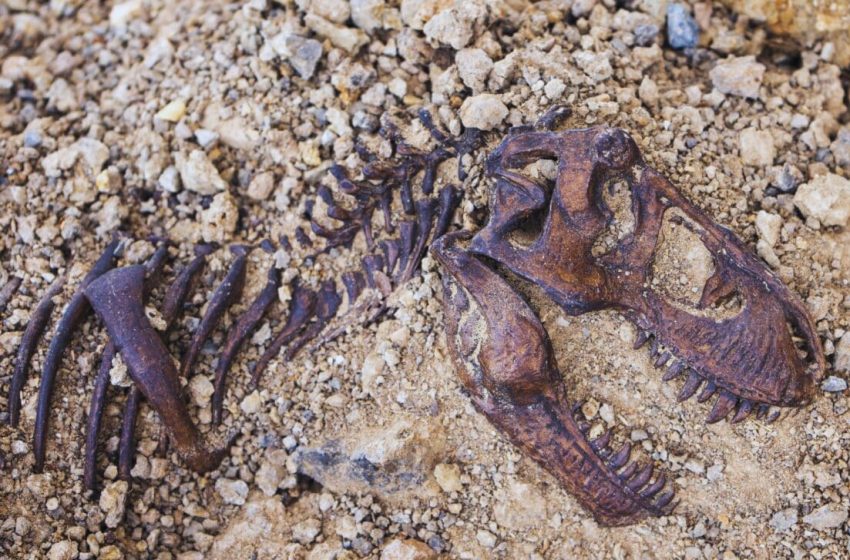
T. rex’s Growth Took Longer Than Anyone Ever Imagined. Here’s What Scientists Found
For decades, scientists believed that Tyrannosaurus rex reached its full size by the age of 25. However, new research has revealed that the iconic dinosaur likely required more time to reach its massive weight of eight tons.
Paleontologists have long studied growth rings found in dinosaur bones, much like the rings inside a tree trunk, to estimate their age and growth patterns. Past research suggested that T. rex, known for its immense size, matured in just 25 years. Yet, according to a new study published in PeerJ, the analysis of 17 Tyrannosaurus specimens points to a much slower and prolonged growth process.
This new study, led by Oklahoma State University’s Holly Woodward, provides the most comprehensive understanding of T. rex’s growth to date, using innovative imaging and statistical techniques.
Advanced Imaging Reveals Hidden Growth Rings
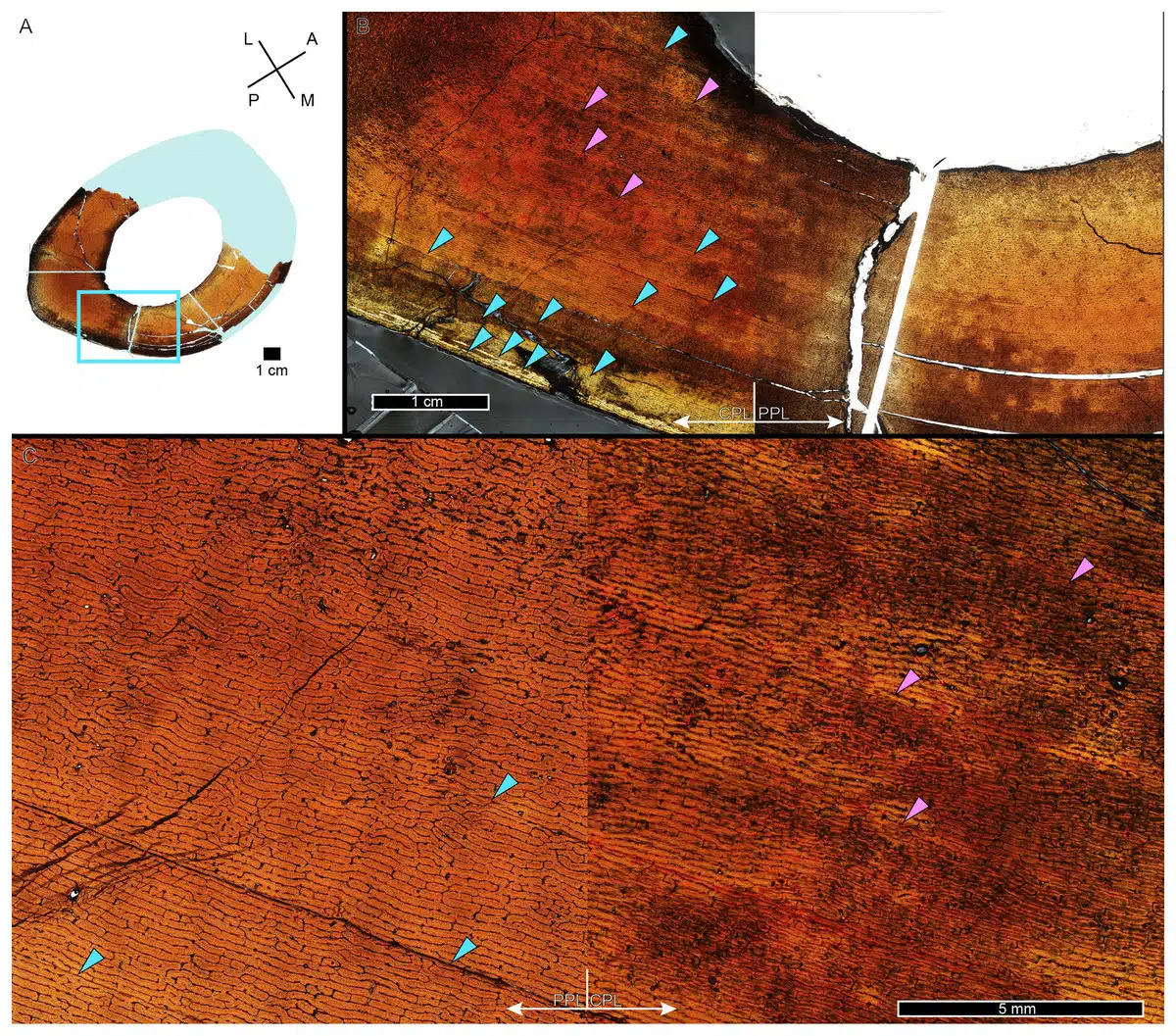
A crucial element of the study was the use of advanced imaging techniques to analyze fossilized leg bones from multiple T. rex specimens. By applying polarized light, researchers uncovered growth rings that had previously been overlooked by traditional methods.
“This is the largest data set ever assembled for Tyrannosaurus rex,” said Holly Woodward. “Examining the growth rings preserved in the fossilized bones allowed us to reconstruct the animals’ year-by-year growth histories.”
This technique allowed scientists to create a more detailed and accurate growth curve, extending the knowledge of how the dinosaurs grew over their lifespans.
What Role Did It Play in Its Ecosystem?
According to the study, T. rex did not grow quickly, but instead expanded over several decades. The dinosaur’s gradual growth process likely spanned roughly 40 years, much longer than previously believed. This extended period of maturation could have had important ecological implications, particularly in how these dinosaurs interacted with their environment and other species.
Co-author Jack Horner, from Chapman University, suggested that the longer growth phase may have allowed young T. rex to occupy different ecological roles.
“A four-decade growth phase may have allowed younger tyrannosaurs to fill a variety of ecological roles within their environments,” Horner explained. “That could be one factor that allowed them to dominate the end of the Cretaceous Period as apex carnivores.”
Instead of all age groups of T. rex fighting for the same resources, they might have had different roles in their ecosystems, which could have helped the species thrive.
Could There Be More Than One Species?
While Tyrannosaurus rex is the most well-known species in its group, the study also raises questions about the classification of some fossils. Researchers found that some specimens, including famous fossils known as “Jane” and “Petey,” showed growth patterns that differed significantly from those of other T. rex specimens. This has led some paleontologists to suggest that these fossils may represent a separate species, possibly a close relative known as Nanotyrannus.
This idea is still being debated, but the differences in the growth patterns of these specimens give us something to think about. A study by paleontologists Zanno and Napoli also suggests that ‘Jane’ and ‘Petey’ might be part of a different species within the tyrannosaur group. While we still need more research to be sure, these findings hint that the T. rex family tree might be a lot more complicated than we thought
First Appeared on
Source link






