


Iran war: What rising oil prices mean for the economy
President Donald Trump continues to give mixed messages about the war in Iran. But what is clear is the impact that the conflict is already having on the US and global economies.
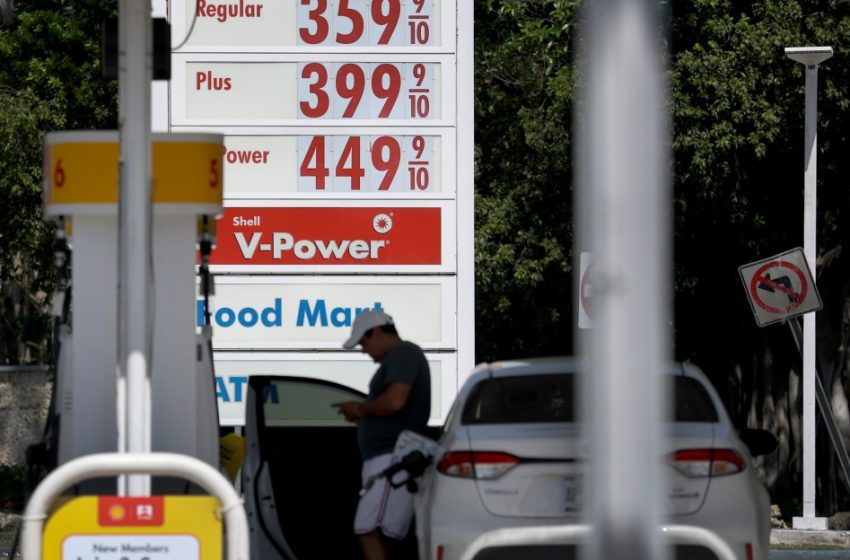
Oil prices, which briefly crested $100 a barrel on Monday, are higher than we’ve seen in years. People are already seeing the impact at the pump, with average gas prices above $3.50 per gallon. But the impact doesn’t stop there: It also means that the price of, well, everything, can go up.
Mike Bird, Wall Street editor for The Economist, told Today, Explained co-host Noel King that higher prices, if they endure, are likely to cause a problem for Trump and the GOP in the approaching midterm elections.
Below is an excerpt of Bird’s conversation with Today, Explained, edited for length and clarity. There’s much more in the full episode, so listen to Today, Explained wherever you get podcasts, including Apple Podcasts, Pandora, and Spotify.
Is the war in Iran already affecting the US economy?
Yes, is the short answer. Oil prices move very quickly to account for future conditions and current conditions, and that is fed almost immediately into gas prices. If you own a car, if you’ve been to fill it up recently, you will have noticed it was more expensive than the last time.
People who spend money on gas have less money to spend on other things. That also feeds into all manner of other things but the most visible immediate term impact is on gas prices.
Why don’t we go into all manner of other things while we’re here?
Energy’s an input good. The amount of energy you consume is mostly not in the form of gasoline. It’s embodied in products in all sorts of things that you purchase, even things that you wouldn’t consider as being energy intensive.
Agricultural goods require fertilizer, they require tractors. Everything that’s manufactured, it’s made somewhere and uses some amount of energy. So the feed-through from energy prices really hits every consumer item. Almost everything is affected by energy.
How long does it take? If I were to go to the grocery store today, am I going to find that eggs and vegetables are more expensive?
You probably wouldn’t find that immediately, if only because a lot of the supply chain activity around what you see in the store today will have begun before the attacks on Iran began.
These things feed through with a long and variable lag time. Some things will be appreciating relatively soon in the store and some things it might take months, maybe even more than a year.
“From an affordability perspective, this is now the second major supply shock caused directly by actions that the administration’s taken.”
If you imagine something like fertilizer costs, which are very closely pegged to the price of oil, [they] affect the amount of food produced in various parts of the world. You won’t start to see those lower amounts of food produced for quite a long time and the price effects won’t be seen for quite a long time.
What about the markets? The markets, fair to say, are kind of always whipsawing, but [they] always go back up, right?
Markets tend to, in the long term, go back up. It’s just whether you can see it through to the long term. There are not many extended periods — say, 10 years — in American equity market history where you weren’t looking at positive returns afterwards. There are a couple, most of them quite a long time ago.
There’s been a lot going on in markets already this year. It’s been generally down the past few days because of all of this volatility.
The bigger question is, is this something that’s going to be over by the end of the week and there’s going to be an embarrassing withdrawal and a walkback? Or is it something we’re going to be talking about in six months time?
Now we should talk about President Trump. What do we hear him saying about his war with Iran and his affordability agenda?
There’s been a lot of muddled communication from the White House over the past few days when it comes to oil prices. The president has asked investors and the American public to look through what he calls short-term effects.
One thing we did see with the tariffs last year is there is this idea that the market is a disciplining factor on the president — that basically, he doesn’t like seeing the red line go down, that there is only so much of the sort of negative press that he’s willing to put up with.
Last year, it allowed for the reduction of tariffs. The tariffs didn’t go away. Obviously the tariffs [are] still really largely in place by various means. So what that means for something as complicated as this, because it’s a military endeavor, is very unclear.
Let’s say we want to envision a world where we can get oil prices back down to where they were three weeks ago. What has to happen?
The main question in terms of how quickly things go back to normal is how long this goes on in the first place. The longer it goes on, the more difficult it becomes to get this production all going again.
You can’t just switch it on and off overnight. You don’t have all the workers required ready to go. If it does drag into weeks and months, I think it’s not a linear process. It can get worse and worse depending on how long it lasts.
How do we see the president’s critics seizing on his refusal to acknowledge that he has not provided an end in sight at this point?
From an affordability perspective, this is now the second major supply shock caused directly by actions that the administration’s taken.
In terms of the president’s opponents and critics, the most important thing to start thinking about is how much this affects the midterm elections. If you see people paying significantly more for gas, seeing prices rise across the economy as they have for the past few years, that is going to be pretty bad for the Republicans electorally.
First Appeared on
Source link






