


The Nine Biggest Takeaways From the First Wave of NFL Free Agency

NFL teams were busy during the first 24 hours of the free agency negotiating period, with 31 of The Ringer’s top 50 free agents agreeing to new deals within the first 24 hours. With all the movement happening across the league, here are my nine takeaways from the busy start to the offseason.
The Rams are all in on Super Bowl LXI.
The Rams were already a bona fide contender entering the offseason, but their moves have cemented them as a team to beat in the race to next season’s Super Bowl. Their trade for former Chiefs cornerback Trent McDuffie last week instantly reminded me of the Jalen Ramsey trade in 2019, a move that helped the Rams defense make the leap before their eventual Super Bowl run in the 2021 season. And on Monday, the Rams doubled down on improving the secondary by signing McDuffie’s former Chiefs teammate Jaylen Watson to a three-year deal worth $51 million.
The moves addressed the team’s biggest weakness after the underwhelming duo of Emmanuel Forbes and Cobie Durant had started at corner in 2025. Now they have two physical and versatile defensive backs to play on the perimeter. McDuffie can be used in the slot, as a defender in the run game, and as a blitzer. He is just 25 years old, so his prime years will be played on his new $124 million extension over the next half decade. Los Angeles led the league in snaps played with six or more defensive backs on the field last year, so we should expect to see both Watson and McDuffie highlighted in Chris Shula’s scheme.
The Rams should once again have one of the league’s most efficient offenses (as long as quarterback Matthew Stafford is healthy), and now that offense is supported by what should be one of the best defenses in the league.
The Ravens are all in, too.
Baltimore’s trade for edge rusher Maxx Crosby was agreed to a couple of days before the tampering period opened, and this might be the most impactful move made in the AFC this offseason. Baltimore deviated from its decades-long strategy of not trading its first-round picks for players when it chose to part with two firsts in the hopes of maximizing its chances to build an elite defense and win a title within the next couple of seasons.
This trade was inspired, but it isn’t without its potential land mines. Unlike the Rams’ trade for McDuffie, a young and ascending player, the Ravens are getting Crosby, 28, when he is at the tail end of his prime and has a lot of mileage on his body, given how many snaps he’s played. Crosby is just one of four players with more than 2,000 pass rush snaps since 2022, and it’s possible that his body will start breaking down once he enters his 30s.
But Crosby’s upside is tantalizing. And for the first time in his career, he will be on a team with a star quarterback and other All-Pro-caliber talent on defense. He also won’t be asked to swing the balance of a game single-handedly. Crosby gives the Ravens legit pass rushing juice they haven’t had since edge rusher Terrell Suggs departed in 2018. The Ravens paid a big price to get Crosby—and hopefully get past star quarterbacks like Josh Allen, Joe Burrow, Drake Maye, and Patrick Mahomes in high-leverage games in the AFC.
The league wisely slow played the quarterback market.
Before the negotiating period opened on Monday, it seemed like quarterback Malik Willis might land a contract paying north of $30 million per year, thanks to a bidding war among QB-needy teams like the Dolphins and Cardinals and the weak class of available starting-caliber quarterbacks.
Instead, hours after Miami released Tua Tagovailoa, it reached an agreement with Willis on a three-year deal worth $67.5 million. At $22.5 per year, he’s making only slightly more than Justin Fields is with the Jets. As of Tuesday morning, former Arizona QB Kyler Murray is still on the market and is reportedly being coveted by the Colts and the Vikings as a low-risk hedge against their incumbent quarterbacks, Daniel Jones and J.J. McCarthy. And there’s currently no traction for aging veterans like Geno Smith or Kirk Cousins, who seem more likely to be signed after the dust settles on all the major free agent acquisitions.
While this slow play means that there have been fewer gaudy contracts to ogle at, it’s probably a good thing for team building across the league and a sign that front offices might be learning the right lessons from the past few seasons. Teams like Detroit, Tampa Bay, Indianapolis, and Seattle have put together impressive runs without making big splashes at quarterback. A result is that there is a midtier quarterback market. And if Murray or Tagovailoa succeed at their next stops (more on Tagovailoa later), the league should continue to find opportunities for young cast-offs who need a change in scenery and less pressure to carry a franchise.
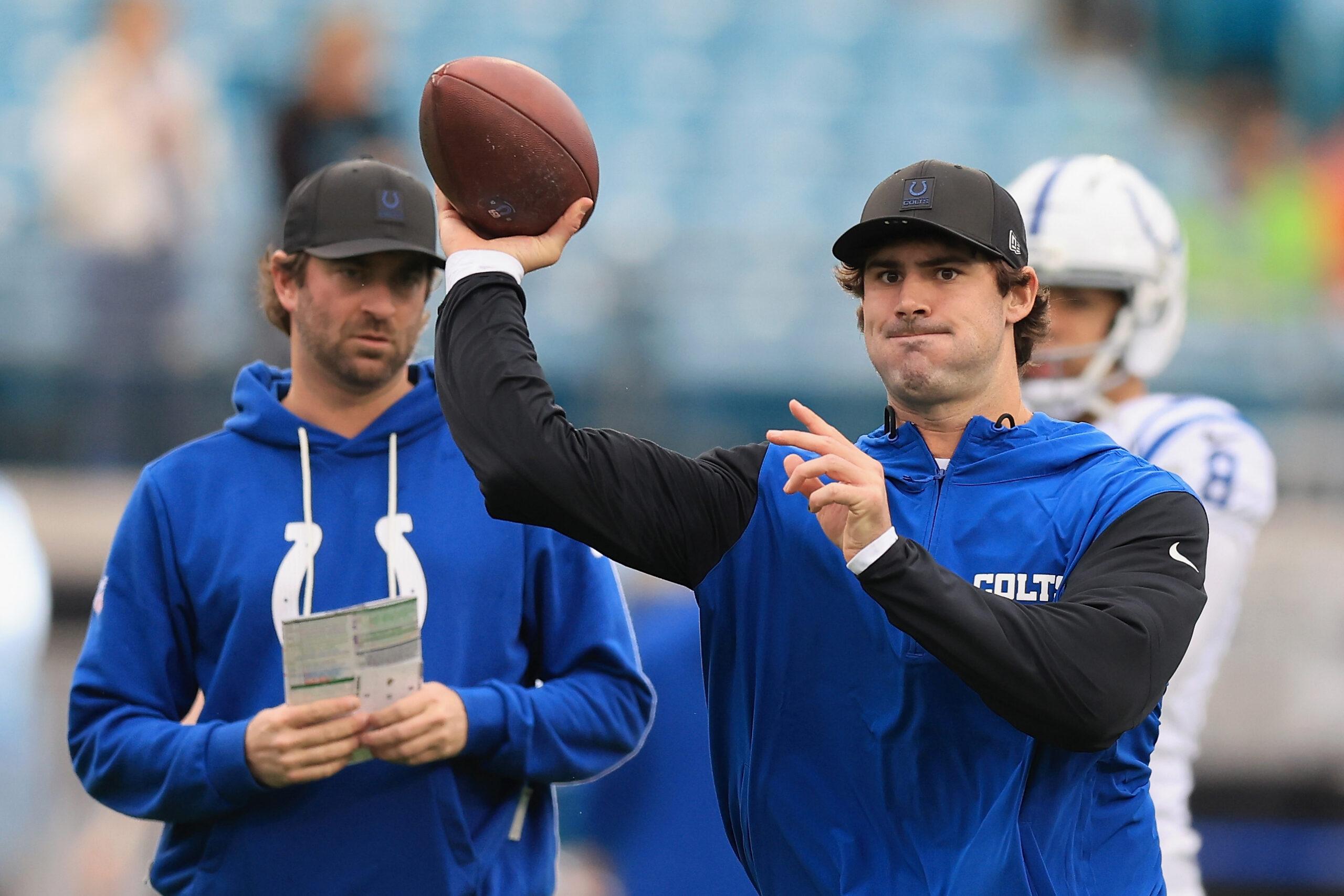
Daniel Jones before a game in Jacksonville
Chris Ballard has no leverage this offseason.
The biggest domino left in the quarterback market is a potential contract extension for Daniel Jones in Indianapolis. Sports Illustrated’s Albert Breer reported that both sides reached an impasse early in negotiations, with Jones seeking a deal that pays north of $50 million per season and the Colts offering something akin to quarterback Sam Darnold’s deal with the Seahawks, which is around $33.5 million per season.
Jones could be flexing some leverage here against Colts GM Chris Ballard, who is already locked in to the $37.8 million salary that comes with the transition tag the team placed on Jones earlier this month. Indianapolis doesn’t have the capital to find a long-term QB in the draft this year after trading for cornerback Sauce Gardner last year. In theory, the Colts could use Kyler Murray as a contingency plan if Jones holds firm on his contract demands. But the Colts have no control over negotiations with Murray, either, as several teams should be interested in him. And since he’s likely playing on a minimum deal next year anyway, Indianapolis doesn’t have any way to lure him financially.
This contract stare-down between Jones and the Colts isn’t in Indianapolis’s favor, and it will probably end with Jones getting the deal he’s looking for even though he tore his Achilles in the back half of last season.
The Colts’ expensive offseason doesn’t end there, either. Receiver Alec Pierce is returning to Indianapolis, but on a four-year deal at $116 million that places his annual contract value ahead of that of receivers like Tee Higgins, Jaylen Waddle, and Nico Collins. Allowing Pierce to test the market was a costly mistake for Ballard and Indianapolis, and now this team is paying nearly $30 million annually for a player who had just 47 receptions last season. Unless Pierce makes an All-Pro team in the next couple of years, we’re looking at a top-of-market deal for an excellent role player. I enjoy Pierce’s speed and contested-catch ability, but I’m glad I’m not the one cutting those checks.
To create enough cap space to tag Jones and retain Pierce, the Colts had to trade receiver Michael Pittman Jr. to Pittsburgh and let edge rusher Kwity Paye leave in free agency (he’s now signed with Las Vegas). While every contract decision may come at the cost of another player, it sure seems like the Colts are getting more spendy without getting any closer to contending.
Dallas and San Francisco, I see the vision!
For two totally separate reasons, I’m talking myself into buying playoff stock in the 49ers and Cowboys.
My optimism about San Francisco is because of its restraint at the start of free agency. The 49ers brought receiver Mike Evans in on a three-year, $60 million deal, but the contract’s guarantees are low, allowing the team to maintain long-term flexibility. That restraint is also apparent in its negotiations with left tackle Trent Williams, who wants a new deal but hasn’t been able to generate much traction with the 49ers on a contract. The 49ers seem to be practicing patience and trusting that head coach Kyle Shanahan can make a top 10 offense out of anything, even if he’s working with one of the oldest units in the league and is short on depth. It worked last season, even as the team dealt with a number of significant injuries. San Francisco seems content to ride out its aging offensive core for another year—but now with a true X receiver in Evans—before it reshuffles the deck in 2027 and beyond.
Dallas, on the other hand, is taking a “no weakness” approach to its roster. Its trade for Rashan Gary on Monday partially addresses its need for a legitimate high-impact player on the edge. By agreeing to terms with free agent safety Jalen Thompson, Dallas also gets another above-average player in the secondary. And Dallas still has the draft capital to add talent at cornerback and in the front seven in April.
If the offense stays as explosive as it was last year, the Cowboys will be a sneaky team to watch in the NFC race.
Tennessee and Las Vegas made identity-building moves.
The Titans and Raiders seem to understanded that they can’t build a sustained winner unless there’s enough support around their young quarterbacks.
The Titans are doing that on defense by adding free agent defensive tackle John Franklin-Myers and defensive backs Alontae Taylor and Cor’Dale Flott. Those additions should immediately make the Titans defense better equipped to stop the run and change up coverage looks on the perimeter. Every stop that unit gets will make life a little easier on second-year quarterback Cam Ward. Add in the trade for edge rusher Jermaine Johnson and this defense looks like it’s taking shape for head coach Robert Saleh.
Las Vegas, meanwhile, has taken steps toward competence on both sides of the ball, starting with a record-setting deal with center Tyler Linderbaum. Pro Football Talk’s Mike Florio reports that Linderbaum’s three-year, $81 million deal is functionally a fully guaranteed contract. Linderbaum will direct traffic in the run game and set protections for the presumed top pick, quarterback Fernando Mendoza. The Raiders have also added linebackers (and former University of Georgia teammates) Quay Walker and Nakobe Dean on three-year deals, receiver Jalen Nailor, edge rusher Kwity Paye, and cornerback Taron Johnson.
These moves alone don’t make the Raiders a serious team quite yet, but they fill roster holes and will help Las Vegas put a respectable product on the field. With a pair of first-round picks in each of the next two drafts, the Raiders don’t seem as hopeless as they did just a few months ago.
The Jets, on the other hand …
Several teams made curious decisions to open free agency. (I’m looking at the Bucs’ deal for running back Kenneth Gainwell in spite of how duplicative his style is with Bucky Irving. Or the $59 million extension the Steelers gave Pittman after acquiring him from Indianapolis. Or Wan’Dale Robinson getting $78 million from Tennessee.)
But nothing confounds me quite like the New York Jets after Monday’s transactions. Trading for safety Minkah Fitzpatrick, 29, is an inoffensive move on its face, even if he’s lost some of his game-warping instincts over the last season or two. But when you pair that move with acquiring 37-year-old linebacker Demario Davis and 33-year-old defensive tackle David Onyemata to be starters in 2026, I wonder about the Jets’ short- and long-term plans.
But even the younger guys New York plans to sign left me wanting. Edge rusher Kingsley Enagbare is a high-motor run stopper, but he gives little on passing downs—and new teammate Joseph Ossai is the inverse. That mix of play styles could make for an interesting edge rush rotation in Aaron Glenn’s defense, but both of those guys would benefit from playing alongside a star who could draw attention away from them and allow more one-on-one matchups. That’s something that New York’s current defensive lineup can’t offer.
Add in guards Alijah Vera-Tucker and John Simpson finding new homes, with the Patriots and Ravens, respectively, and the Jets now find themselves needing to overhaul the interior of their offensive line. Getting worse up front doesn’t help this team do anything but tank harder. If Jets fans aren’t totally bought in on New York’s race to the bottom of the standings, I would suggest divesting from this team entirely until the 2027 NFL draft.
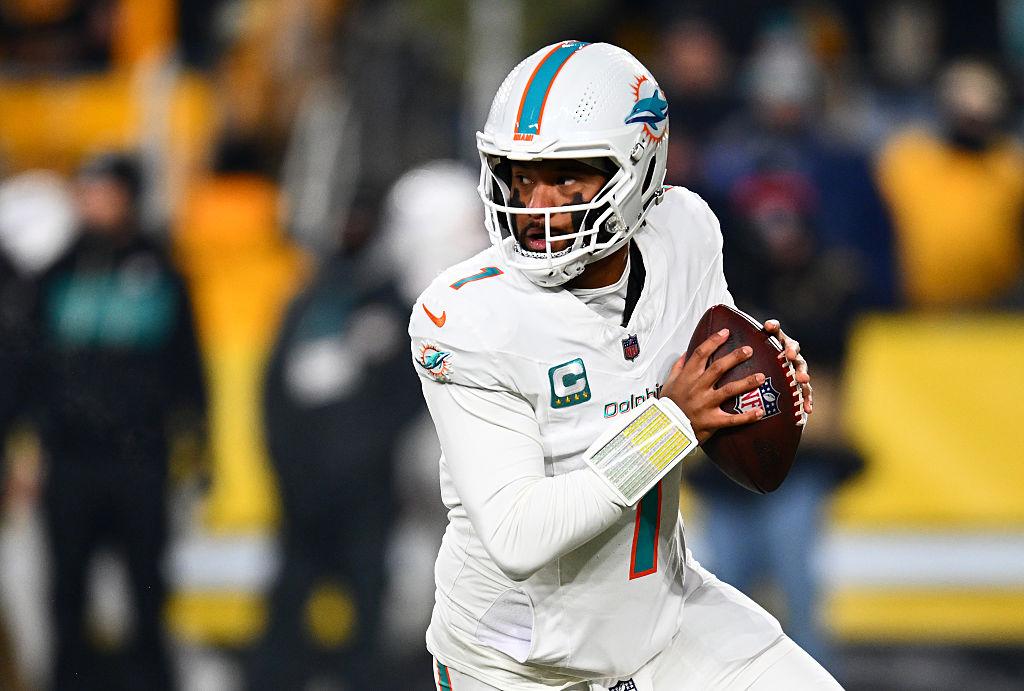
Tua Tagovailoa during a game against the Pittsburgh Steelers on December 15, 2025
Tua Tagovailoa found a safe landing.
For a long time, I believed the best job in football was backup quarterback. You can make great money with little in-game responsibility, and maybe even stick around long enough to become a fan favorite! But after the Dolphins cut quarterback Tua Tagovailoa (and for financial purposes designated him as a post-June 1 release, so that they can spread his $99 million cap hit over two years), I’m thinking that the best job is actually being a failed starting quarterback who gets paid to do nothing at all.
Tagovailoa quickly landed with the Falcons on a one-year deal for the veteran’s minimum. And after all the disappointment that came with his poor play and injuries, this was probably the happiest outcome for all parties involved.
Atlanta has more than enough talent around Tagovailoa to maximize his talent. If everything comes together, he could be the Daniel Jones of 2026. Tagovailoa landed in a low-stakes situation where he can rehabilitate his career. Falcons quarterback Michael Penix Jr. is recovering from a torn ACL, so Tagovailoa will have a clear runway to start at the beginning of the season without being saddled with any expectations to win right away. It’s not hard to picture him as a fit in Kevin Stefanski’s West Coast system, where he’ll be able to play within structure and feed his best receivers. That’s what the Falcons organization probably thought it would get from quarterbacks Desmond Ridder, Kirk Cousins, and Penix during the past five years. If Tagovailoa is good in that role, he could either be a midseason trade asset or he could take the job from Penix outright. And if he struggles in a new system, he’ll still be paid handsomely to be a journeyman.
I’m not in love with Kansas City’s 2026 plan.
The longer I look at Kansas City’s depth chart and its competition in the AFC West, the more I feel Chiefs optimism can be tabled until 2027.
Kansas City’s defense will probably take a step backward this season, and that alone probably will keep the Chiefs out of contention—even if quarterback Patrick Mahomes returns to full health. McDuffie, Watson, and safety Bryan Cook are all gone to new teams, and Kansas City still doesn’t have a premiere edge rusher. Defensive coordinator Steve Spagnuolo will need to be better than ever to maximize this unit, because there’s no star player outside of defensive tackle Chris Jones.
And on offense, I’m not sure why this offseason was the time to spend big on a running back. I enjoy Kenneth Walker III and think the Super Bowl LX MVP can bring an explosive rushing element that the Chiefs haven’t had in the Mahomes era, but a deal that pays Walker $14 million per year only makes sense if the Chiefs believe they’ll also have one of the five best offensive lines in the league, and if Mahomes is healthy enough to punish teams for loading the box to stop the run.
This doesn’t mean I’m completely selling my stock in the Chiefs; that would be foolish. Even during a disappointing 2025 season, the Chiefs still had one of the more efficient offenses in the league. But if I’m to give this team the benefit of the doubt befitting of a real contender, I’m going to have to see this roster make a major impression during the season.

Diante Lee
Diante Lee joined The Ringer as an NFL writer and podcaster in 2024. Before that, he served as a staff writer at The Athletic, covering the NFL and college football. He currently coaches at the high school level in his hometown of San Diego.First Appeared on
Source link






