


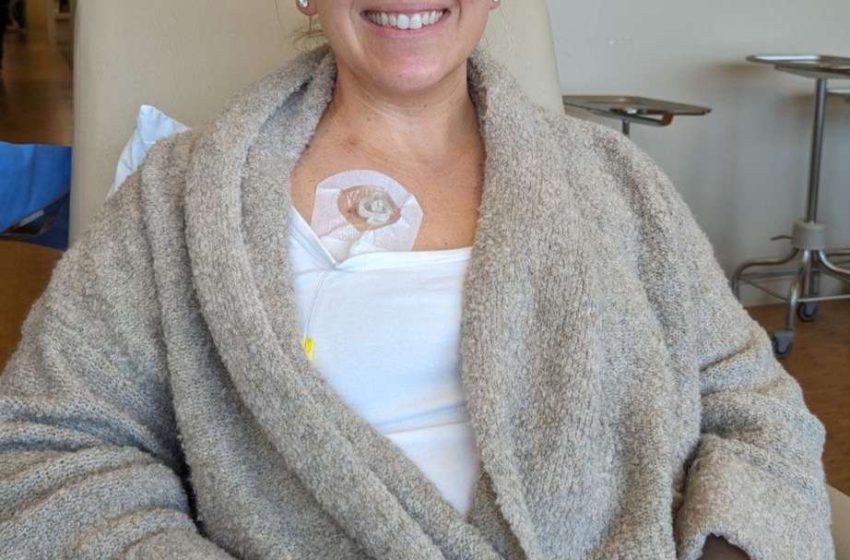
Mom, 41, with Stage 4 Colon Cancer Has ‘No Evidence of Disease’ After Life-Saving Transplant
Amy Piccioli
Credit: Northwestern Medicine
NEED TO KNOW
-
Amy Piccioli was diagnosed with stage 4 colorectal cancer after an ER visit for dehydration in 2024
-
A liver transplant from a close family friend helped her achieve “no evidence of disease” after extensive treatment
-
Piccioli is now raising awareness about colorectal cancer and urging patients to explore transplant options if the disease spreads to the liver
A woman with stage 4 cancer received a liver from her friend — and the transplant saved her life.
In May 2024, Amy Piccioli, a 41-year-old accountant from Los Angeles, visited the emergency room after dealing with dehydration from a stomach bug. She was 39 at the time and a seemingly healthy mom of three. So she was stunned after scans revealed a mass in her colon and multiple lesions on her liver. After a biopsy, she was ultimately diagnosed with stage 4 colorectal cancer.
“I had zero signs of colorectal cancer. No pain, no changes in bowel habits and no family history,” she told Northwestern Medicine. “When a doctor tells you it’s stage 4, you think, ‘My life is over.’ Learning that a transplant could be an option for me changed everything.”
Piccioli immediately underwent multiple rounds of chemotherapy and started immunotherapy medication. She then consulted with her doctors about the possibility of getting a liver transplant.
Piccioli was later referred to Northwestern Medicine, which has one of the only programs in the United States with a liver transplant program specifically for patients with colorectal cancer that has spread to the liver.
The PEOPLE Puzzler crossword is here! How quickly can you solve it? Play now!

Amy Piccioli’s family on the beach
Credit: Northwestern Medicine
In September 2025, she traveled to Chicago to connect with Dr. Zachary Dietch, a transplant surgeon at Northwestern Medicine.
“Amy had disease confined to the liver and had responded very well to treatment,” he said. “For patients with unresectable colorectal liver metastases, chemotherapy alone historically results in a 10% five‑year survival. But in carefully selected patients who undergo liver transplantation, five‑year survival can reach 60% to 80%, and some patients achieve long‑term cure.”
After sharing the link for living-donor screenings with friends and family, Piccioli was thrilled to learn that a close family friend, Lauren Prior, 37, was a match.
“It felt like fate,” she said. “Lauren and her family had already told us we could stay with them in Chicago while I recover from the surgery. And then she turned out to be my perfect match. At that point, I had so much faith in my surgical team that I was more scared of a Chicago winter than a liver transplant.”
“It’s such a small sacrifice to make that could potentially save someone’s life, or at least improve their quality of life,” Prior told ABC News of being a donor. “The impact you can have on someone else is incredible, and it’s worth it.”
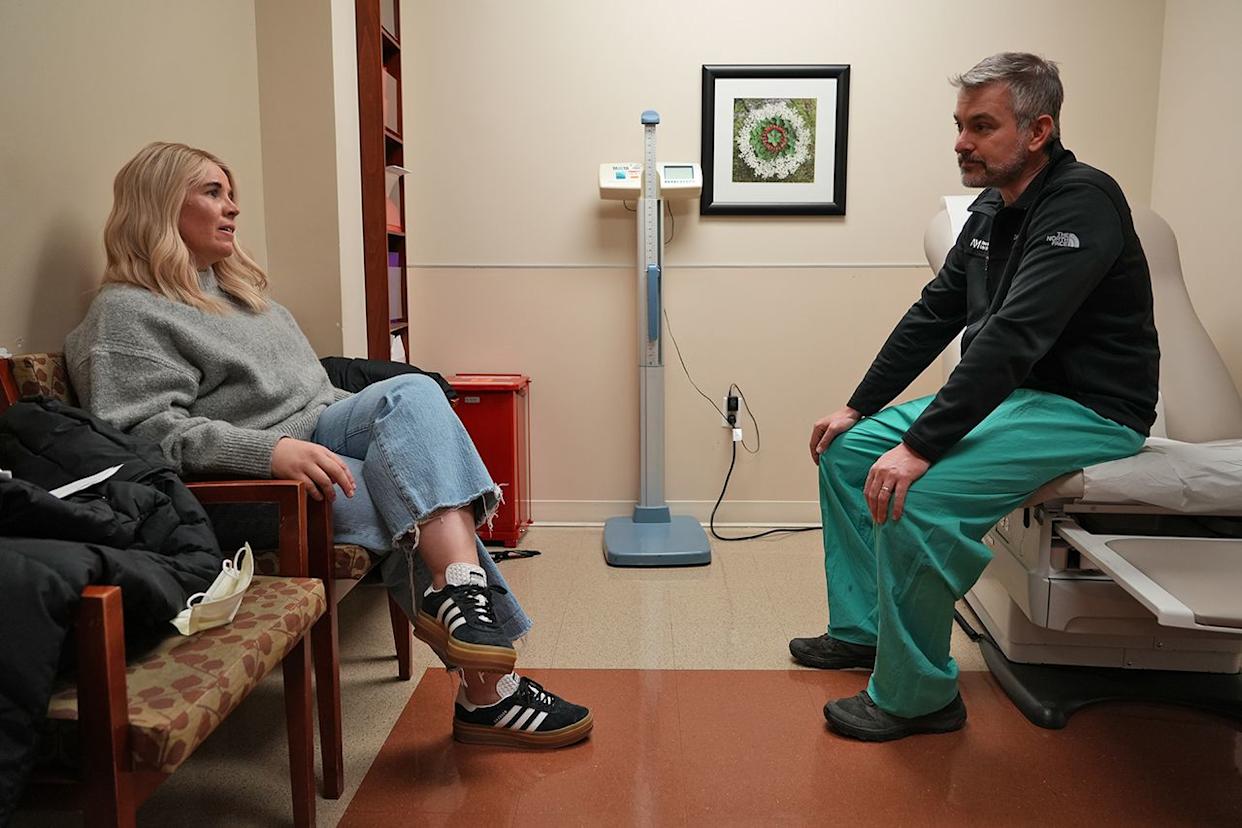
Amy Piccioli and Dr. Zachary Dietch
Credit: Northwestern Medicine
In December 2025, the longtime friends underwent their respective surgeries. Doctors removed a portion of Prior’s liver and transferred it to Piccioli, whose previous liver was removed.
Three months later, doctors said that both Piccioli and Prior are recovering well. Additionally, a blood test that detects residual cancer cells came back negative, confirming Piccioli has “no evidence of disease.”
Piccioli will stay in Chicago until the end of the month as she continues her recovery. She told the hospital that she wanted to share her health journey in honor of March’s Colorectal Cancer Awareness Month, noting that more younger people are being diagnosed with the disease.
“I’m more committed to the cause than anything,” she said. “If your cancer has spread to your liver, ask your doctor about a transplant. It might be an option you didn’t know existed. That information could save someone’s life. I can’t express how grateful I am for my donor and the Northwestern Medicine transplant team for saving mine.”
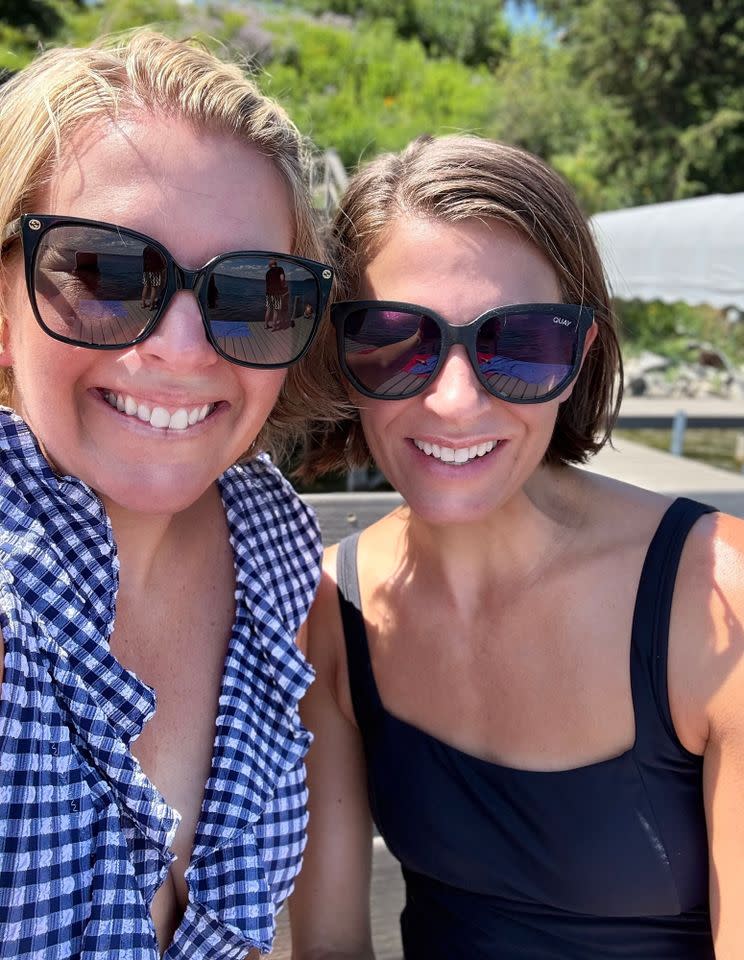
Amy Piccioli with longtime friend Lauren Prior
Credit: Northwestern Medicine
Never miss a story — sign up for PEOPLE’s free daily newsletter to stay up-to-date on the best of what PEOPLE has to offer, from celebrity news to compelling human interest stories.
Colon, or colorectal, cancer is the third most common cancer in the world, after lung and breast cancers.
While overall rates of colon cancer have gone down over the past 10 years, rates in people younger than age 50 have increased by about 2% each year. According to the American Cancer Society, recent reports revealed that one in five people diagnosed with colon cancer is now under 55.
The American Cancer Society recommends that adults 45 and up get regular colon cancer screenings, either stool analyses or colonoscopies. And they urge people with symptoms of colon cancer — such as a change in bowel movements, like increased diarrhea, rectal bleeding, dark stools, unexpected weight loss, cramping and excess fatigue — to get checked out by a doctor.
Preemptive screenings are most important since symptoms typically only appear after colon cancer has already spread. People with colon cancer fare better when the disease is caught and treated early, before it spreads outside the large intestine or rectum.
Read the original article on People
First Appeared on
Source link






