


‘That’s why there’s 9 billion of us and not 9 billion of some other primate’: Why our ability to adapt is humanity’s ‘superpower’
Humans have evolved the ability to live anywhere on Earth, thanks to gradual changes to our biology and our knack for developing new technologies, like clothes and shelter. This adaptability is often touted as being unique to our species, Homo sapiens.
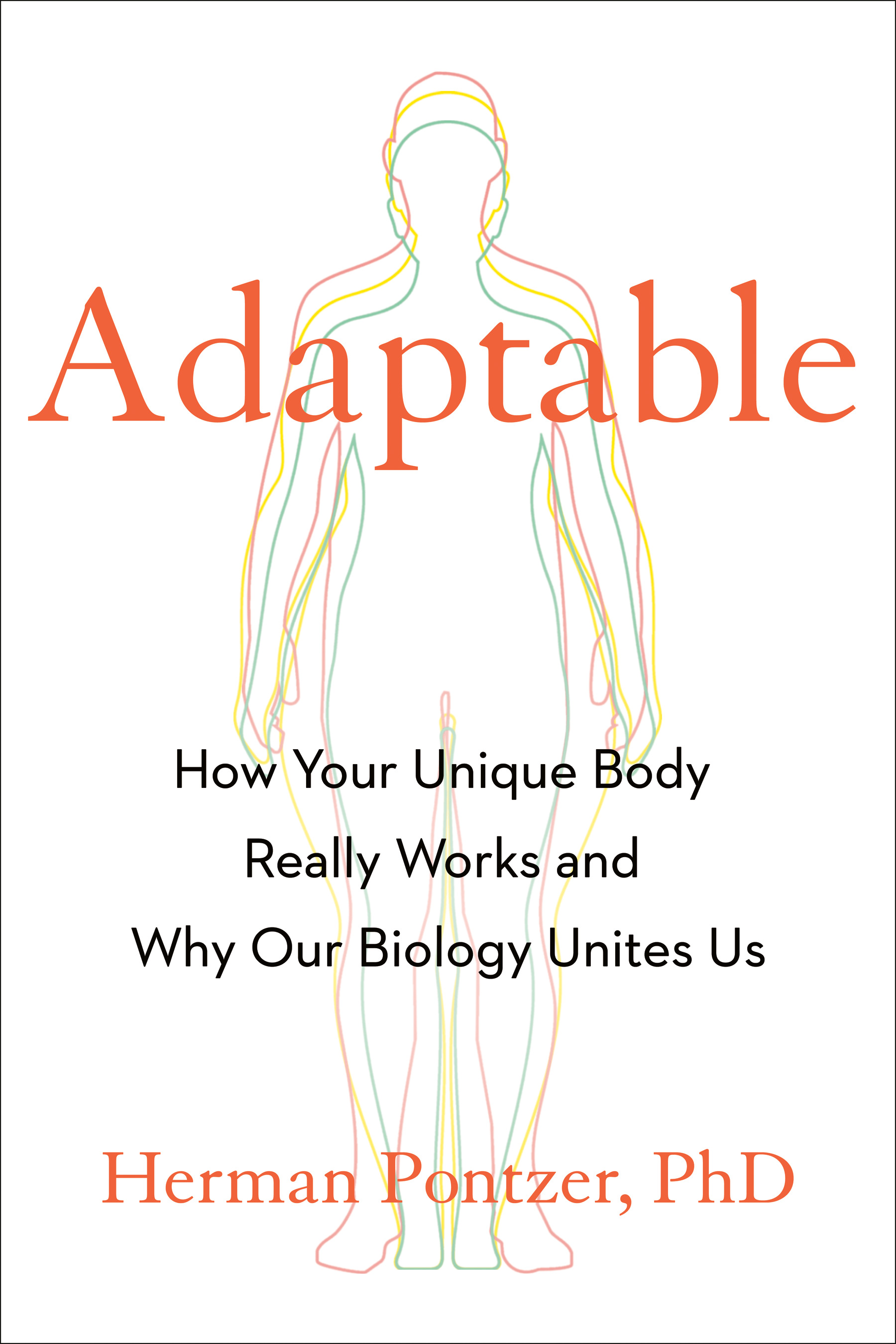
In his new book, “Adaptable: How Your Unique Body Really Works and Why Our Biology Unites Us” (Penguin Random House, 2025), Herman Pontzer, a professor of evolutionary anthropology and global health at Duke University, explores how local environments work in tandem with genetics to produce the full spectrum of diversity we see in people today.
Article continues below
“Adaptable” is a finalist for the PEN/E.O. Wilson Literary Science Writing Award, which celebrates excellence in nonfiction in the physical or biological sciences. The winner will be announced March 31 at the Literary Awards Ceremony and will receive a $10,000 cash prize.
Live Science spoke with Pontzer about his book and why understanding why and how diversity occurs is essential for questioning and challenging scientific misinformation.
Sophie Berdugo: Why did you decide to write the book now?
Herman Pontzer: In having conversations about “Burn” [Pontzer’s book on the science of the metabolism (Penguin, 2022)], it became very clear to me that when you move outside of the ivory tower and start having these conversations more broadly, that there’s just a lot of misunderstanding and misinformation about just how the body works in general. It’s not just our metabolism. The metabolism is one of those blackbox things that we love to blame everything on and people don’t really understand what it means or how it works.
SB: What is your favorite fact about the human body that you feel is completely underappreciated?
HP: I mean, where to start? Your kidneys. Kidneys are the forgotten essential workers of the body. And I could start anywhere, but let’s start there — because if I say brains or hearts, people go, “Yeah, those are important; we know that.”
Your kidneys, man: 180 liters [47.5 gallons] of water a day [are] filtered through your kidneys. All of the detox stuff that you think you’re doing with the supplements you’re taking, they’re [your kidneys are] doing it for free and better. Somehow our bodies have learned to regulate water in a way that’s different from the other apes, because we evolved in a dry environment. So, it’s the interplay of water balance across our whole systems.
Spleens — let’s do another unappreciated organ. Most people don’t even know what their spleen does, I think. But among others, it’s an immune function organ. Your spleen is this reservoir for red blood cells. And so, whether you’re at altitude and you need a little bit more oxygen, your spleen gets bigger to be this bigger red blood cell reservoir for that.
There’s this fascinating population called the Sama in the Philippines. They spend their lives on boats and in the ocean, and they forage underwater. And so there’s been local adaptations, local evolution to give them bigger spleens [to have more blood oxygen when holding their breath for long periods under water when diving for food]. The alleles, the gene variants, that give them bigger spleens have become more common, and now people there have bigger spleens, on average, than everybody else.
Literally everywhere you look in the body, there’s a story that I bet you haven’t heard of.
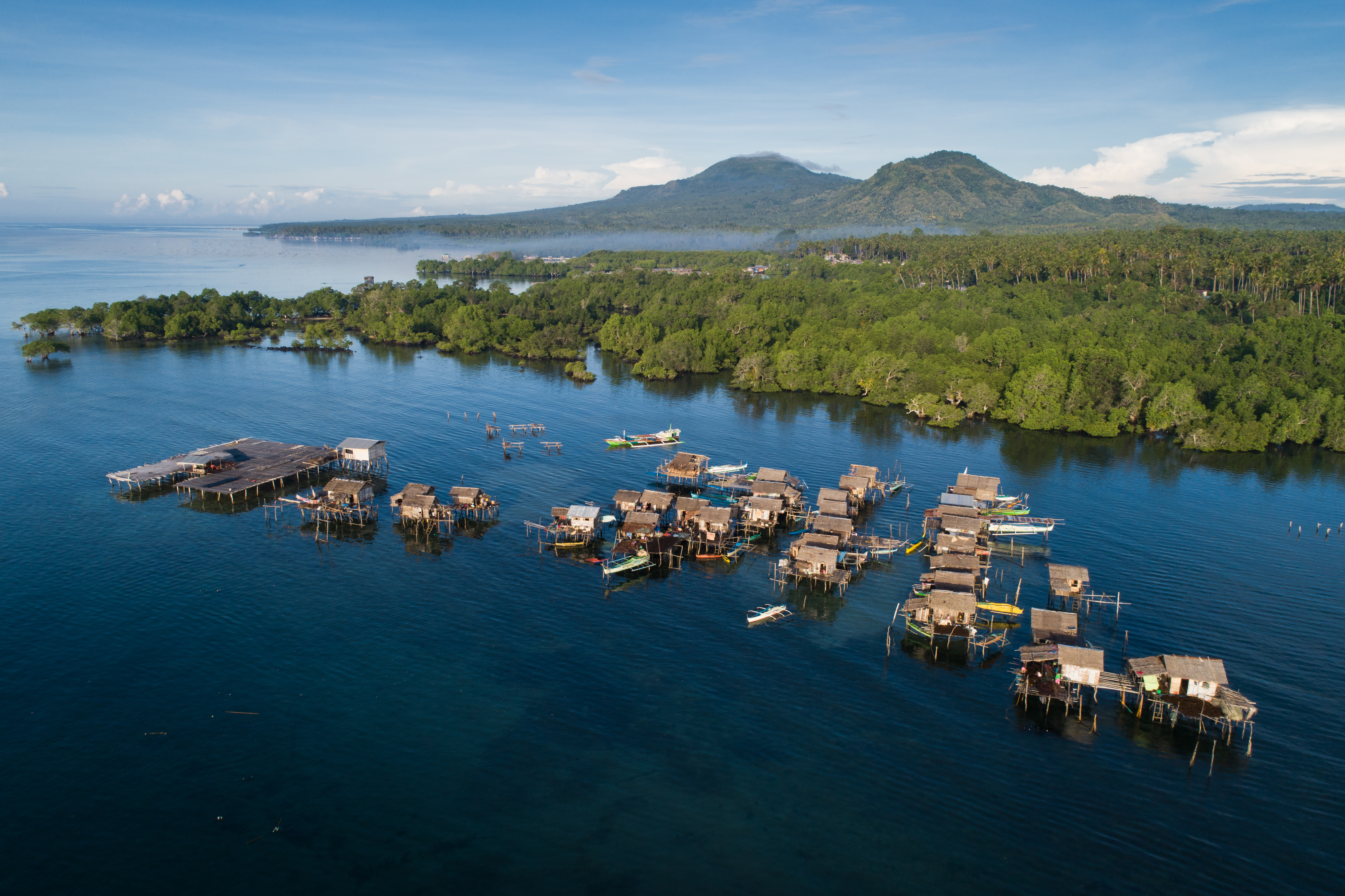
SB: That case of the spleen being enlarged in this population in the Philippines is a great example of a local adaptation. Could you explain how these local adaptations occur?
HP: To talk about those local adaptations becomes a little bit tricky because they do happen, right? Certain populations do have a trait that gets more common there, or bigger or smaller, whatever it is. Natural selection can shape a trait in a population, but it’s actually pretty rare because the conditions have to be just right.
So how do we do it? Local adaptation is just like any other kind of evolutionary adaptation. The reason a certain trait becomes common in a place is because it helps individuals there survive and reproduce. And that could be anything from being the right body shape and size to having a bigger spleen that helps you forage underwater. Anything that helps you survive and reproduce could end up as a local adaptation.
But the important thing here for why we see these localized events happening — and what makes them different from things that affect our whole species — is that it really has to be localized to a specific environment. It can’t be that if the same trait is good everywhere, then that trait’s going to spread because there’s so much interbreeding, gene flow as we call it, that eventually if it’s a good trait everywhere, it’ll get everywhere.
So it has to be just good there. There has to be something about that trait that makes it really helpful right there but not other places. And that has to persist for generations and generations so that there’s enough time for selection, because natural selection acts very slowly over generations. So it has to be good for survival and reproduction, has to be very localized and persistent for generations and generations.
Very few selection pressures meet all those criteria. Skin color is a good example of one that does — the best skin color to have in terms of ultraviolet light production. The darker your skin, the more protected you are against ultraviolet light damage versus having lighter skin if you need to be able to make more vitamin D, because that’s the trade-off.
Those conditions have been around since the sun and the Earth have been where they are. There’s always been more ultraviolet light at the equator and less towards the poles, and so that gradient has been really consistent. And then we see, surprisingly, a really consistent gradient in local populations’ skin tone, how much melanin they make and, therefore, how dark their skin is.
[Then there are] things like high-altitude adaptations. The Himalayas have been thousands of meters tall since forever basically, for our purposes. And so humans living there have always had that selection pressure to be able to handle high altitude. And so you see altitude adaptations there. That’s the kind of stories we see with local adaptation.
Where we get into trouble is when people talk about local adaptations with things like heart disease. There’s been the argument in the ’90s that Black Americans might be more likely to have heart disease because there’s some localized set of alleles that affects their heart function that makes them more likely to develop hypertension and heart disease. Well, that doesn’t make a lot of sense, because the selection pressures on the heart have been kind of the same for our whole species forever.
Same with all these ridiculous and really dangerous things about IQ evolution in different populations. Having a smart brain has been selected for — it’s been a good idea — for our whole species since forever. And so any traits that make us have smarter brains are going to be selected for equally everywhere. Gene flow is going to push them all around.
SB: So hypothetically, if I was born with the same genetics but in the Philippines, like your earlier example, instead of the U.K., would the environment override the genetic hand I’ve been dealt?
Literally everywhere you look in the body, there’s a story that I bet you haven’t heard of.
HP: The way I try to talk about genetics in my classes and in the book is, your genetics — the hand you’re dealt — kind of gives you a universe of possibilities where you could end up. Now, it’s not unlimited. There’s nothing that you could ever do to me that would have made me 8 feet [2.4 meters] tall, right? My parents could have given me all the best nutrition. I was never going to be 8 feet tall, or even 7 feet [2.1 m] tall, for that matter. So there are limits.
So I don’t think of it as overriding. I think whether nature or nurture is what you see emerging more, it’s almost always nurture. The environment usually has a much, much larger effect. But they really work together.
SB: What role does epigenetics play in shaping how you develop over developmental time, rather than evolutionary time?
HP: It’s a wonderful example of nature and nurture working together because epigenetics is the environmental effects on your body that actually sort of change the way that your genes act for the rest of your life. An environmental experience, a stress, can affect the body in a way that it actually affects the genome, which affects your DNA so that a particular gene might be turned off or actually amplified. It can have different effects for the rest of your life.
But what’s really interesting about epigenetics is this possibility that those changes might persist across generations. And so we know this is true in mice, that the epigenetic effects on the genome that we see within a lifetime are somehow transmitted to the offspring and they will have those same epigenetic effects. So the environment experienced by mom as she’s growing up could actually affect her offspring when they’re born and for their lives.
We have some interesting hints that it’s also happening in humans. It’s a really exciting space to watch in biology. I don’t think we have the full answer yet for humans; it’s just so hard to do the work because you’re talking about studies that take decades, basically. But it’s an exciting new frontier in the sort of nature-nurture interface.
SB: Would you mind explaining what evolutionary mismatches are, and why they’re important?
HP: Our species evolved as hunter-gatherers. And so that environment’s been the norm for humans for millions of years actually, even before we were Homo sapiens. Being a hunter-gatherer looks different depending on where you are in the world and what time frame we’re talking about, but it always involves a lot of physical activity. It always involves foods that you’re getting from the wild environment around you. It generally involves a fair amount of pathogens and stuff — the world’s dirty out there in the wild. And so they’re the kind of environments that our bodies are evolved to be best at because that’s what shaped us.
Our environments today are so different from that, and that’s the mismatch. The environment that I’m living in right now — my house is climate controlled; I’ve got thousands of calories of food in the refrigerator; if I don’t want to walk around too much today, I don’t have to. I’ve got all sorts of antibacterial soaps and antibiotics if I need them.
Our environments have shifted so much that we’re well outside the kind of micro-adjustments our bodies are used to making over a lifetime. And so our physiologies respond in ways that can be bad — so, heart disease, allergies, all sorts of modern ailments that we know didn’t used to be common but are common now because of that mismatch.
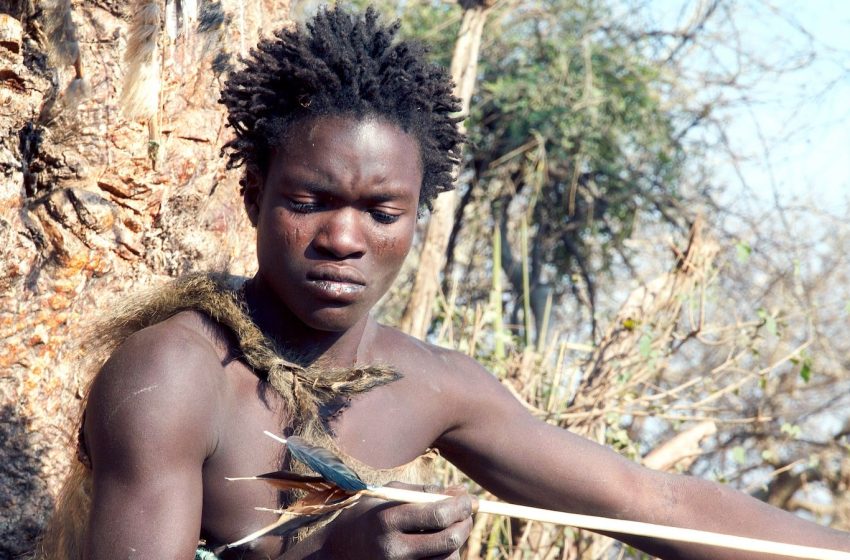
SB: You mentioned how you see the human body as an anthropologist. You talk throughout the book about the Hadza and other contemporary hunter-gatherer populations. What can we learn about local adaptations from these populations?
HP: We are an incredibly diverse species. Our ability to adapt to our different environments and the cultural adaptations we see, the biological — that’s our superpower. That’s why there’s 9 billion of us and not 9 billion of some other primate. We are as successful as we are because of this adaptability, this flexibility. And what that means is that if we only look to our own population, if I only did this book pulling what we could understand from my fellow Americans, it would be an impoverished book. There would be less to say, and we’d learn less about our bodies and ourselves because we wouldn’t have the full extent of human diversity to pull from and learn from.
SB: Your book covers a lot of ground. What do you hope readers take away from it?
HP: More than anything, I hope it gives them the tool set to engage because they’re going to put that book down, and the next day they’re going to read the paper or be online, and they’re going to see some new study about the brain or about diet or they’re going to hear some headline about vaccines. And I want people to have a tool set to digest that, make sense of it, and ask the right questions about how we interpret all of this and move forward.
SB: What are those key questions that you hope readers will start to ask?
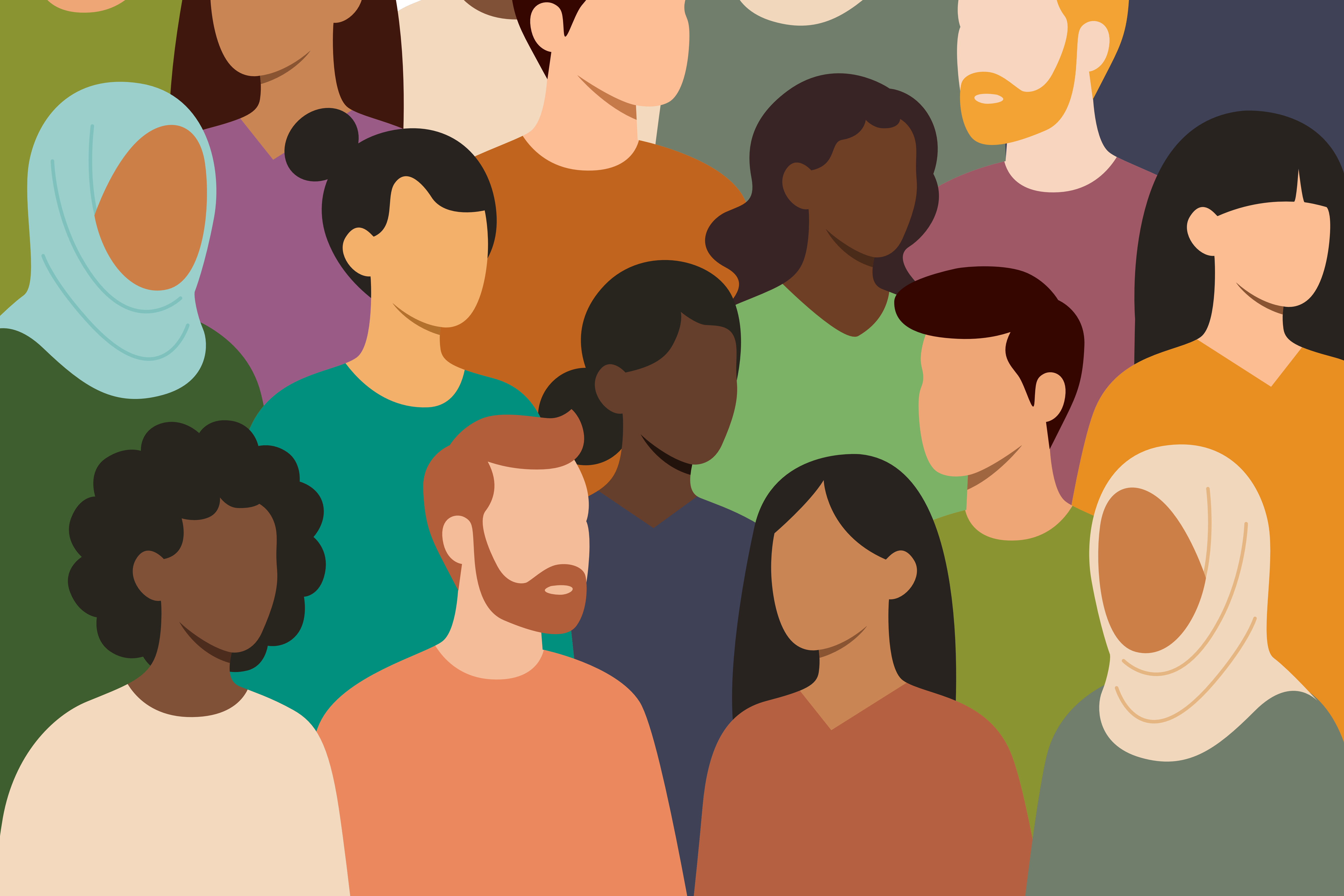
HP: First of all, to understand that diversity is multilayered. And so, just because I know the color of your skin, it doesn’t mean I know anything else about you. I can understand something about that and why people’s skin might be darker or lighter and understand that that’s a separate question completely from hearts and heart health, or intelligence or anything, really. All these systems develop independently. So, when we think about diversity, we need to move away from the categories that we’re taught and [away from] putting everybody in a bucket, and understand this is multilayered. It’s true for yourself; it’s true for everybody else.
Science has done a lot of work in the past couple hundred years, at least, on the human body to develop some really important consensus ideas around health. We know what kinds of diets keep us healthy. We know that vaccines keep us healthy. We can understand these things and move forward, comfortable in that knowledge. So the debates, for example, around vaccination, I think, are hurtful because we actually have been debating vaccines for 300 years at least, and the evidence is really clear that they’re one of the biggest public health victories ever.
So both the kind of concrete details like that, but also the kind of mental tool kit to how we understand diversity. I think those are two different things to walk away with.
Editor’s note: This interview has been condensed and edited for clarity.
First Appeared on
Source link






