


Scientists Tried to Clone Clones Forever. It Didn’t End Well
Countless scientists and at least a dozen high-concept sci-fi comedies over the past 30 years have speculated on the potentially degrading effect of making clones out of other clones, ad infinitum. The same year that researchers first cloned Dolly the sheep, the Michael Keaton comedy Multiplicity (1996) compared it to the visual static added when your office Xerox machine makes a copy of a copy of a copy.
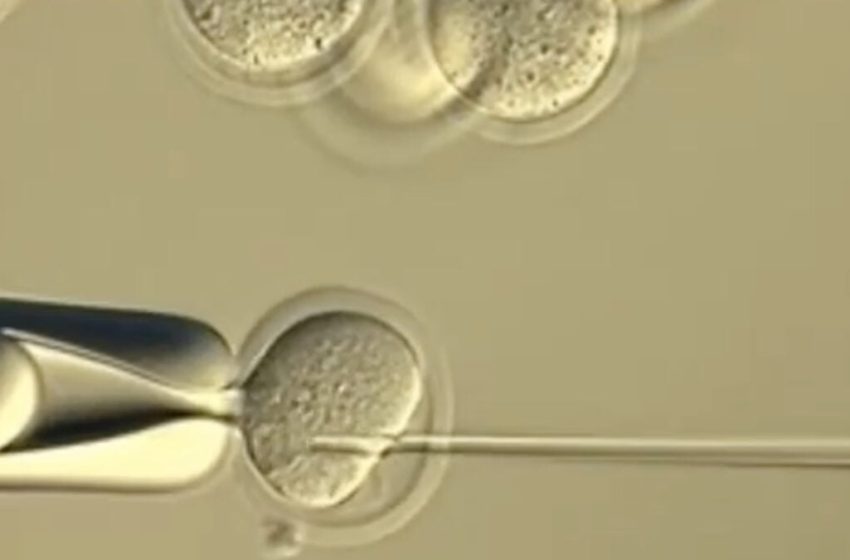
Now, biologists in Japan have determined what they believe might actually be a hard limit on just how many successful, viable clones can be made from generations of past clones. Drawing on 20 years of their own research serially cloning mice, the team had hoped to make infinite clones of clones with the help of a promising reagent additive, trichostatin A, which helps to suppress the activity of genetic mutations during the cloning process.
“We initially concluded that serial cloning could be continued indefinitely,” Teruhiko Wakayama and his colleagues noted in their new study, published Tuesday in the journal Nature Communications, “since the success rate improved slightly with each successive generation.”
It was all smooth sailing, in fact, until the researchers started cloning their 25th through 27th generations of mice. But by the 58th generation, according to Wakayama’s team, the mice did not even survive for more than a day.
Thousands of healthy clones
Scientists have used trichostatin A as an antifungal antibiotic, but it can also inhibit the functioning of certain enzymes in mammals, like mice and also humans. For Wakayama and his team’s purposes, however, the compound also acts as what they call an “epigenetic modification reagent,” suppressing unwanted DNA transcription factors, or the enzymatic proteins that activate pieces of the potentially harmful mutations in a mouse’s genetic code during cloning.
“More than 1200 cloned mice were produced from a single original donor mouse,” according to Wakayama, a developmental biologist who works for the University of Yamanashi’s Advanced Biotechnology Center, and his coauthors. And, surprisingly, most fared well before the drop-off.
“Late-generation clones except [the] last generation that survived to birth were notably healthy,” the team reported, “with normal lifespans, despite carrying numerous deleterious mutations.”
These very re-cloned clones, in fact, also developed with most of their reproductive organs healthy and intact, the researchers found, “raising the possibility that subsequent generations could be produced via sexual reproduction.”
Their study suggests that further experimentation with reagents like trichostatin A might further extend cloning deeper into successive generations. They found the compound remained effective, even as they worked with later, more difficult generations of their clones. The success rate for implanting a clone donor cell nucleus into an egg was three times more successful for even 51st generation cloned mice when trichostatin A was used (a 5.4% success rate), as opposed to without the reagent (1.6%).
A steep drop
Wakayama’s team did, however, measure some hard facts about the number of natural mutations that emerged between each successive generation of their clones. Each new round of cloned mice acquired about 70 small “single-nucleotide variants” and about 1.5 additional and more substantial “structural variants” to their genetic code. While this rate was not out of the ordinary, those structural variations built up over multiple rounds of re-cloning.
Over time, they found, “the build-up of harmful variants appears to have outweighed adaptive effects,” without the chromosomal recombination effects of sexual reproduction to filter out the large and potentially harmful genetic variations.
Here too, there was evidence that even a slight pivot back to sexual reproduction could course-correct these issues. The researchers’ late-generation cloned mice, for example, were born with noticeable abnormalities in their placenta, but when those mice mated naturally, their offspring’s placenta had returned to normal.
Theories abound for why mammals and other creatures evolved to reproduce sexually, including a case that it helped earlier species protect themselves from parasites by offering robust genetic diversity. Wakayama and his group’s own journey to the far end of genetic recloning might suggest mammals need to mate to protect their genome from going stale over time.
First Appeared on
Source link






