


Scientists Built a Full-Scale Dinosaur Nest and Discover Why the Eggs Didn’t Hatch at the Same Time
A life-size oviraptor nest has helped scientists understand how these dinosaurs incubated their eggs. The results suggest a mix of body heat and sunlight, with uneven temperatures that may have caused eggs to hatch at different times.
The study, published in Frontiers in Ecology and Evolution, takes on a question that has puzzled researchers for years. Were oviraptors closer to reptiles or birds when it came to incubation? The answer appears to fall somewhere in between.
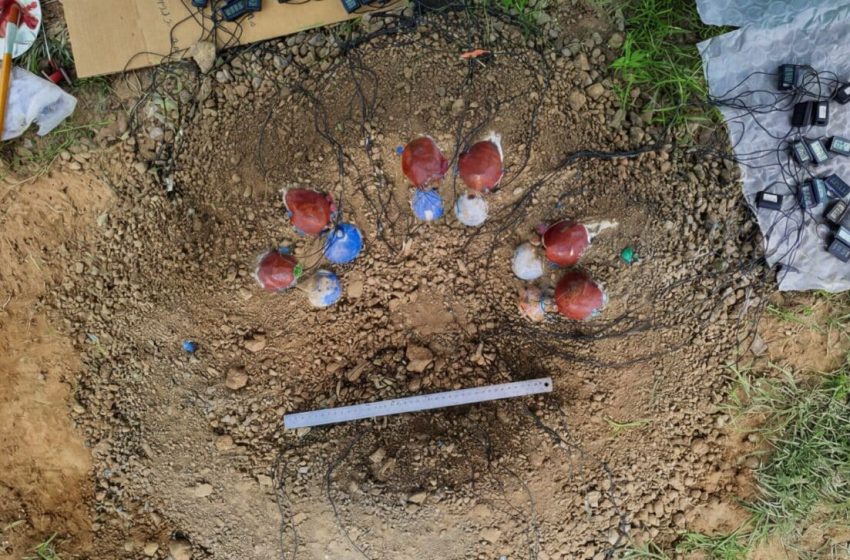
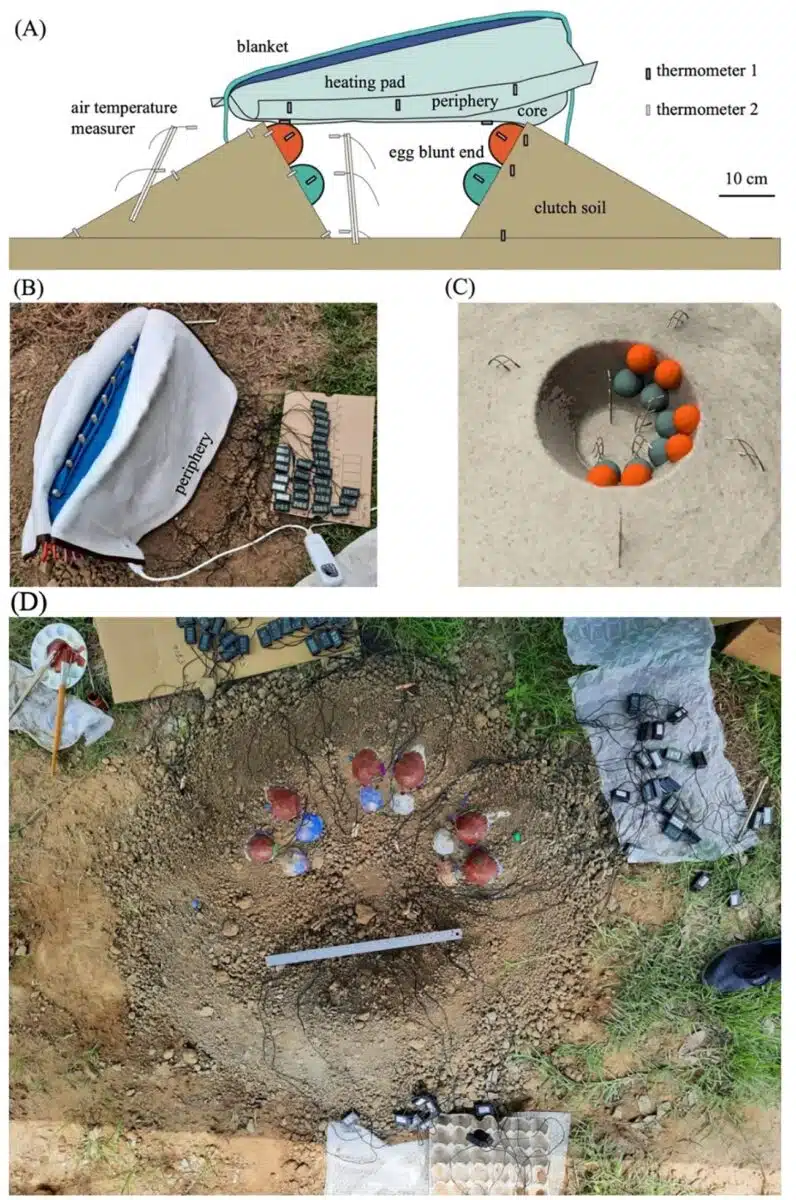
To explore this, researchers in Taiwan combined simulations with a full-scale physical model of the animal and its nest. As stated by latest research, this method made it possible to observe how heat actually spread through the eggs under controlled conditions.
A Nest Design Unlike Anything Seen Today
The reconstruction focused on Heyuannia huangi, a species that lived between 70 and 66 million years ago. It measured about 1.5 meters in length and weighed around 20 kilograms, but its nesting behavior is what stands out.
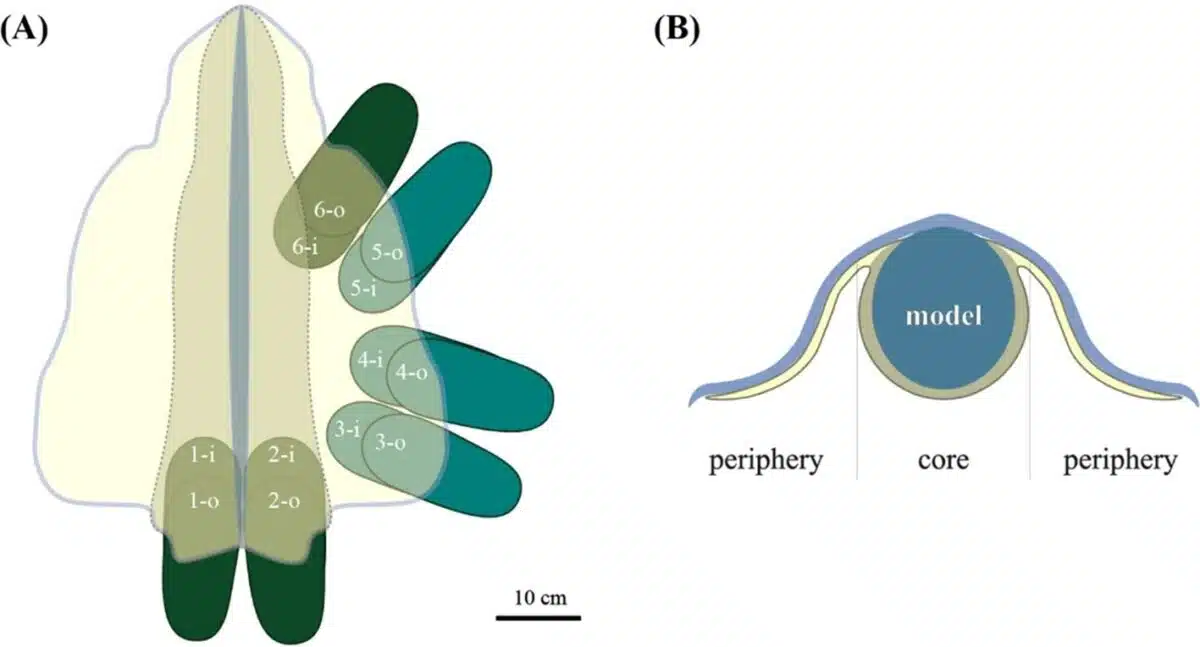
Oviraptors arranged their eggs in rings within semi-open nests. Researchers recreated this setup using polystyrene foam, wood, and layered materials to simulate the body, along with resin eggs placed in double rings. According to Frontiers in Ecology and Evolution, reproducing this structure was essential since the layout directly affects heat distribution.
“Part of the difficulty lies in reconstructing oviraptor incubation realistically,” said Chun-Yu Su, noting the lack of modern equivalents. “For example, their eggs are unlike those of any living species, so we invented the resin eggs to approximate real oviraptor eggs as best as we could.”
Uneven Temperatures Inside The Nest
The experiments revealed clear temperature differences between eggs. In colder conditions, the gap between eggs in the outer ring reached up to 6°C. In warmer environments, that difference dropped to about 0.6°C.
Dr. Tzu-Ruei Yang also explained that the position of the adult relative to the eggs influenced how heat was shared. Some eggs received more warmth than others, which likely led to asynchronous hatching within the same nest.
The study also highlights the role of sunlight. As the researchers explained that the open structure of the nest meant solar heat had a stronger effect than warmth from the ground, which differs from reptile strategies such as those seen in turtles.
A Method Different From Modern Birds
Modern birds rely on direct contact incubation, keeping their eggs at stable temperatures by covering them. Oviraptors could not do this effectively because of their circular nest arrangement. The adult could not maintain contact with every egg at once, resulting in lower incubation efficiency compared to birds. This led to a system described as co-incubation, combining body heat with environmental warmth.
“Modern birds aren’t ‘better’ at hatching eggs. Instead, birds living today and oviraptors have a very different way of incubation or, more specifically, brooding,” Yang said. “Nothing is better or worse. It just depends on the environment.”
First Appeared on
Source link






