


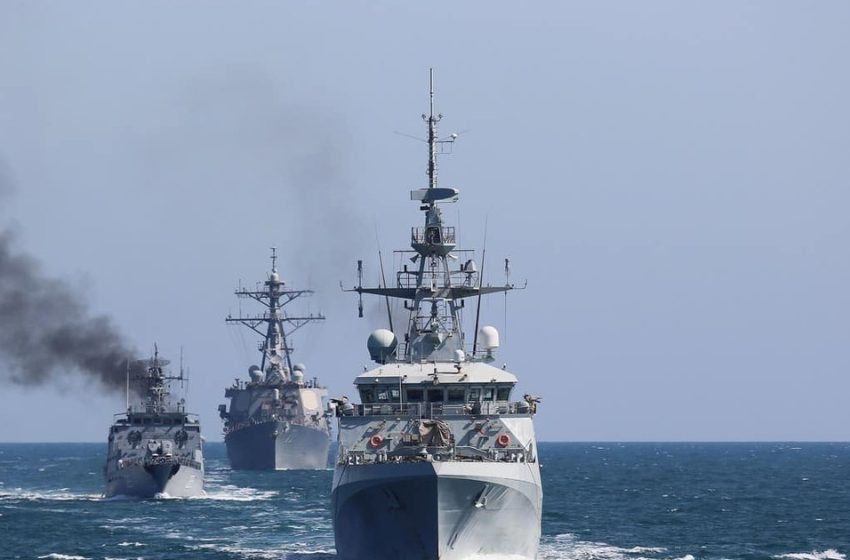
Relief for African economies as UK, France lead 30-nation coalition to secure transit through Strait of Hormuz
In a joint statement published by the UK government, the six countries backed preparatory plans for coordinated operations to secure navigation in the region.
The Strait of Hormuz remains open, but heightened regional tensions mean that not all ships can pass freely.
Some vessels continue to navigate the waterway but require special clearance, armed escorts, or additional insurance to mitigate risks, while others have been stopped or delayed due to security warnings, sanctions, or restrictions on certain cargoes and flagged vessels.
The disruption is therefore political and security-related, rather than a literal closure, yet it has already contributed to higher oil prices and pressure on energy-dependent economies, including in Africa.
Since then, the coalition has expanded to include about 30 countries, with Britain and France set to chair talks this week to formalize a joint mission to secure the waterway, according to UK media reports.
A meeting of defense chiefs is expected in the coming days, with one official noting, “I anticipate that at some point in the near future there’ll be some kind of Strait of Hormuz security conference.”
French daily L’Orient–Le Jour also reports that the UK has offered to host a follow-up summit in Portsmouth or London to finalize operational details, with officials saying the coalition would work to reopen the waterway “as soon as the conditions are right.”
The renewed diplomatic and military coordination underscores growing urgency among global powers to restore stability to one of the world’s most critical energy corridors.
Africa’s fuel vulnerability exposed
As a major supplier to South Africa, India’s policy shift is expected to significantly raise import costs in the coming weeks.
Nigeria is also facing mounting pressure, with fuel prices rising by roughly 39% in recent weeks, highlighting the broader vulnerability of African economies to global energy shocks.
Across the continent, countries reliant on imported petroleum products are grappling with tighter supply, rising freight costs, and weakening currencies.
North Africa’s largest economy, Egypt, has rolled out emergency energy-saving measures as the economic shock from the Iran war ripples beyond the Middle East, tightening fuel supplies and putting pressure on public finances.
The Strait of Hormuz remains one of the world’s most critical energy chokepoints, facilitating a substantial share of global oil and liquefied natural gas exports. Disruption along the strait has forced longer shipping routes and increased insurance premiums, pushing up global fuel prices.
Enabling uninterrupted shipping would help stabilize supply chains and ease cost pressures for African importers.
However, the crisis also highlights a deeper structural issue: the continent’s continued dependence on external fuel markets, reinforcing the need for expanded domestic refining capacity and energy security strategies.
Editor’s note: The story was updated to clarify that the Strait of Hormuz is not physically closed but is currently affected by security and geopolitical tensions linked to the ongoing war involving Iran, the United States and Israel, which have severely disrupted navigation and maritime traffic
First Appeared on
Source link






