


NASA’s Discovery in the Sahara Reveals Hidden Geological Wonder
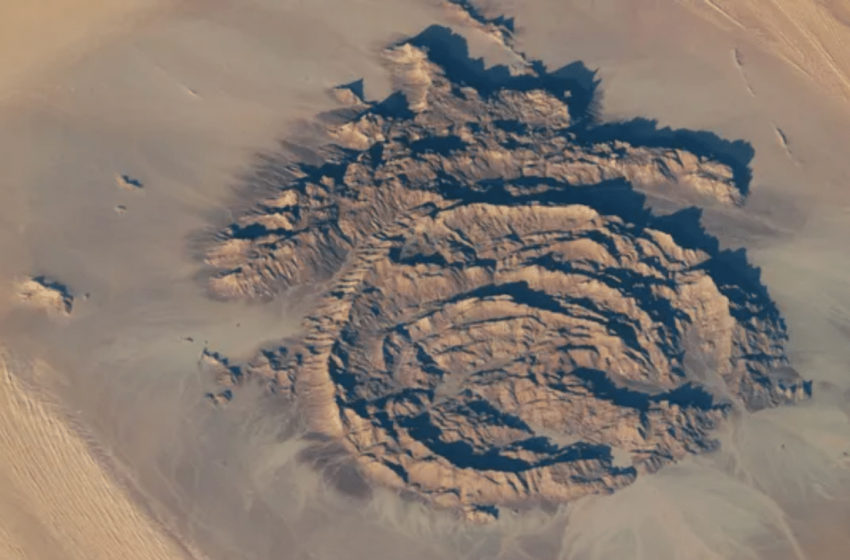
In an awe-inspiring revelation from NASA’s Earth Observatory, scientists have uncovered the true origin of Mount Arkanu, a colossal massif in the Sahara desert. This majestic formation, composed of concentric rocky rings, has long baffled researchers, initially thought to be the result of an ancient extraterrestrial impact. However, new research suggests the massif is far more complex, born of repeated volcanic magma intrusions that have shaped the landscape over hundreds of millions of years.
A Unique Formation: The Concentric Rocky Rings
Mount Arkanu, a striking geological feature located in Libya’s remote desert region, is characterized by its mesmerizing concentric rings of rock. The structure spans an impressive 15 miles, with distinct layers of igneous basalt and granite creating a series of overlapping rings. Scientists originally assumed these rocky rings were the result of a massive asteroid strike, but recent studies have overturned that theory, suggesting that the formation’s origin lies deep beneath the Earth’s surface. According to Earth Observatory researchers,
“Repeated intrusion events produced a series of overlapping rings, their centers roughly aligned toward the southwest.”
These events of magma rising toward the surface created the unique formation we see today. The entire ring complex is framed to the north by an extraordinary “hat-shaped” structure, composed of sandstone, limestone, and quartz layers, adding another layer of geological intrigue to the massif.
Credit: NASA’s Earth Observatory
The Ancient Artworks of Mount Arkanu
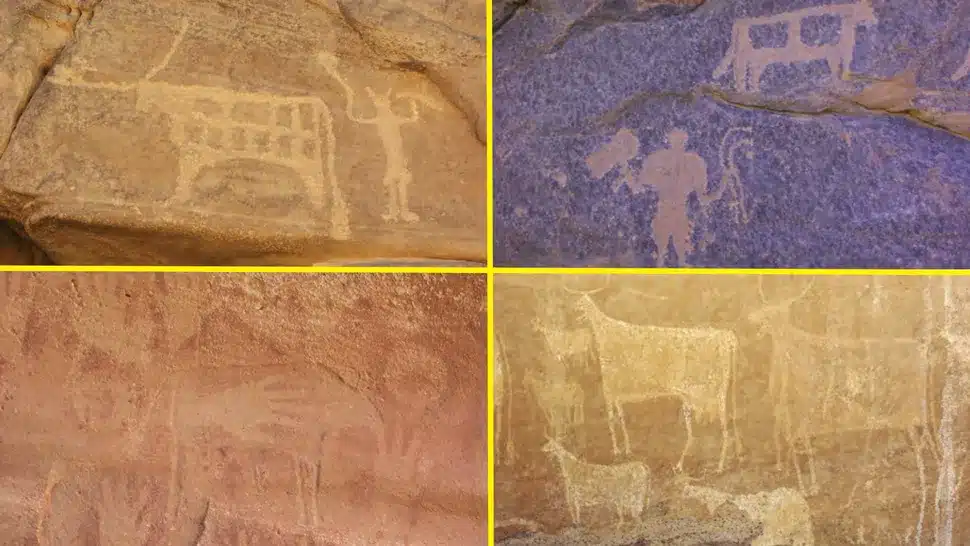
In addition to its stunning geology, Mount Arkanu also holds a treasure trove of ancient artworks, offering a glimpse into the Sahara’s past. Petroglyphs on the massif’s walls depict animals like cattle, giraffes, and human figures. These carvings, discovered in 2003, suggest that the massif has been a vital location for human activity for millennia. The ancient artwork not only represents the early inhabitants’ connection to the land but also hints at the site’s use as a seasonal grazing ground for cattle. Local nomads, including members of the Bedouin tribe, would trek their herds into the massif, seeking shelter from the scorching desert sun. These patterns of migration, combined with the petroglyphs, offer profound insights into the ways humans interacted with the environment long before modern technology.
The Mysterious “Hat” Formation
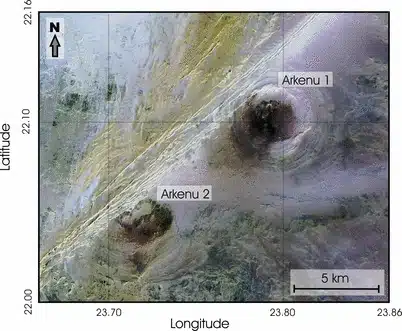
One of the most captivating aspects of Mount Arkanu is the enormous “hat” that rests atop the massif. This unusual structure, composed of layered sandstone, limestone, and quartz, forms a dramatic contrast against the surrounding rocky rings. Researchers note that this hat-shaped formation serves as a unique geological feature that adds to the massif’s complex structure. It is formed by sedimentary rock layers that have endured the test of time, offering a rare glimpse into the Earth’s tectonic history. According to the Earth Observatory team, the interplay between igneous and sedimentary rocks in this region is a testament to the dynamic forces that have shaped the Sahara’s landscape over millions of years.
(Land Processes Distributed Active Archive)
A Vital Water Source in an Arid Landscape
Despite the Sahara being one of the most hyper-arid regions on the planet, Mount Arkanu receives slightly more rainfall than its surroundings. This is due to a phenomenon called orographic precipitation, where moist air is lifted over mountain ranges, causing it to cool and release rain. The massif itself gets between 5 to 10 millimeters of rain annually, a slight increase compared to the 1 to 5 millimeters that fall across the surrounding desert. This marginal increase in precipitation supports a surprising amount of vegetation, including grasses, bushes, and small trees. These hardy plants provide a crucial resource for wildlife and herders, creating a rare oasis in an otherwise desolate landscape. The periodic rains also feed the wadis, or ghost rivers, which occasionally flood and carve through the rocky walls, adding to the complex natural system of Mount Arkanu.
A Historical Connection to Desert Nomads
For centuries, Mount Arkanu’s unique topography has made it a key resource for the nomadic herders of the region. The massif’s sheltered nature provides vital shade, protecting cattle and other animals from the intense desert heat. The ring-shaped walls, which act as natural barriers, helped early nomadic groups to contain their herds within the massif, allowing them to graze safely. Early explorers documented these practices, noting that Bedouin herders would stay within the massif for months at a time, blocking up gaps in the rock walls to prevent their cattle from wandering off. The long-standing use of this site by human populations underscores the connection between the land’s geological features and the ways in which local cultures have adapted to their environment.
First Appeared on
Source link






