A Bold Return With Modern Touches
The Tales of 30th Anniversary Remastered Project has been one of my most highly anticipated blueprints to see blossom, and its start, the Tales of Graces f remaster, was an outstanding debut. Next on the docket is another PlayStation 3 entry, Tales of Xillia, which is one of my favorite entries in this series and one of many for which I have plenty of nostalgia, having played it around the time of its initial launch.
Being highly familiar with this entry, I eagerly dove in, ready to re-experience this classic in all its glory, and on the other end, I’m abundantly satisfied, doubly so thanks to appreciated quality-of-life upgrades, even if the game’s overall structure is still questionable.
Story and Characters
Throughout Tales of Xillia, you explore the world of Rieze Maxia, a land existing thanks to a symbiotic relationship between humans and spirits. However, the former is currently at odds with tensions between the Rashugal empire and Auj Oule. At the same time, a seemingly young woman claiming to be the lord of the spirits, Milla Maxwell, loses control of the Four Great Spirits while attempting to destroy a device that siphons them, the Lance of Kresnik. This incident saps Milla of her more supernatural capabilities, and it leaves her allied with Jude Mathis, a kind-hearted medical student who was coincidentally caught in the crossfire and struggles to find his place on this journey.
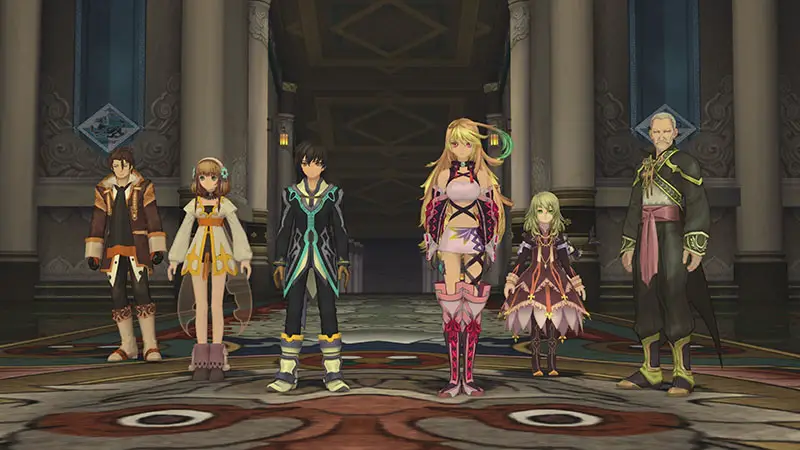
As is the usual fare with Tales, Xillia boasts endearing character dynamics that take center stage, though the narrative here is arguably equally prominent. There’s an ever-present tension lurking throughout the story’s duration, with each party member having clearly defined struggles and arcs that all blossom by the end. None of the members came across as majorly weak links, either, though I like a few more than the rest. Of course, skits, which are brief, impromptu exchanges during parties, bolster these strengths, with an emphasis on humor that provides memorable levity in the moment. I wholeheartedly adore this cast, and the English dub has aged remarkably well, save for Milla, whose stilted deliveries stand out by comparison to the rest of the ensemble.
The Dual Protagonist System
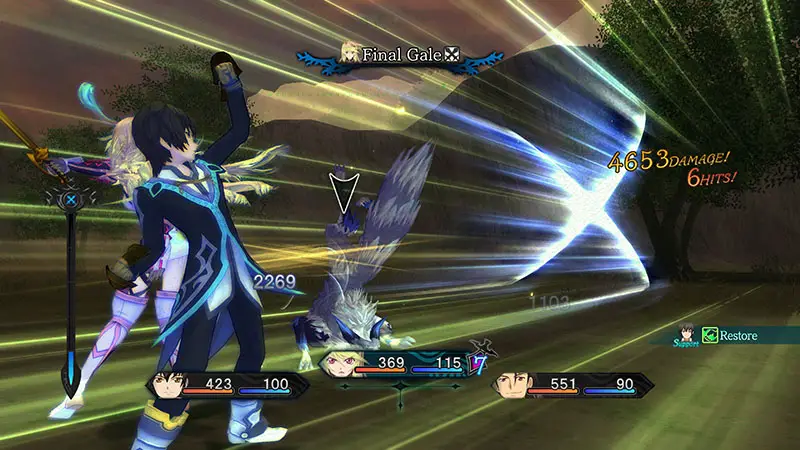
However, one issue I had when I first played the PlayStation 3 release and still retain to this day is the choice of protagonist. When beginning the game, you choose whether Jude or Milla embodies that role, and it ultimately feels arbitrary in this case. While you do have a few instances of changed perspectives, they’re relatively rare since Jude and Milla are often together. Further, most occasions where alterations even take place don’t feel necessary to be tied to a specific perspective. It often appears to be padding for more playtime or an attempt to avoid excessive information dumping, neither of which feels justified when considering this execution.
The only consistent difference is that both routes have their own assortment of battle themes. If you’d like a recommendation, I advise doing Jude’s route first since some major events are glossed over on Milla’s route, while hers can benefit more in hindsight. One offhanded negative I have, too, is that the side quests can be dull, but they at least aren’t arduous to complete.
Gameplay and Combat
The gameplay has multiple foundational mechanics, with combat itself utilizing the Double-Raid Linear Motion Battle System. Simply put, this links two characters together during battle, flanking foes, granting access to support abilities, and enabling the utilization of Linked Artes. The lattermost facet is a crucially defining characteristic for this entry, as it transforms the standard Artes (combat skills) of linked party members into altogether new attacks with enhanced damage, effects, and range.
Granted, only certain duos of Artes can lead to these maneuvers, and they can only be performed when the Overlimit Gauge reaches notches during regular combat, but that serves to intensify their weight and presence. Additionally, you don’t need to worry about your AI partner needing to use the right Arte to time it with yours, as it happens automatically, removing what would’ve been a horrendous constraint.
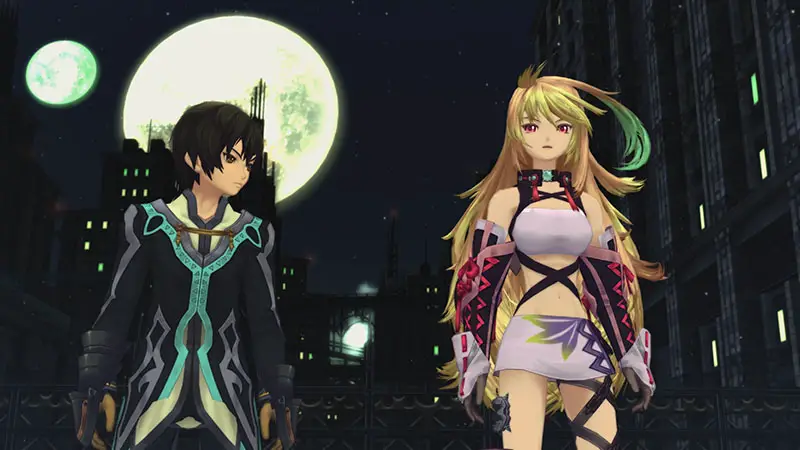
Linked Artes then reach their grandest capacity once the Over Limit reaches its maximum level and emits a golden glow, enabling consecutive Linked Artes with no delay. Plus, since you’re able to swap linked partners mid-battle, you can even do so during Overlimits for even more back-to-back action should you have the reflexes. Once you unlock more Artes and party members, this system becomes increasingly compelling and addictive to master.
Character Growth and Progression
Generally speaking, Xillia does a fantastic job of preventing these tools from becoming overused, extending to basic attacks as well. Basic attacks are governed by the numeric Assault Counter, a similar system to Tales of Graces’ CC gauge that limits how many attacks you can perform consecutively before being gradually upgraded. None of these facets even mentions special party member characteristics that further diversify their combative applications during manual control, giving more layers of depth. In comparison to other Tales of games, Xillia’s battle system can be deceptively tricky to wholly unearth, but it pays off in the long term. Other factors like being able to swap active party members mid-battle only further boost your combo creativity, too.
Xillia also differs in its character growth. Rather than a traditional experience-based leveling structure with supplemental customization systems, the basis of leveling is tied to Growth Points earned from combat, redeemed onto a grid. Essentially being a simplified form of Final Fantasy X’s Sphere Grid, this menu houses stat boosts, new Artes, and new Skills, which are equippable abilities providing substantial benefits, like resisting status ailments and strengthening essential battle components. The Grid itself expands the more it’s filled, and connectivity between nodes opens more distant slots, creating a gratifying loop that never lets up in reward.
Quality of Life Improvements
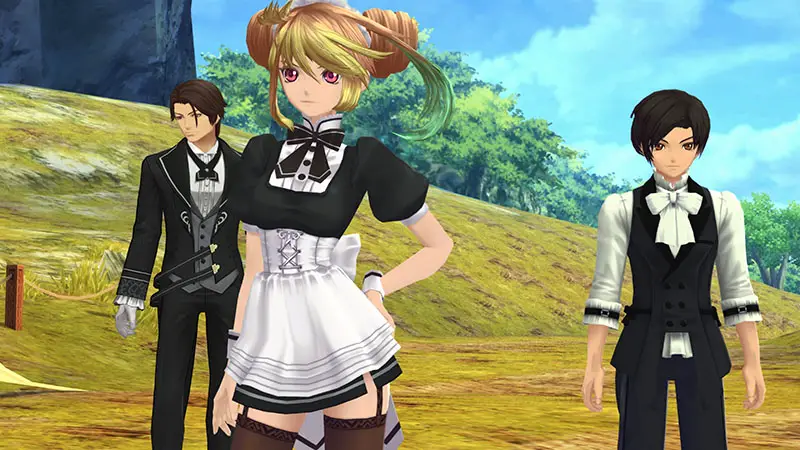
The cycle of Xillia’s combat and character growth lands in an impressive spot between complexity and approachability. Variety is robustly supported in line with Tales of conventions, thanks to several playable characters, and customization can be highly intricate or reassuringly streamlined. The GP Grid features an auto-fill option that saves time in the long run, provided you don’t mind that facet being non-manually controlled. Encounters are also reasonably quick and infused with weight across each swing, too.
Then, strengthening all of these aspects are the numerous quality-of-life additions added to this remaster, reminiscent of what Graces f brought to the table. Several pieces of DLC content from the original PS3 release are implemented, save for licensed costumes. Auto-save is enabled, field encounters can be turned off, dashing can be toggled, standard fights can be retried, and the mini-map has been improved with markers for practically everything, including clear indicators for limited-time events. Field movement, in particular, feels significantly faster than I remember, which is a slight relief.
The Grade Shop and Customization
One of the most substantial additions, though, is the incorporation of the Grade Shop right when beginning the game, akin to the Graces f remaster. Here, you can tailor your playthrough however you wish with a slew of combat amplifications and a couple of challenge restrictions. Honestly, while this design choice grants approachability, I can’t deny that I do sincerely miss earning Grade throughout the game and eagerly awaiting what to spend it on for my next playthrough. Having these considerable boons straight out of the gate feels like a bit much to me, but you can at least opt to ignore these options in favor of a more traditional initial playthrough.
One final system worth elaborating on is the shop upgrading. Materials and gald can be spent to enhance the lineups of various shops, whether they be cooking ingredients or equipment, giving players an active hand in growing their potential selection as long as they are on top of it. As a brief aside, I do highly recommend not taking too much advantage of the Grade Shop bonuses when starting the game, since some can ruin the balancing rate at which you level the facilities. Raising the difficulty level can somewhat supplement this, but
Verdict

Seeing more Tales of series titles arrive on modern platforms has been a delight, and while Tales of Xillia is a rather safe choice to follow after Graces f, considering its relative recency within the franchise’s scope, it’s appreciated nonetheless. Numerous quality-of-life additions, stable performance, and a refined presentation elevate this striking entry in this long-running franchise, making it an excellent revisit for fans and a more than welcome package for newcomers alike.
I definitely have a bias for Xillia’s direct sequel, which I’m indescribably eager to revisit. Still, until that time comes, I’m more than willing to spend more time basking in Xillia’s comfortable familiarity, where almost every facet of gameplay and narrative gels exceptionally well.
Tales of Xillia Remastered (PS5)
Must-Play
Tales of Xillia Remastered is a strong return for one of the series’ most character-driven entries, enhanced with meaningful quality-of-life improvements and modern conveniences. While the dual protagonist system remains underwhelming, the fast-paced combat and beloved cast shine brighter than ever in this refined update.
The Good
-
Engaging combat system: The Double-Raid LMBS and Linked Artes offer depth and satisfying combo mechanics. -
Memorable characters: A well-developed cast and strong English dub bring emotional weight to the story. -
Smart quality-of-life additions: Features like auto-save and improved map markers modernize the experience.
The Bad
-
Protagonist Choice is Arbitrary: The choice in protagonist is usually meaningless, with the differences being unnecessary. A single campaign could’ve worked. -
Grade Shop available too early: Unlocking powerful modifiers at the start can throw off game balance.
First Appeared on
Source link