


A family’s heartbreak | Features Local
FOURTEEN-year-old Levi Mohammed has stopped cancer treatment after years of battling a rare form of leukaemia, a decision his mother says was led by the teenager himself after his condition worsened.
Levi, who was diagnosed at age eight, has endured repeated relapses and intensive medical interventions, including two brain surgeries in recent weeks. His mother, Marissa Sarah Ali, shared the family’s journey and the painful decision in a Facebook post in March, as well as the financial strain of seeking care abroad. A GoFundMe account was set up, and thus far Can$244,020 of a Can$400,000 goal has been raised. The GoFundMe account has since been paused.
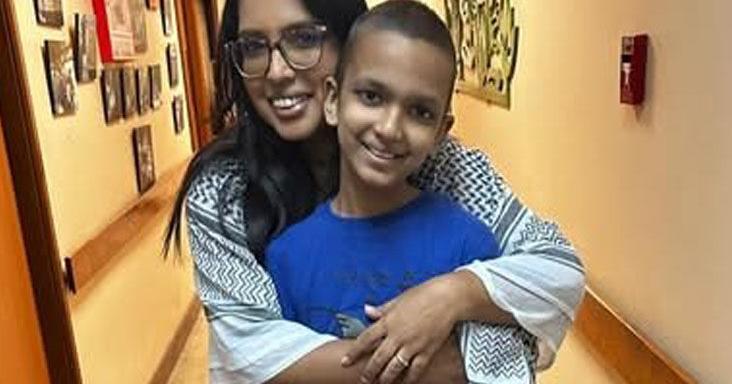
RELAPSES: Fourteen-year-old Levi Mohammed has stopped cancer treatment.
Ali said via a Facebook post: “It is difficult post to make. And not in the least because I’m not sure what to say. The past two weeks have seen Levi’s health deteriorate despite multiple surgical interventions.”
She explained that new and troubling symptoms raised fears of another relapse. “He’s developed some troubling symptoms, that might indicate that the cause of his neurological issues is possibly another relapse of his cancer. Even though previous tests showed no evidence, a most recent one indicates that further testing and evaluation is needed. Levi is very weak. He is recovering from two brain surgeries in the past two weeks.”
The family had been preparing to return to the United States for urgent care. “We will be taking back to North Carolina for further assessment and for any necessary treatment to be start ASAP. I’m asking for your help in the form of sharing Levi’s story, sharing his GoFundme information and keeping him in your thoughts. Our immediate priority is getting him safely to UNC Children’s Hospital.”
However, in a heartbreaking follow up on Levi’s condition, Ali shared: “Levi has started the process of transition. Our brave boy made the decision to stop treatment. Cancer has taken enough from him. It will take no more. He is in full control. He deserves rest and peace now.”
Ali said the family received confirmation of the severity of his illness on March 27. “On the morning of Friday 27th March, we had our answer. His cancer is aggressive and this third relapse has been devastating. It’s come back in multiple sites in his body.”
She noted that further treatment would not offer a cure. “Treatment will not cure him, it will only prolong the inevitable while causing him harm.”
The decision, she said, felt different from previous relapses, which were marked by uncertainty and fear. “Deciding what to do after his first, then second relapse was so difficult. There was so much fear, anxiety, uncertainty about if we were making the right decision.”
“This third time, there’s none of that. There’s only peace and certainty, because this time, Levi has led the way. His body and mind are in alignment.”
In her tribute, Ali described the strength her son has shown throughout his illness. “He’s earned it. In blood. In tears. In the very marrow of his bones. He’s earned it. We are so proud of him. So proud of his decision. He’s so brave.”
She added that the family is now focused on supporting him through this stage of his journey. “We love him and it’s an honour and a privilege to walk beside him on this final part of his journey before he returns to the Universe. My heart is broken. We are devastated. This is going to be the hardest thing we will ever have to go through. But if Levi can do it, we have to find a way to do it too. For him. Always and always for him,” she said.
ABOUT LEUKAEMIA
Leukaemia is the most common cancer in children, affecting the blood and bone marrow where new blood cells are produced. It occurs when abnormal white blood cells grow uncontrollably, crowding out healthy cells needed to fight infection, carry oxygen and control bleeding.
In children, the most common type is acute lymphoblastic leukaemia (ALL), which develops quickly and requires urgent treatment. Other forms include acute myeloid leukaemia (AML), which is less common but also fast-growing. Chronic types are rare in children.
Because the disease affects blood production, symptoms often appear suddenly and may worsen over a short period. These can include persistent fatigue, frequent infections, fever, easy bruising or bleeding, bone or joint pain, swollen lymph nodes, and unexplained weight loss. Some children may also experience headaches or neurological symptoms if the disease affects the central nervous system.
The exact cause of childhood leukaemia is not always known, but it is believed to involve genetic changes in developing blood cells. Certain risk factors, such as inherited genetic conditions or previous exposure to high levels of radiation, may increase the likelihood, although most children diagnosed have no clear risk factors.
Treatment is often intensive and can last for years. It usually involves chemotherapy as the main approach, sometimes combined with targeted therapy, radiation, or a bone marrow (stem cell) transplant in more severe or relapsed cases. Survival rates for childhood leukaemia, particularly ALL, have improved significantly over the years, with many children achieving remission.
However, when the disease returns, known as a relapse, it can be more difficult to treat. Multiple relapses or aggressive forms of the disease may limit treatment options, and in some cases, care may shift toward managing symptoms and ensuring the child’s comfort and quality of life.
First Appeared on
Source link






