


A Group of Scientists Just Discovered Fossils in Greenland That Are 3.7 Billion Years Old
Scientists have discovered the oldest known fossils on Earth, 3.7 billion-year-old microbial remnants, uncovered in Greenland’s Isua Greenstone Belt. This exceptional discovery suggests that life emerged rapidly in Earth’s ancient past, shortly after the planet’s formation, challenging previous ideas about the origins of life.
The study, led by researchers from Australia and the UK, pushes back the known timeline of life on Earth by 220 million years. The fossils were found in rocks exposed by the recent melting of a perennial snow patch. These findings open new perspectives on the rapid emergence of life on our planet and suggest that microbial life may have been more diverse and complex than previously believed.
The Ancient Life Discovery That Will Leave You Stunned!
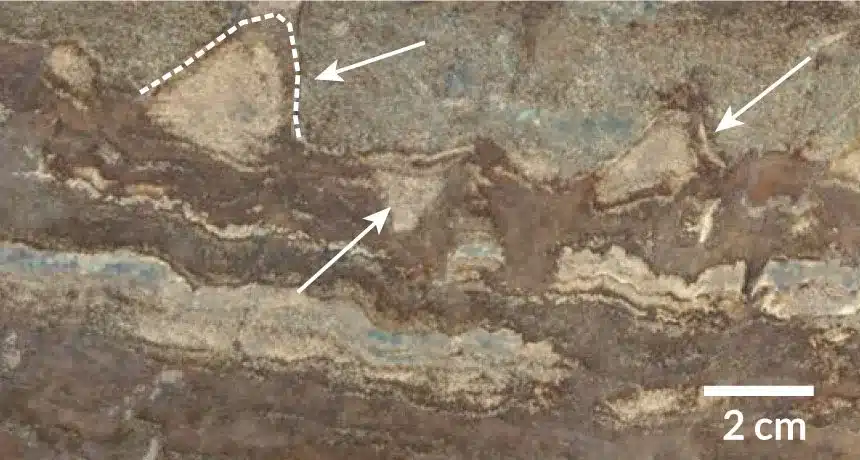
The 3.7-billion-year-old fossils were found in the Isua Greenstone Belt, located along the edge of Greenland’s icecap. Led by Professor Allen Nutman from the University of Wollongong, the team discovered stromatolites, layered structures created by microbial communities in shallow marine environments.
These fossils, made of metacarbonate rocks, are the oldest evidence of life to date, pre-dating previous discoveries from the Dresser Formation in Western Australia by over two centuries. The authors of the study, published in Nature, explained that:
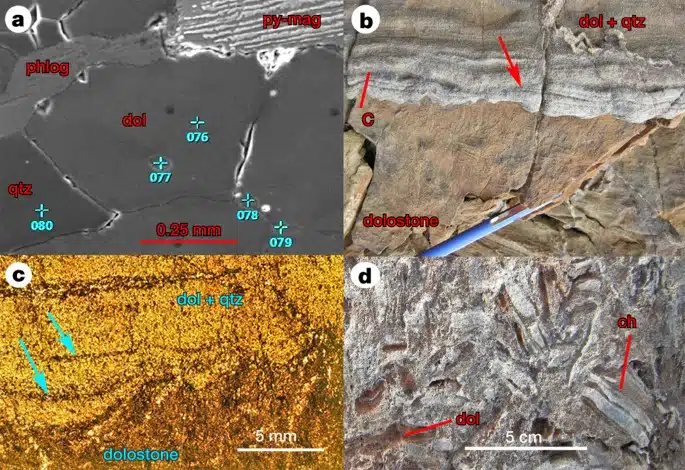
“We report evidence for ancient life from a newly exposed outcrop of 3.7-billion-year-old metacarbonate rocks in the ISB that contain 1-4 cm-high stromatolites, macroscopically layered structures produced by microbial communities.”
According to the research, these findings suggest that microbial life not only existed but was already complex and diversified early in Earth’s history, a few hundred million years after the planet’s formation.
How Stromatolites Reveal Early Earth’s Story
Stromatolites are key evidence of early life because of the way they form. Layers of microorganisms build up over time, creating visible, rock-like structures. These fossils are considered one of the most enduring records of ancient life. The Isua stromatolites, in particular, grew in a shallow marine setting, as indicated by chemical signatures in the metacarbonate rocks, along with interlayered sedimentary rocks formed by storm waves.
“The significance of stromatolites is that not only do they provide obvious evidence of ancient life that is visible with the naked eye, but that they are complex ecosystems,” explained Professor Nutman.
The stromatolite fossils found in Greenland also offer the first evidence of an environment where early life thrived, providing a deeper understanding of Earth’s ancient biosphere.
What If We Found Alien Life?
The discovery has profound implications for the search for life on other planets, particularly Mars. According to Professor Martin Van Kranendonk from the University of New South Wales, the Isua stromatolites offer a model for identifying similar structures on the Red Planet, where conditions 3.7 billion years ago may have been conducive to microbial life.
Mars, with its ancient, damp environments, could have hosted life forms similar to those that existed on early Earth. The team’s findings underscore the possibility that life may have emerged quickly on other planets as well. As Dr. Vickie Bennett, co-lead investigator from the Australian National University, remarked:
“This discovery represents a new benchmark for the oldest preserved evidence of life on Earth. It points to a rapid emergence of life on Earth and supports the search for life in similarly ancient rocks on Mars.”
First Appeared on
Source link






