


A Massive 92-Foot Dinosaur Buried for 147 Million Years Was Accidentally Unearthed Beneath a Construction Site
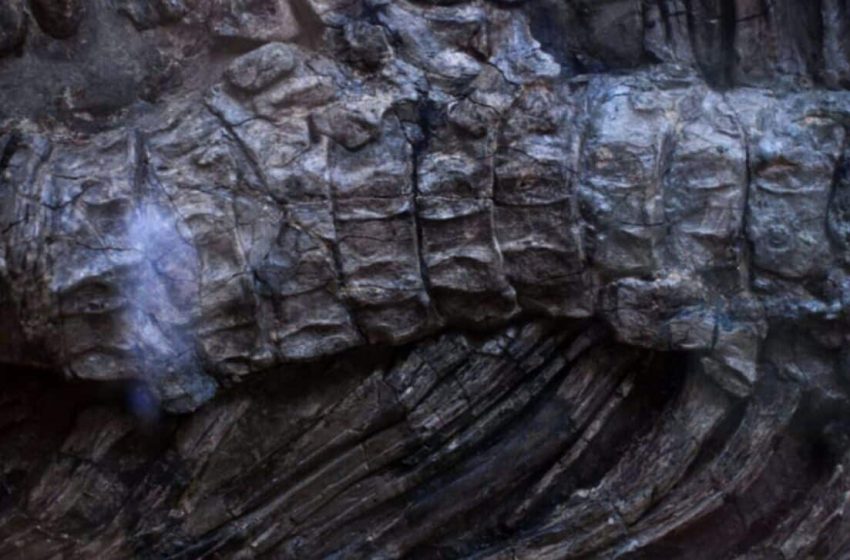
Construction workers in the Tongnan District of southwestern China expected to spend their day pouring concrete for a foundation at a new industrial building project. Instead, the heavy machinery began to expose something buried far deeper in the purple-red rock layers while preparing the site. The excavation sits within the Sichuan Basin, a region known for its complex geological history and a dense concentration of ancient sedimentary deposits.
As the crew cut into the earth, they uncovered massive stone fragments that did not match the typical bedrock formations found in the surrounding construction area. These structures were too large and organized to be random geological formations, eventually displaying a distinct biological pattern that suggested the presence of prehistoric remains. The workers decided to halt the excavation when they realized the bones were significantly larger than any modern animal remains normally found in the region.
Word of the find reached the Chengdu Center of China Geological Survey which dispatched a team of specialized researchers to inspect the site and document the fossils. The researchers confirmed that the construction equipment had accidentally opened a window into the Suining Formation after cutting through several meters of sandstone. This specific geological layer dates back approximately 147 million years to the Late Jurassic period, a time of significant diversification for large dinosaurs.
Bones Hidden in Jurassic Sediment
Dr. Xuefang Wei led the formal investigation into the fossils that lay embedded within thick layers of mudstones and sandstones that characterized the ancient environment. Geological evidence suggested the landscape was once a semi-arid region defined by seasonal water bodies and extensive wetlands that supported a wide variety of prehistoric life. Sediment ripple marks and other aquatic fossils indicated that shallow lakes periodically flooded the surrounding plains and trapped organic material in the silt.
These ancient floods played a critical role in preserving the dinosaur through rapid burial in thick sediment before scavengers or weather could destroy the remains. By shielding the bones from oxygen and erosion, the environment allowed the skeleton to mineralize over millions of years while the land above slowly transformed. The excavation eventually produced a partial skeleton that included three dorsal vertebrae and six tail vertebrae that were remarkably well preserved in the stone.
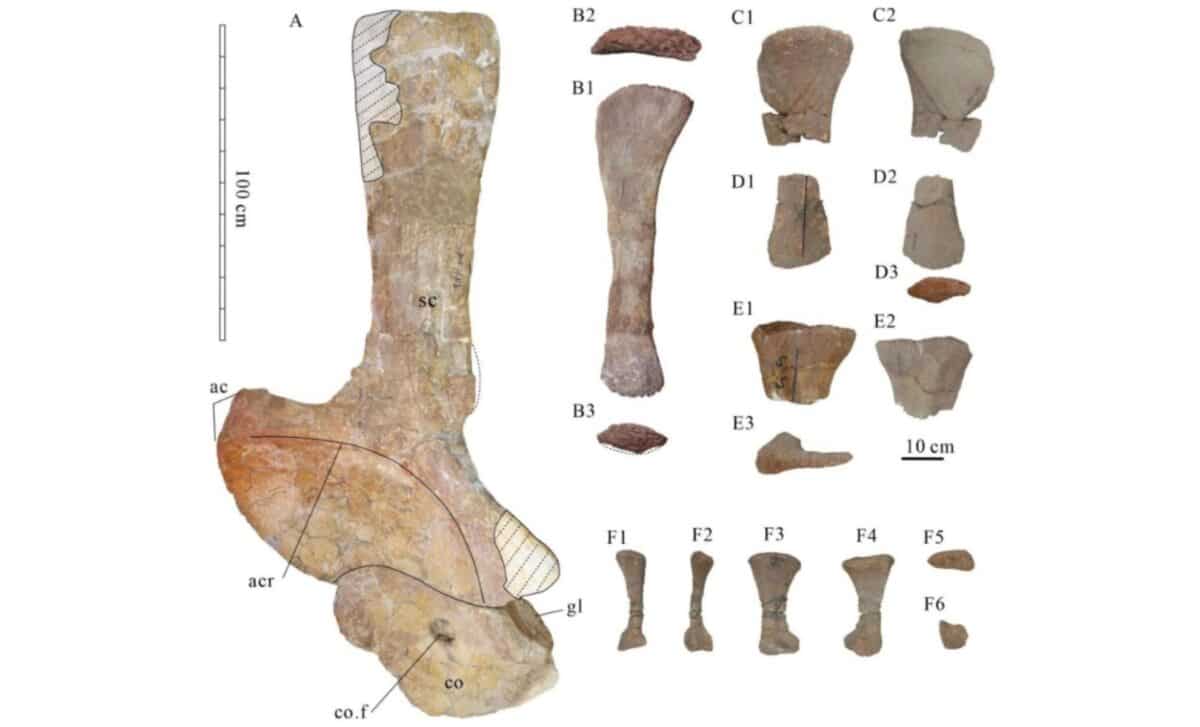
The team also recovered sections of the shoulder girdle and several hind-limb elements such as the tibia, fibula, and metatarsals from the red sandstone. These bones were enough for the scientists to categorize the animal as a member of the sauropod group, which includes the largest animals to walk on land. This family of long-necked dinosaurs represents a successful lineage that reached its peak in size during the middle and late stages of the Jurassic.
The Giant Named Tongnanlong zhimingi
Years after the initial field work was completed, the research team formally described the species in the peer-reviewed journal Scientific Reports for the international scientific community. They gave the dinosaur the name Tongnanlong zhimingi to reference its discovery site and to honor the influential Chinese paleontologist Dong Zhiming for his contributions. This new species belongs to the Mamenchisauridae family which is famous for its members having exceptionally long necks that often exceeded the length of their bodies.
Several unique anatomical features became apparent once the bones were cleaned and measured in the laboratory using precision tools to remove the remaining stone matrix. The fossil included a massive scapula, or shoulder blade, that measured more than 1.8 meters in length and provided a base for the animal’s powerful front legs. This specific bone is notably larger than the shoulder blades recorded for many other related giant dinosaurs discovered in the same geological formation.
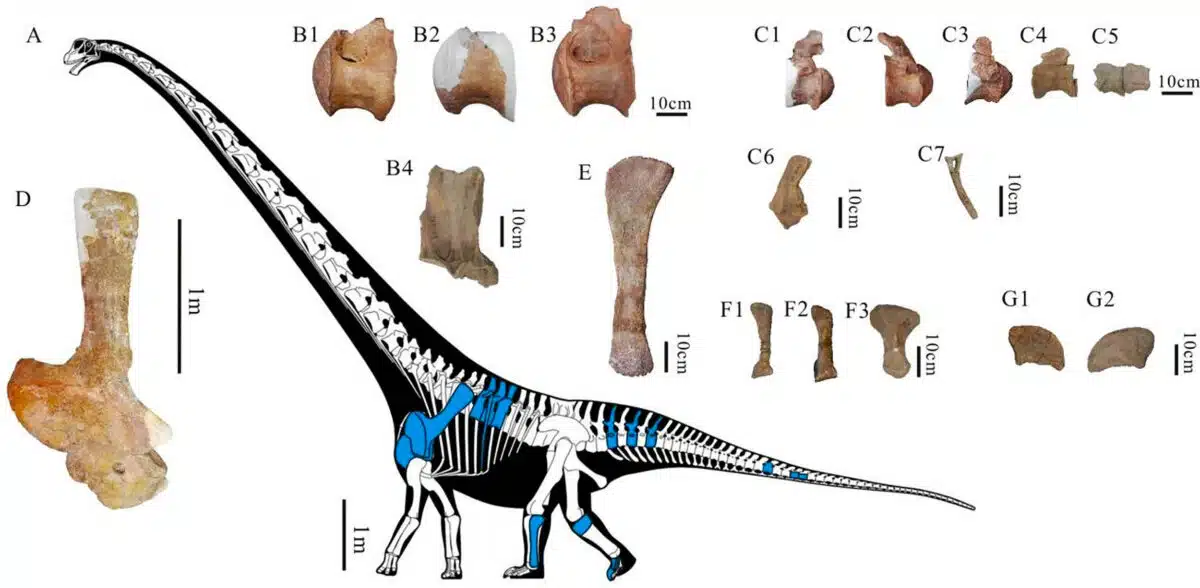
The vertebrae of this species also featured reinforced ridges and a complex system of internal air cavities that allowed the bones to remain light and functional. These structures, known as pleurocoels, allowed the massive skeleton to maintain structural integrity without the animal becoming too heavy to move across the ancient wetlands. This adaptation was essential for supporting a body that likely weighed as much as ten modern elephants standing on top of each other.
Calculating a 92-Foot Frame
Paleontologists used mathematical scaling to estimate the full dimensions of the dinosaur since the recovered skeleton was not entirely complete at the time of study. By comparing the size of the shoulder blade and the length of the leg bones to more complete relatives, they could accurately project its total body proportions. The team concluded that the animal measured between 23 and 28 meters long, representing a truly massive individual within its family tree.
An animal of 28 meters, or roughly 92 feet (28.04 m), would be among the largest land animals known to science and represents the upper limit of regional dinosaur growth. This measurement places the specimen at the extreme end of the size spectrum for the mamenchisaurid lineage that thrived across the Asian continent during the Jurassic. These dinosaurs dominated their ecosystems by consuming massive amounts of high-canopy vegetation that other herbivores were unable to reach with their shorter necks.
The discovery also provides new data for the long-standing debate surrounding the East Asian Isolation hypothesis which has influenced paleontological thought for decades. This theory suggests that rising sea levels once separated China from other landmasses, leading to a unique and isolated evolutionary path for its native dinosaur populations. However, the features of this new find resemble sauropods found in other parts of the world, proposing that migration across different continents was likely possible.
“The anatomy of this specimen suggests that giant sauropods were more widely distributed and interconnected than previous models of Jurassic geography had indicated,” the research team stated.
This evidence suggests that giant dinosaurs may have been more interconnected across various landmasses than previously believed by researchers studying the movement of prehistoric species. The presence of similar traits in distant regions implies that land bridges or lower sea levels allowed for migration between Asia and other parts of the globe. The Chongqing Museum of Natural History now houses the remains of this massive Jurassic giant, where it will undergo further research and public display.
First Appeared on
Source link






