


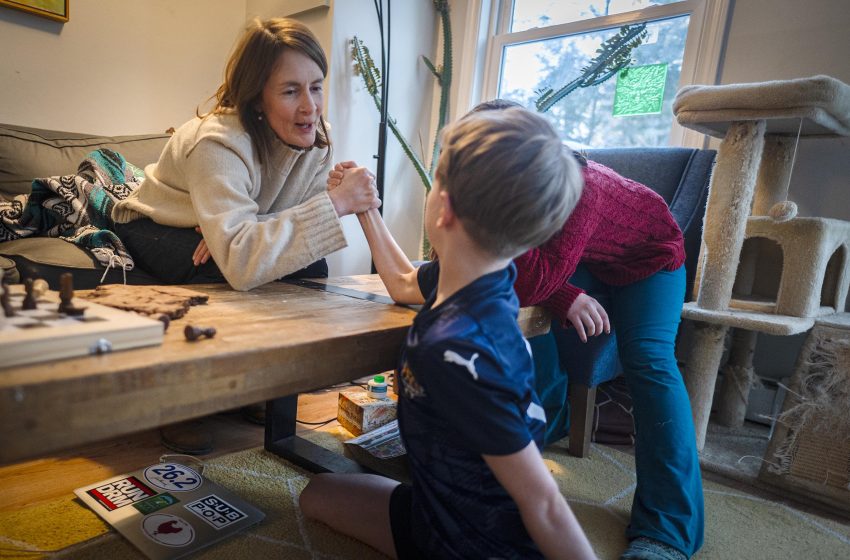
A rare condition can send kids into fits of rage. Treatment could help — if insurance covers it.
Just days before Christmas in 2023, Elizabeth Bechard’s 7-year-old son woke in the middle of the night, screaming. He and his twin sister had been battling winter strep infections, Bechard said, but this was different from the discomfort of a scratchy throat and fever.
In the weeks that followed, he became wracked with obsessive compulsive disorder, anxiety and rage. He refused to go to school. He shouted at his parents. He kicked walls and broke glasses.
“He would become the Incredible Hulk, doing things like flipping over heavy furniture and ripping books and trying to throw himself out the window,” Bechard said.
Bechard had heard about cases like this before: an otherwise content child becomes unrecognizably rageful, seemingly overnight. She had a hunch about what might be the cause. She took her son to his Burlington primary care provider, who referred them to a clinic at Dartmouth that specializes in these conditions.
It took a few months for Bechard and her son to get an appointment, but once they were there, “within about five minutes,” the doctors confirmed what she suspected, she said.
Her son was diagnosed with PANDAS — or Pediatric Autoimmune Neuropsychiatric Disorders Associated with Streptococcal Infections.
PANDAS, and the related PANS (pediatric acute-onset neuropsychiatric syndrome, which has similar symptoms but no identified strep trigger) are both mysterious and controversial diagnoses that link psychological symptoms with a physiological trigger, specifically inflammation brought on by an infection, such as strep throat.
The condition is marked by the sudden development of intense OCD, mood swings, rage and anxiety. Often, children refuse to eat, go to school or let their parents leave them.
Researchers hypothesize that the infection triggers an autoimmune response that specifically leads to swelling in parts of the brain, which then prompts the range of psychological symptoms.
Some doctors dismiss the diagnosis, instead seeing the symptoms as part of the broader spectrum of OCD and psychological disorders. They are skeptical that a virus or bacteria can cause psychological syndromes. Still others worry that the syndrome is far more widespread and underdiagnosed.
Clinical studies showing that treating the immune system can help reduce the psychological symptoms of the condition are still early and small. But some families whose children are able to get the most intense autoimmune treatments have found it radically helps their children live with the condition. Others languish in treatment purgatory as they await coverage of the costly infusions from insurers who want to see stronger science for the therapy.
One Vermont lawmaker wants to change that, forcing insurers to pay for PANDAS treatment if a doctor determines it necessary. But that push means fighting an uphill battle of stigma and low awareness that those impacted by the disease say they’ve long been mired in.
A tightrope of treatment
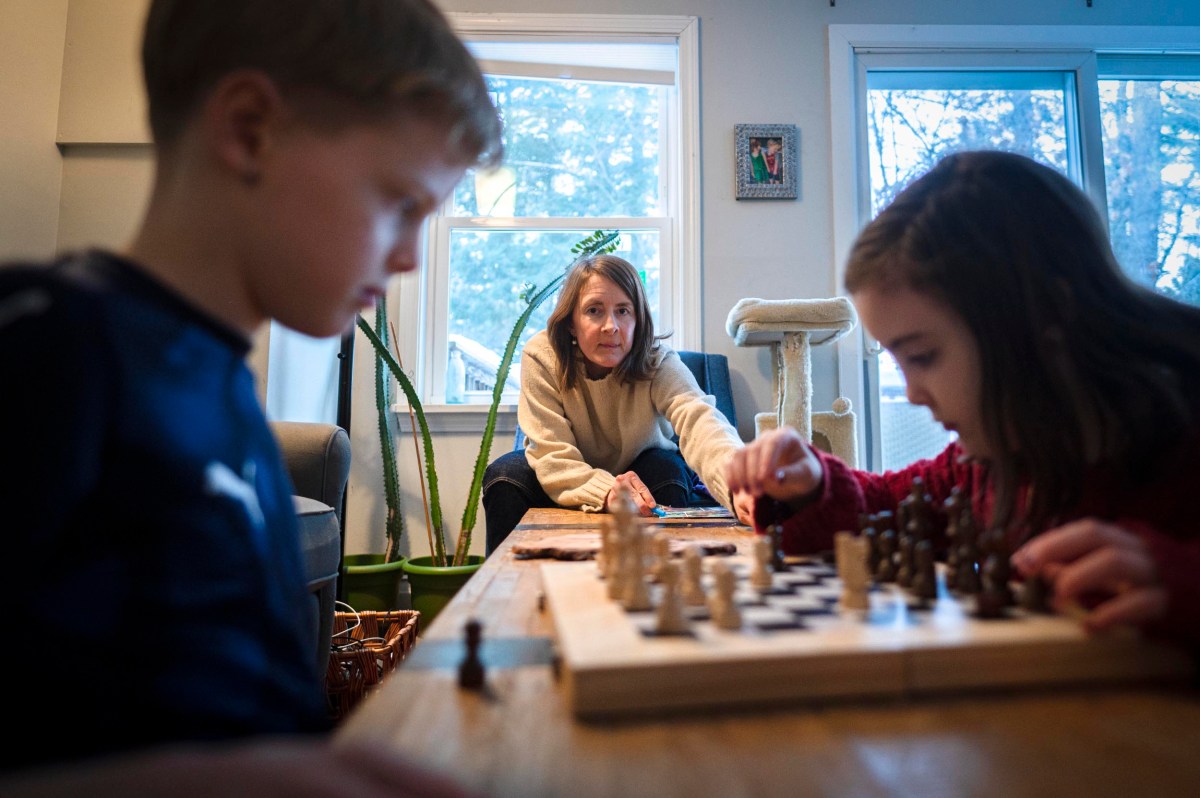
“The trick is to be skeptical and open minded, which is a hard tightrope to walk,” said Steven Schlozman, a doctor specializing in pediatric psychiatry at UVM Health. From his clinic, he knows that a PANDAS diagnosis is right for some patients, but he is also wary of signing a child up for the risks of treatment.
Broadly, treating PANS and PANDAS aims to lessen the symptoms while also targeting the root cause. That means many children are prescribed typical treatments for psychological conditions — appetite stimulants for their food refusal, SSRIs for depression, anti-psychotics for rage — while also working through treatments that target the infection and inflammation itself.
For Bechard’s son, that meant taking ibuprofen and a litany of antibiotics to clear the strep infection. She said he took anti-inflammatory medication, anti-psychotics, a few different antidepressants, ADHD pills, anti-anxiety medication and steroids, too, which only worsened his psychological distress.
“There’s lots of trial and error for lots of different things,” Bechard said.
If all else fails in kicking the infection and inflammation, doctors look to an intravenous infusion of immune system antibodies for treatment of PANDAS. The treatment — called IVIG, for intravenous immunoglobulin — requires that a patient sit for hours as they receive an IV drip of someone else’s donated antibodies. It is something that patients with autoimmune conditions like HIV or Lupus receive, and though the evidence is sparse, early studies have shown it helps treat PANDAS symptoms.
This was the case for 12-year-old Enzo Gaskell. His story is not unlike Bechard’s son’s. In September 2022, Enzo had just started third grade at Christ the King School in Burlington. “He was happy as can be,” his mother, Adrienne Gaskell, said.
She described him as a charismatic, goofy and sociable kid. Then seemingly in a span of days or weeks, “he changed dramatically.”
Or as Enzo himself put it: “One day I went to school, and the other day, I didn’t want to get out of bed,” he said. “It makes me do things that I don’t want to.”
He didn’t want to eat. He didn’t want to go to school — and when he did, he hid in the bathroom or disappeared in the building. He would throw things and rage at home, and he wouldn’t let his parents leave him with anyone, though previously he was happy to have his grandparents over as babysitters when his parents went out on date nights.
It took nine months — months of meetings with pediatricians, psychiatrists, stays in and out of inpatient mental health beds and trips to the emergency room — for Enzo and his parents to even hear of PANDAS.
“The day we got the diagnosis was such a sense of relief to have clarity,” Adrienne said. It was revelatory to have something physical and tangible to point to as the cause of this — and a clear path of treatments to target the inflammation.
When antibiotics failed to address his inflammation, the Gaskells’ doctors recommended IVIG therapy. Their insurance covered it.
Enzo received the first infusion at home, where he could watch TV shows and sit comfortably for the hours it takes to complete the treatment. A week and half later, “It was like Enzo returned to us,” Adrienne said.
“He went into his room, and he was like ‘I have to clean and organize my room,’” she said. “It was like he was seeing things with fresh eyes for the first time.”
But the treatment was not without its hiccups. Enzo said he spent the day after he had the infusion vomiting in the emergency room as his body acclimated to the influx of someone else’s antibodies.
Now, though, his reaction is more often a slight headache. He likes that he gets to watch “The Simpsons” and drink Gatorade to hydrate after the infusions, something that would otherwise be off limits.
But it’s side effects like those Enzo first experienced that Schlozman, the UVM Health psychiatrist, wants to prevent wrongly saddling a child with. The after effects can include allergic reactions and anaphylaxis. Often patients receive steroids with the immunoglobulins to subdue an immune response, but the steroids themselves can provoke a neuropsychiatric reaction.
Schlozman worries about the downsides of a child missing a day of school or sports or socializing, if other treatments can suffice. “A kid’s job is to be a kid,” he said.
Enzo, for instance, has to miss an entire day of school to receive his infusion, which he now receives every three weeks. He is able to receive the treatment at home, but that’s not the case for every child.
“If they need it, that’s great, but I certainly don’t want to commit anybody if they don’t need it,” Schlozman said.
Also, “it’s really, really, really, really expensive,” he said.
Covered Condition
The expense of these infusions is central to S.251, the bill introduced in the Senate Finance Committee this year. As it stands, the bill would require insurers to cover treatment for PANDAS and PANS that a clinician deemed medically necessary — including the intravenous immunoglobulin therapy.
Sen. Thomas Chittenden, D-Chittenden Southeast, introduced the bill after learning about another child on his son’s soccer team who has PANDAS and has been struggling to get the treatment covered by insurance.
He is candid about the reality that his bill, which has only received brief attention so far, may not become law this session. He sees the introduction more as an opportunity to raise awareness of the condition so it’s easier to pick back up in future sessions.
Though the costs vary, on average in the United States, one IVIG infusion costs $9,720, according to one 2021 study of cost effectiveness.
A child with PANDAS would require repeated infusions — like Enzo’s every three weeks.
It’s a bill that Elizabeth Bechard cannot foot. Her insurer, Cigna does not want to either.
She and her son have tried everything up to IVIG, and their doctor says it’s time to try the treatment. Since returning to school and getting the flu this fall, Bechard’s son has been going through a particularly heightened stretch of difficult behavior. Bechard has gone through rounds of denials and appeals with Cigna for the treatment to be covered. The company has told her the treatment is not considered medically necessary, Bechard said.
“It just kind of kills me because nobody is ordering IV infusions for their 9-year-old for fun,” she said.
A spokesperson from Cigna was unable to comment on the individual case but said that the insurer reviews each request for IVIG treatment individually. Madeline Ziomek, the Cigna spokesperson, wrote that the insurer bases decisions on “the member’s specific health condition, current medical evidence, and the terms of the individual’s health plan.”
“Because IVIG is a highly specialized therapy, it is typically covered when there is clinical evidence demonstrating its effectiveness, including for certain immune and blood disorders. We routinely review and update our coverage policies as new clinical evidence is published,” Ziomek wrote.
Because Cigna is a private insurer whose coverage Bechard receives through her employer, the Vermont bill would not apply to them.
BlueCross BlueShield of Vermont, whose plans sold on the state health insurance marketplace could be subject to a potential state law, already does cover the treatment for PANDAS, spokesperson Kristina Masseri told VTDigger.
“As long as the condition is confirmed by a specialist, and the disease is moderate or severe, and the patient has failed all other treatments, we do cover it,” she said. “It’s a need for this patient population, so (the clinical team) felt like that’s important.”
She acknowledged, though, that the science behind the treatment is still developing, and may change as prevalence of the diagnosis evolves.
Vermont Medicaid, which is a state-federal partnership for those with low incomes or certain disabilities, does not currently cover the IVIG treatment for PANDAS because the research on it is still so early, though they may evaluate coverage on a case-by-case basis.
Medicaid wants to wait until there is more solid data before using limited state funds to cover the treatment, said Alex McCracken, the director of communications for the Department of Vermont Health Access, which oversees Medicaid in the state.
It’s likely that more research will come as the condition and its treatment become better understood. Alexandria Rains has worked as a case manager for the mental health service provider NFI Vermont for eight years. She specializes in cases of neurodiversity, and only learned of PANDAS two years ago. Now, there are three patients with the condition in NFI’s system alone — including Enzo Gaskell, whose parents work with Rains.
She sees a better understanding of the condition as a pathway to better understanding the brain-body connection more broadly.
“There is a lot of stigma around the diagnosis. A lot of doctors don’t believe in it. I think it’s because of how drastic it is for the medical community,” she said. “If we look at the body-brain axis, we will have to rethink everything our society has separated along the body-brain axis… I think that’s where the future of medicine is going and I think some folks are not ready for that.”
For now, Bechard continues to face the everyday monotony of insurance denials and the daily challenges of getting her son to school and helping him regulate his psychological distress.
On Tuesday, Bechard learned her insurer once again denied coverage for IVIG treatment. All the while, her son has continued to miss school and act out.
Still, she somehow remains optimistic: “We will continue to appeal until we win.”
First Appeared on
Source link






