


A Sunken Road to Atlantis? Scientists Make Unbelievable Find in Area With Only 3% Seafloor Explored
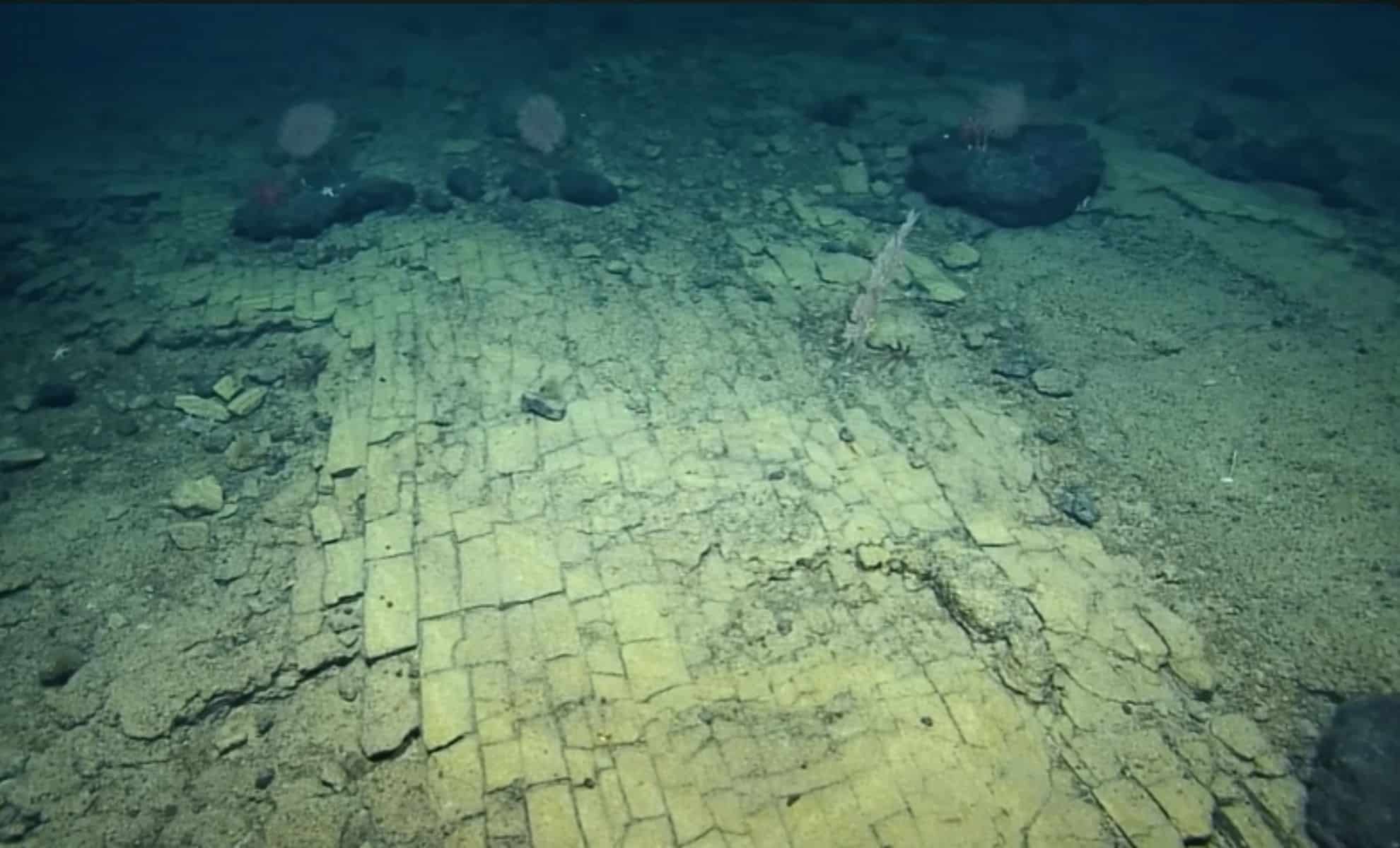
The discovery took place along the Liliʻuokalani Ridge, inside the Papahānaumokuākea Marine National Monument (PMNM), one of the world’s largest marine conservation areas. Although it spans a massive area in the Pacific, researchers have visually explored less than 3 percent of its seafloor. This particular moment, broadcast live by the Ocean Exploration Trust, felt like something from a fantasy film, but had very real geological roots.
The find happened during a mission to survey ancient seamounts, underwater volcanoes, north of the Hawaiian Islands. While piloting a remotely operated vehicle (ROV) across the summit of Nootka Seamount, researchers encountered what looked like a dry, stone-paved path. “Are you kidding me? This is crazy,” one team member reacted over the radio, as heard in the April 2022 highlight reel shared on YouTube. The appearance of the rocks stunned even seasoned explorers.
Volcanic Crust, Not a Road ?
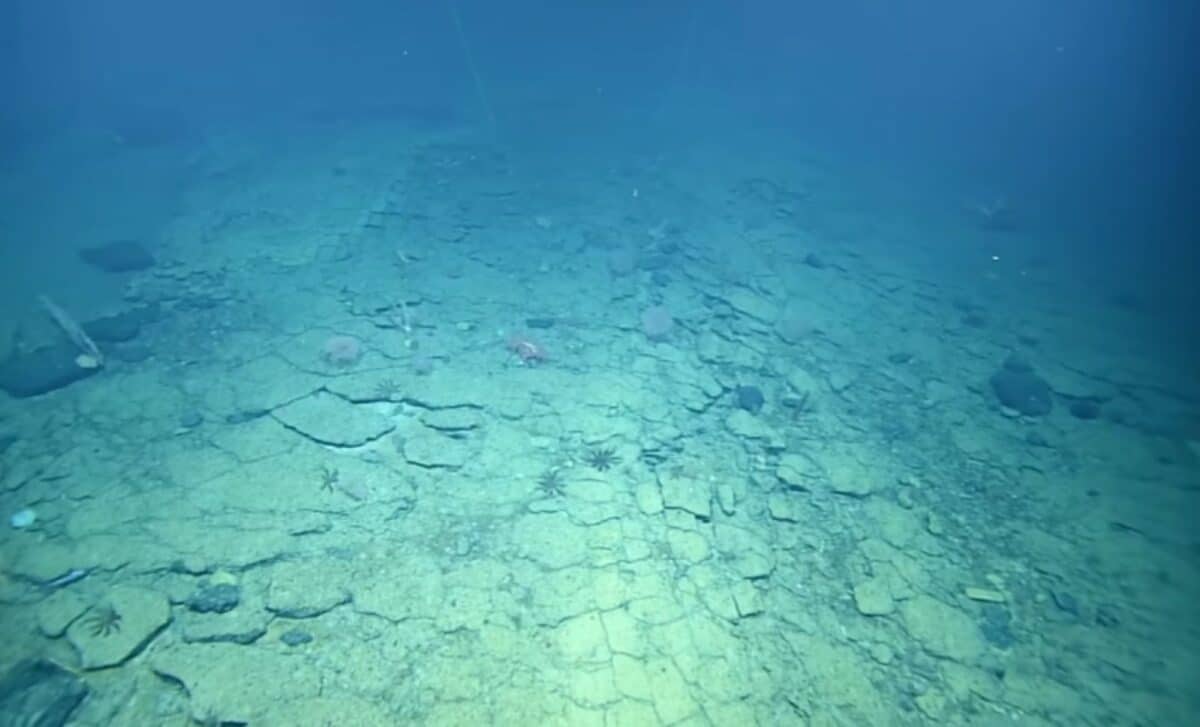
Despite initial impressions, this was not evidence of lost civilizations or human-built structures. The apparent “road” was actually a naturally fractured flow of hyaloclastite, a volcanic rock formed during explosive underwater eruptions when lava shatters on contact with seawater. According to Ocean Exploration Trust researchers, the neatly aligned shapes seen in the footage resulted from thermal stress: repeated heating and cooling over time caused the rock to crack at roughly 90-degree angles.
The result is a geological illusion: slabs of volcanic crust that almost appear man-made.In one section, the surface was described as resembling a “baked crust that could be peeled off,” and the cracks looked like bricks. This kind of structure isn’t unheard of, similar natural formations can be found on land, like the Giant’s Causeway in Northern Ireland, but spotting it at a depth of over 3,000 meters beneath the ocean made the sight all the more unexpected.
One of the Least-Explored Places on Earth
The yellow brick road discovery is just one tiny part of a vast, mostly unmapped underwater region. As reported by the Ocean Discovery League and Boston University, only between 0.0006 and 0.001 percent of Earth’s deep seafloor has ever been visually observed. That amounts to about 3,823 square kilometers, slightly larger than Rhode Island. It’s a tiny sliver of the 335 million square kilometers that make up the deep ocean, defined as everything below 200 meters.
According to the 2025 coverage study published in Science Advances, the bulk of visual data on the seafloor comes from just a few countries (mainly the United States, Japan, and New Zealand) and focuses on areas within their national waters. Only about 19 percent of dives have taken place in the high seas, which cover 58 percent of the ocean’s surface. This heavy bias limits global understanding of ocean biodiversity and geology, especially in underexplored regions like PMNM.
Scientific Value beyond the Spectacle
Though it looks like something from a fantasy story, this fractured crust carries real scientific weight. Hyaloclastite deposits like those found at Nootka Seamount offer insights into volcanic behavior, seafloor formation, and the physical conditions that shape underwater ecosystems. “Our exploration of this never-before-surveyed area is helping researchers take a deeper look at life on and within the rocky slopes of these deep, ancient seamounts,” explained the team behind the E/V Nautilus expedition.
The same geological features that create dramatic visual effects also shape habitats for marine life. Volcanic rock formations provide surfaces for organisms to cling to, hide within, or feed on. The “road” might just be one of many clues hiding in the darkness of the deep ocean, clues that are waiting to tell us more about how life survives far below the surface, far from light.
In the end, this surreal underwater pathway isn’t a remnant of Atlantis, nor a gateway to Oz. But it is, in its own way, a signpost, one pointing to just how much of our own planet remains unseen, unmapped, and full of surprises.
First Appeared on
Source link






