


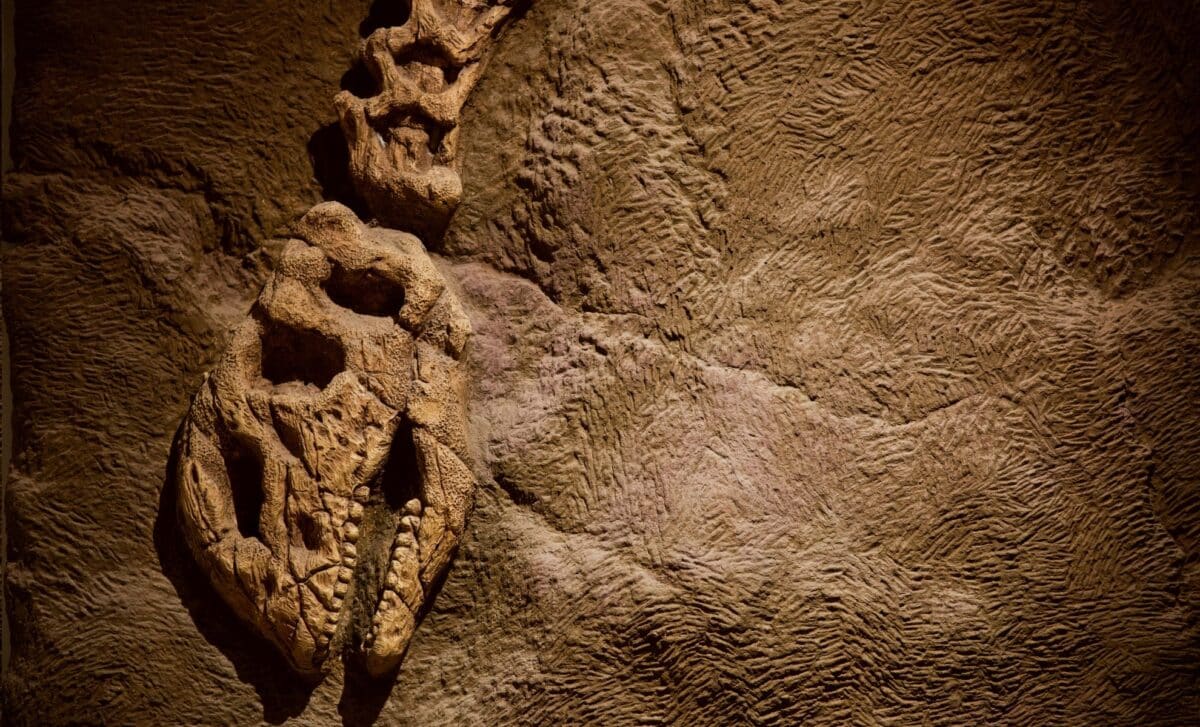
A Well-Preserved Dinosaur Fossil Found with a Surprising Thing in Its Throat and Stomach!
The Pulaosaurus qinglong, a small herbivorous dinosaur from about 163 million years ago, was found with not only a surprisingly preserved voice box but also seeds and small stones in its stomach. This revelation offers new clues about how early dinosaurs communicated and fed—and what they might have sounded like.
The Pulaosaurus fossil was unearthed in Qinglong County, a region already rich with fossils from the Jurassic period. Researchers believe this area was once a humid, volcanic landscape, perfect for preserving such remarkable details. The skeleton itself was found curled up in a slab of reddish sandstone, with its bones still largely intact. But what really stands out about this find are the unexpected details.
A Snapshot of Pulaosaurus Qinglong
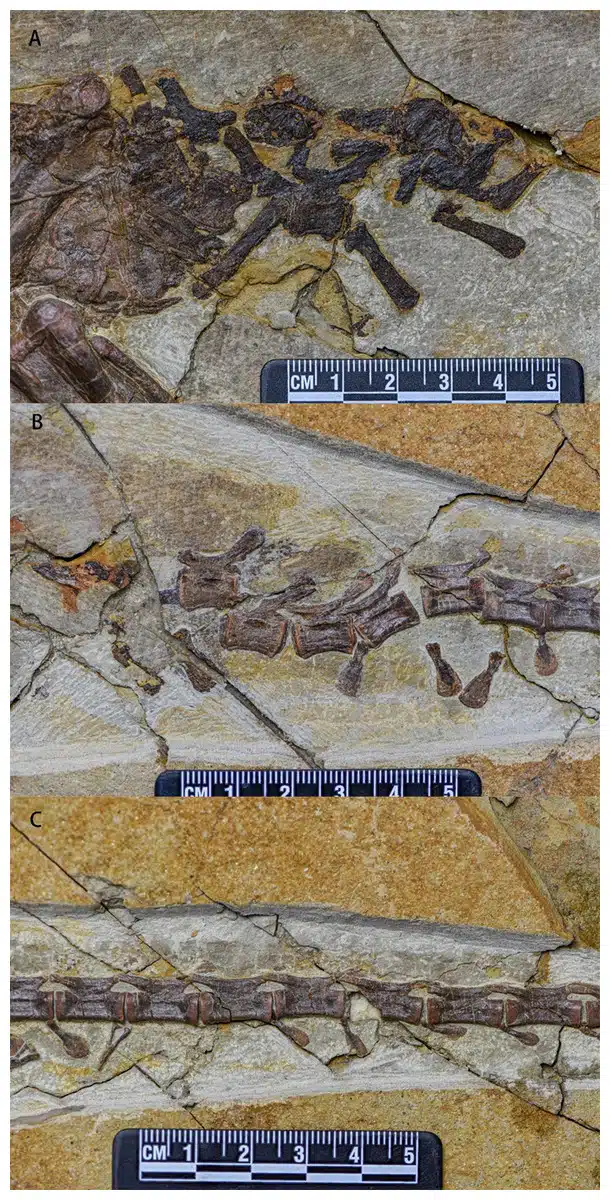
As mentioned in the study published in PeerJ, the Pulaosaurus fossil was discovered in an extraordinary state of preservation. The skeleton, measuring just 28 inches in length, includes bones that remain connected in their natural order, allowing scientists to reconstruct its posture and feeding habits.
According to Yunfeng Yang, a paleontologist from the Institute of Vertebrate Paleontology and Paleoanthropology in Beijing, this discovery helps classify Pulaosaurus as an early neornithischian; a group of small, plant-eating dinosaurs that evolved into the herbivores we recognize today, such as duck-billed dinosaurs.
The stomach holds small stones and oval-shaped impressions that suggest Pulaosaurus consumed plant matter, likely using its teeth to nip vegetation and swallow it along with grit to aid digestion. The presence of seeds in the fossilized remains is particularly noteworthy, as it offers direct evidence of the dinosaur’s diet.
A Rare Find: The Dinosaur’s “Voice Box”
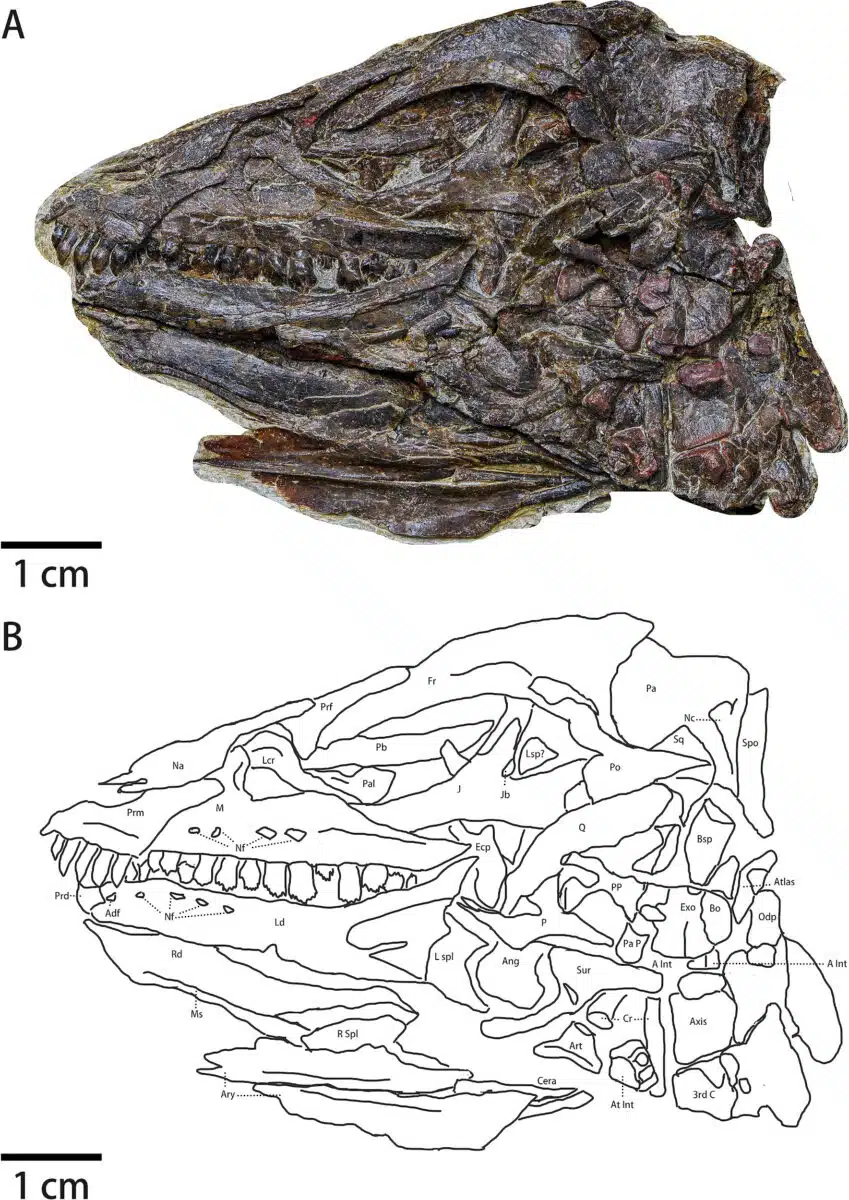
But the real jaw-dropper is what was found near the dinosaur’s lower jaw: a pair of long bones that make up the larynx, or voice box. Unlike the soft, flexible cartilage seen in modern reptiles, these bones are ossified, meaning they turned into bone, which is incredibly rare in dinosaur fossils. This structure, known as the arytenoids, is involved in controlling airflow and producing sound, suggesting that Pulaosaurus could have had some kind of vocal ability, perhaps similar to that of modern birds.
James Napoli, a vertebrate paleontologist, pointed out that while we’ve known that some dinosaurs might have had large larynxes, their role was thought to be more about modifying sounds than producing them. The preservation of these bony vocal structures in Pulaosaurus opens the possibility that some dinosaurs were capable of more complex vocalizations than we had imagined.
“Dinosaur sounds are one of those persistent unknowns that make this paper all the more exciting,” Napoli explained. “Without fossilized vocal organs, which are extremely rare, it’s really hard to even begin to estimate the limits of dinosaur vocal behavior, much less what they really sounded like.”
Feeding, Digestion, and the Hyoid Bone
The fossil also preserved part of the hyoid bone, which helps support the tongue and mouth. Interestingly, the hyoid bones of Pulaosaurus are short, especially compared to its jaw, suggesting it didn’t have much tongue mobility.
“It is possible for Pulaosaurus to have an avian-like vocalization,” said the research team of a 2018 study on dinosaur tongues anatomy.
Unlike modern birds, which have highly flexible tongues, Pulaosaurus likely used its beak and teeth, rather than a flicking tongue, to gather and process food. It’s a simple but crucial insight into how this dinosaur might have gone about its daily business.
First Appeared on
Source link






