


Americans urged to leave 14 Middle East countries amid Iran war “due to serious safety risks”
The U.S. State Department has urged Americans to leave 14 countries across the Middle East amid the widening Iran war.
Americans were urged late Monday to “depart now” from Bahrain, Egypt, Iran, Iraq, Israel, the West Bank, Gaza, Jordan, Kuwait, Lebanon, Oman, Qatar, Saudi Arabia, Syria, the United Arab Emirates and Yemen.
More than a million Americans were believed to be in the region, a source said.
U.S. citizens had initially been urged to leave “using available commercial transportation, due to serious safety risks.” But on Tuesday, the State Department said it was facilitating charter flights from the United Arab Emirates, Saudi Arabia and Jordan for Americans and that it would “continue to secure additional capacity as security conditions allow.”
The State Department was proactively contacting U.S. citizens to offer them seats on charter flights, an official told CBS News. More than 120 people were fielding calls at its 24/7 call center.
The Free Press: From October 7 to Killing Khamenei
The State Department also told all non-emergency U.S. government personnel and their families to leave Bahrain, Iraq, Jordan, Qatar, Kuwait and the United Arab Emirates. Non-essential personnel and their families have additionally been ordered to depart from U.S. diplomatic posts in Cyprus and Pakistan.
The State Department said Tuesday it was helping Americans book commercial flights, as such options were available in Saudi Arabia, the UAE, Oman and Egypt.
“For those in countries lacking commercial aviation availability, the Department is facilitating travel to third countries as conditions allow,” it said. “That includes increasing ground transportation options for American citizens wishing to leave Israel.”
Speaking to reporters on Tuesday, Secretary of State Marco Rubio said “almost 1,600” Americans had requested assistance with departing the region. The department also said Tuesday it had answered calls from almost 3,000 U.S. citizens in the region and will “waive any statutory requirement for American citizens to reimburse the government for travel expenses.”
Americans who need the government’s help arranging travel should call +1-202-501-4444 from abroad or +1-888-407-4747 from the U.S. and Canada.
Amid efforts to leave the region, four U.S. embassies have closed and suspended consular services, although a State Department official said U.S. diplomatic operations continue.
The U.S. embassies in Beirut and Kuwait announced on Tuesday they would be closed until further notice “due to ongoing regional tensions.” The embassy in Kuwait was closed a day after smoke was seen rising from the mission following Iranian attacks on the country.
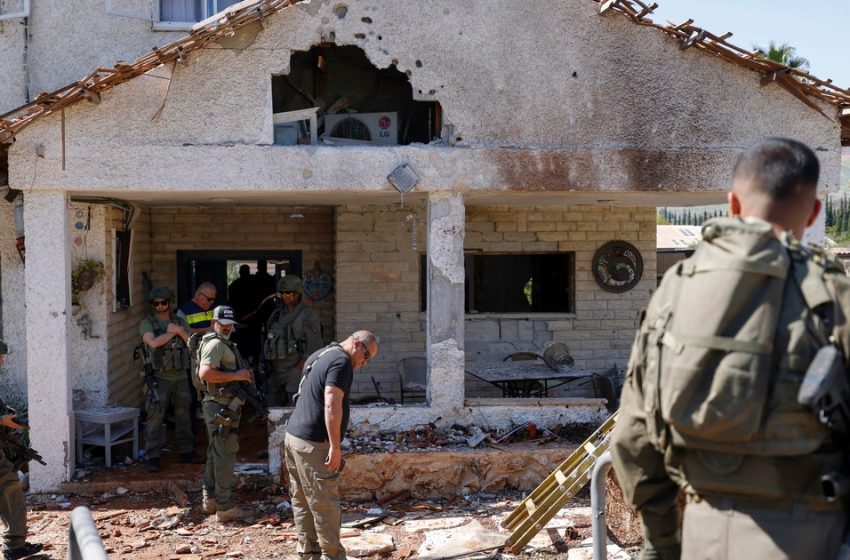
The U.S. embassies in Saudi Arabia and Jerusalem said they would be closed on Tuesday. The embassy in Riyadh was attacked by two drones, causing a small fire and limited damage, the Saudi Ministry of Defense said on X Monday. A U.S. official and a Gulf official confirmed to CBS News a CIA station at the embassy complex in Riyadh was hit, but there were no American casualties. The CIA declined to comment.
Rubio on Tuesday addressed a drone attack on a U.S. consulate in Dubai, where he said a drone struck a parking lot near a chancellery building and started a fire. All personnel were accounted for, he said.
AFP via Getty Images
The U.S. and Israel began attacking Iran on Saturday in what President Trump described on Monday as the “last best chance” to address the threat posed by Iran’s ballistic missiles and nuclear program. He articulated the reasons he said he decided to order strikes, bombing over 1,000 targets in the opening days of what he said could be a weeks-long conflict. They include destroying Iran’s missile capabilities, annihilating Iran’s navy and preventing Iran from developing nuclear weapons.
Six U.S. troops have been killed during the war. The U.S.-based Human Rights Activists News Agency said Wednesday that over 1,000 civilians in Iran have been killed since Saturday.
Americans — and travelers who found themselves stranded amid regional airport and airspace closures — have been trying to figure out how to leave the region, with some expressing frustration over the government’s response.
“We’re honestly trapped,” Sasha Hoffman, an American who lives in Chicago and was vacationing in Dubai when the strikes began, told CBS News on Tuesday. “It’s really frustrating that right now the U.S. is saying ‘Americans come home’ when in reality we can’t come home. We’ve had flights booked today, tomorrow, all of them are canceled. All of the airspace is closed through tomorrow night, now, if you’re in the UAE.”
In Israel, American Tamar Rubinstein, pregnant with twins, said she was taking a bus to Egypt then flying through Europe back to her home in Chicago — a journey she said will take about two and a half days.
“There’s such a lack of clarity,” she said.
U.S. Ambassador to Israel Mike Huckabee said early Tuesday, “We are getting a lot of requests regarding evacuating from Israel from American citizens who are currently in Israel or who have family here.”
In a lengthy post on social media, Huckabee outlined how people can depart Israel, noting “there are VERY LIMITED options.” He said the U.S. Embassy was not in a position to evacuate or directly help Americans leave the country.
An estimated 9,000 Americans have safely departed the Middle East since the start of the conflict, the State Department said.
First Appeared on
Source link






