


Amy Madigan Won an Oscar for ‘Weapons.’ Who’s Next?
We’re in a post–Aunt Gladys world, anything’s possible.
Photo: Miya Mizuno/Sony Pictures/Everett Collection
In an awards season as (mostly) unpredictable as this one, Amy Madigan picking up a Best Supporting Actress Oscar for her brief but indelible performance as Aunt Gladys in Weapons wasn’t exactly a foregone conclusion. By the time the ceremony arrived, the category had become something of a three-way race between Madigan, One Battle After Another’s Teyana Taylor, and Sinners’s Wunmi Mosaku, with those ever-reliable betting markets leaning slightly toward Madigan. But it really could have gone in any direction. Even as she picked up a number of notable precursors, the Academy Awards’ historic dismissal of horror loomed large enough that Madigan’s garishly made-up witch never felt like a sure thing.
Of course, there was precedent. When I suggested giving Madigan gold seven months ago — and yes, you can consider this a victory lap — I noted that the Oscars have selectively celebrated horror, with Madigan following in the footsteps of Ruth Gordon, a Best Supporting Actress winner for a notably similar role in Rosemary’s Baby. But Madigan wasn’t even the only spell-casting nominee in her category, which also included Mosaku’s Hoodoo practitioner Annie. And if we really want to consider the Academy Awards’ shifting relationship to genre, we can’t overlook the fact that the record breaker for most nominees in the ceremony’s history is, as of 2026, a horror film. Sinners may also be a period drama, a musical, and a gangster movie, but it’s fully steeped in southern Gothic horror. And in picking up the Best Actor trophy, Michael B. Jordan became the first cinematic vampire to triumph in the category.
It would be a mistake to dismiss the representation of horror at the 98th Academy Awards as a fluke — consider, too, The Substance and Nosferatu’s multiple nominations the year prior. The field appears to be wide open, which means extolling the virtues of the movies and performances we love might have real impact. As with all Oscar winners, Madigan was propelled to victory by a number of factors beyond the strength of her performance, including decades of respect for her work and the cultural impact of her character. But she was also buoyed by critics and industry insiders banging the drum for months: An Oscar for Aunt Gladys sounded crazy until it didn’t. Sinners, with its deeply resonant themes and Ryan Coogler at the helm, may have had more obvious awards potential from the jump, but as an April release, it also benefited greatly from nearly a full year of sustained chatter. There was enough momentum behind it that for a brief moment, it seemed poised to upset the presumptive Best Picture front-runner (and ultimate victor), One Battle After Another.
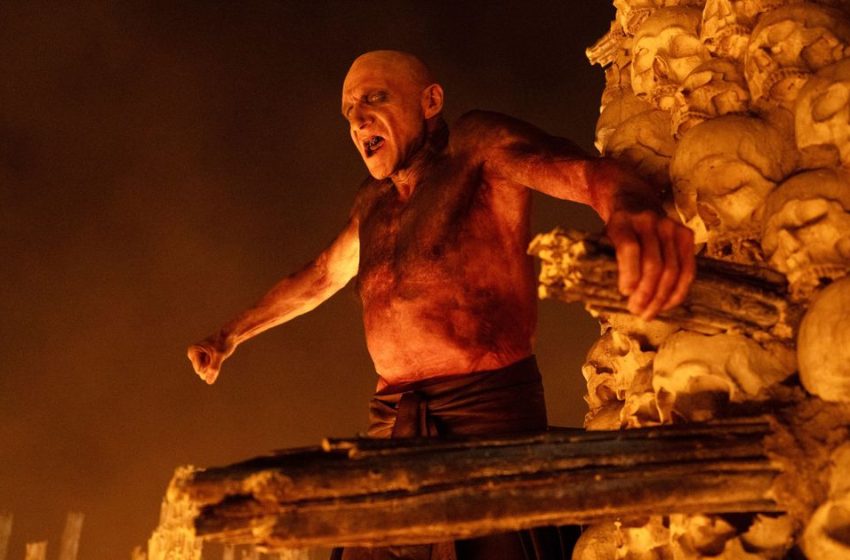
What that means, as far as this horror fan is concerned, is that it’s never too early to start championing the genre performers that might traditionally be overlooked by Academy voters. Who are the actors delivering standout performances in movies that would never be called “Oscar bait”? Even this early into 2026, there’s at least one clear contender: Ralph Fiennes in 28 Years Later: The Bone Temple, which Vulture critic Alison Willmore wrote might be “the best thing he’s ever done.” As far as awards go, this may not be an easy sell. Even Academy members who were able to stomach The Substance’s Grand Guignol finale might find themselves queasy at Bone Temple’s skinning sequence. But those willing to give the film a chance will discover truly remarkable work from Fiennes, who imbues Dr. Ian Kelson with a potent humanity that grounds the blood-soaked sequel in real pathos. The character’s relationship with the Alpha he’s named Samson (slightly more clothed in this one) provides much-needed humor and tenderness, a mélange that Fiennes is particularly adept at. He also delivers a true showstopper of a musical performance, and I am telling you, that’s a feat the Oscars love to reward. However unlikely it may be for the Academy to remember The Bone Temple a year after its January release, this is a performance worthy of accolades: nuanced, committed, and (that perennial awards-favorite adjective) brave.
Were Fiennes to be nominated, it would be his fourth time up for an Oscar (he has yet to win, in case you want to use that narrative to your campaigning advantage), but there’s another repeat nominee I’d make a case for. Why not consider Rachel McAdams, who is so good in Sam Raimi’s Send Help that she almost convinces you she could be called frumpy? Realistically, the movie is even less likely to be on the Academy’s radar than The Bone Temple, which was written by Oscar nominee Alex Garland and is the fourth installment in a series originally helmed by Oscar winner Danny Boyle. Send Help, by contrast, is a goofy, gory, CGI-laden ’90s throwback directed by a man most famous for Evil Dead and Spider-Man movies. Must we limit ourselves to what’s realistic, though? We’re in a post–Aunt Gladys Oscar world, and McAdams’s performance as Linda in Send Help is why the film works as well as it does. Over the course of the movie (spoiler alert), she shifts seamlessly from underdog to villain, with McAdams bringing surprising complexity to a character who could easily feel one-note. That we root for her even after she breaks bad is a credit to the actor’s command of the screen and the way McAdams manages to tease out the raw nerve at Linda’s core that pushes her toward unthinkable acts.
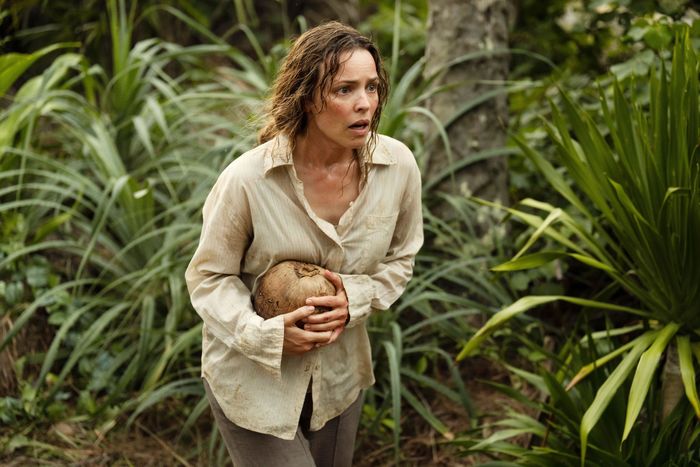
Rachel McAdams in Send Help.
Photo: Brook Rushton/Walt Disney Studios/Everett Collection
At the risk of sounding greedy, why stop there? You could make a strong case for McAdams’s co-star, the perpetually underrated Dylan O’Brien. And it’s not just Fiennes in The Bone Temple — there’s also Chi Lewis-Parry as the aforementioned Samson, and Sinners alum Jack O’Connell as sadistic psychopath Sir Lord Jimmy Crystal. For those interested in full-blown wishcasting, you can even look to the rest of 2026’s genre offerings to imagine what upcoming movies might enter the awards conversation. Mubi, which helped The Substance overperform throughout last awards season, is distributing Jane Schoenbrun’s Teenage Sex and Death at Camp Miasma — wishful thinking or not, Gillian Anderson as a reclusive former Final Girl sounds Oscar-worthy to me. Nosferatu writer-director Robert Eggers is taking on a new monster with Werwulf, which seems, at the very least, destined for similar recognition in the technical categories. And don’t overlook a movie like Hokum, the first theatrical release from filmmaker Damian McCarthy. Given its rapturous reception out of SXSW and the Oscar power of distributor Neon, mainstream award nominations are at least plausible.
Even as we wait to see the full effects of Weapons and Sinners on the future of the Academy Awards, there’s no denying the vibe shift. That’s why this is not only a victory lap from one of Aunt Gladys’s earliest champions — it’s also a call to arms. The door may not be wide open for any horror movie to enter the awards conversation, but it’s certainly more ajar than it ever has been before. Passionate genre fans would be wise to take advantage.
First Appeared on
Source link






