


Ancient Fossil Reveals a Surprising Truth About Dinosaur Size
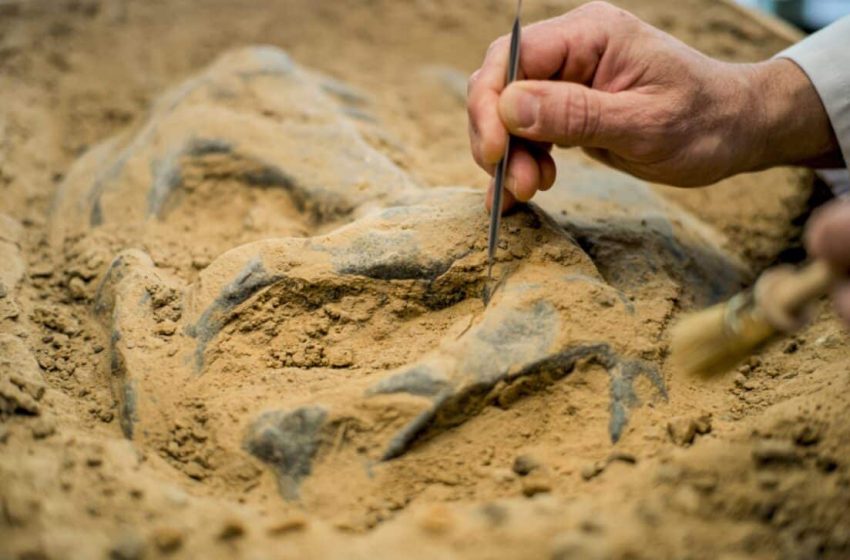
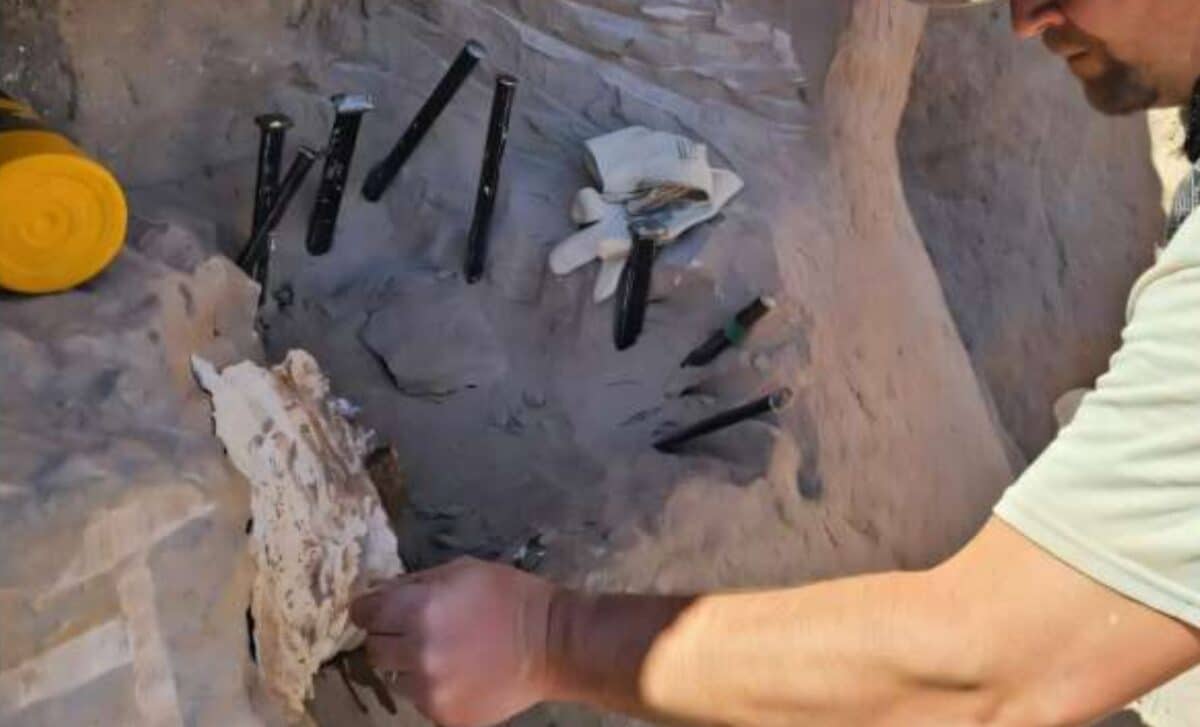
The fossil was discovered in 2014 at the La Buitrera fossil area, and researchers spent about a decade preparing the fragile bones for study. According to the University of Minnesota’s release, the work culminated in a paper published in Nature on February 25, 2026, led by Peter Makovicky and co-led with Sebastián Apesteguía.
Alnashetri matters because alvarezsaurs (its broader group) have been difficult to interpret in South America, where finds were often fragmentary and hard to compare with better-preserved Asian specimens. A more complete animal changes what can be tested, not just what can be guessed.
A “Rosetta Stone” Fossil for a Puzzling Dinosaur Group
For decades, alvarezsaurs were a frustrating puzzle: famous for tiny teeth and stubby arms ending in a single large thumb claw, yet poorly represented in a form that lets scientists confidently map their anatomy. According to the University of Minnesota, most well-preserved fossils came from Asia, while South American records were “fragmented and difficult to interpret.”
That is why the team emphasizes the value of an articulated skeleton. “Going from fragmentary skeletons that are hard to interpret, to having a near complete and articulated animal is like finding a paleontological Rosetta Stone,” said Peter Makovicky, in the University of Minnesota statement. He added, “We now have a reference point that allows us to accurately identify more scrappy finds and map out evolutionary transitions in anatomy and body size.”
The Nature paper itself frames the broader stakes in technical terms: it describes Alnashetri as “to our knowledge the most complete and smallest South American taxon to date,” while also reporting that South American taxa may not form a simple ladder leading toward later Asian forms.
What the Bones Say about Size, Age, and Anatomy
The fossil does more than add a new specimen, it adds a test case. According to the University of Minnesota release, microscopic analysis of the bones confirmed Alnashetri was an adult of at least four years old, underlining that it truly was small rather than a juvenile of a larger species.
Its anatomy also stands out from later relatives. According to the same release, Alnashetri had long arms and larger teeth than later alvarezsaurs, which the researchers interpret as evidence that some members of the lineage were tiny before developing the more extreme traits often tied to an “ant-eating” specialization.
The Nature abstract sharpens one of the headline claims: rather than finding support for a single, directional trend toward miniaturization, the authors report “no support for evolutionary miniaturization” and instead “repeated evolution within a narrow body size range.” It’s the kind of sentence that reads dry on the page, yet it lands hard on older assumptions.
A Pangaea-Linked Origin and the Role of la Buitrera
The study doesn’t stop at a single skeleton from Patagonia. According to the University of Minnesota release, the team identified alvarezsaur fossils in museum collections from North America and Europe, using those data to argue the group originated earlier than expected, when continents were still connected as Pangaea.
Nature’s paper uses the language of biogeography to describe the mechanism: it reports an inferred “Pangaean ancestral distribution,” with “vicariance dominating the early history of the clade”, in other words, geographic separation tracking the breakup of landmasses rather than improbable ocean crossings.
And the location matters. The La Buitrera fossil area has become a recurring character in this story, not just a dot on a map. According to the University of Minnesota release, the site has yielded other animals including primitive snakes and tiny saber-toothed mammals, offering a window into smaller-bodied Cretaceous life that is often under-sampled. Apesteguía summed up the site’s impact in the same statement: “After more than 20 years of work, the La Buitrera fossil area has given us a unique insight into small dinosaurs and other vertebrates like no other site in South America.”
First Appeared on
Source link






