


Ancient Romans Really Did Use Poop as Medicine. We Just Got The First Real Proof. : ScienceAlert
Stool transplants are cutting-edge experimental procedures, but using poop as medicine is hardly a modern idea.
Ancient Romans knew their… feces – or at least they liked to think they did. According to historical documents, influential doctors in Rome were advising folks to brew up healing poultices and therapeutic fragrances using animal and even human dung.
At last, we have the cold, hard evidence.
Archaeologists in Türkiye have now found the first chemical traces of human poop in a 1,900-year-old bottle.
This long, thin vessel looks sort of like a glass candlestick with a splayed base. In ancient Roman times, it was known as an unguentarium, and was typically reserved for perfume or makeup.
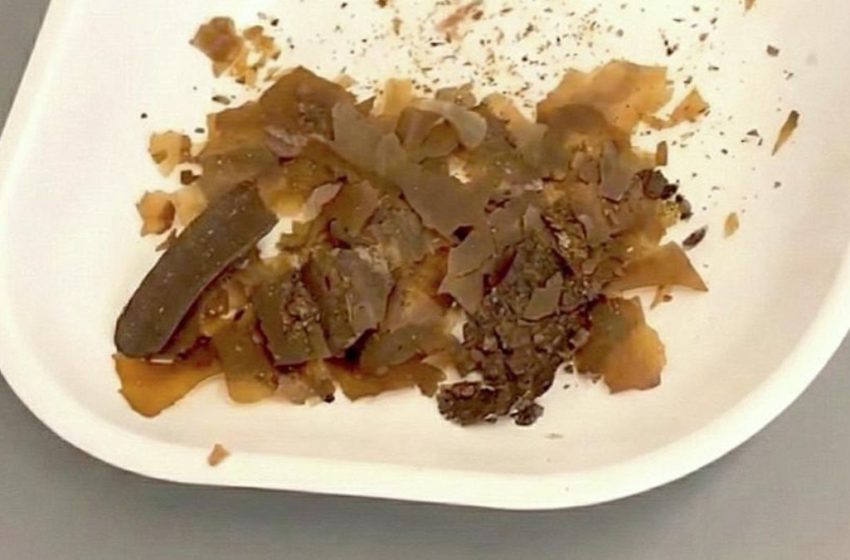
When researchers scraped the insides of the artifact, housed in the Bergama Archaeology Museum, dark brownish flakes of an unknown material fell away.
Grinding up the sample and analyzing its chemistry, the research team of three discovered markers that strongly indicate the presence of human poop.
Plus, there was a sprinkling of aromatic compounds from thyme, probably to mask the smell.
In ancient Rome, it was not unusual for prominent physicians, like Hippocrates, Pliny the Elder, or Galen of Pergamon, to advise using poop as medicine.
In fact, excrement or dung, usually from animals, was recommended in medical texts for a plethora of health issues, such as inflammation, infection, and even reproductive disorders.
Galen alone refers to fecal medicines in his writings at least two dozen times. While the famed Greek physician rarely recommends human feces, he does make sure to mention the therapeutic value of children’s poop (so long as they are fed a very specific diet, of course).
To find remnants of human poop in an ancient Roman vessel, dated to the 2nd century CE, is telling. It suggests that human excrement really was used as a form of topical treatment or ‘olfactory pharmacology’, as historical documents indicate.
“Ancient sources make clear that the boundaries between cosmetic and medicinal usage were fluid, and that unguents often blurred distinctions between healing, hygiene, and magic,” archaeologist Cenker Atila, of Sivas Cumhuriyet University, and colleagues write in their published paper.

Similar poop treatments seem to have persisted through the Middle Ages, but they were then lost in the 18th century.
Back then, using dung as medicine was probably quite risky, as feces can transmit dangerous pathogens.
But today, when fecal transplants are properly screened, the stool and its various microbes have the potential to address a whole variety of ailments, from depression and bipolar disorder to diabetes, heart disease, and drug-resistant superbugs.
Scientists may know more about the gut microbiome than ever before, and yet we still have so much to learn about the millions of microbes that reside in our intestines and how they might impact our health.
While clinical trial reviews suggest that fecal transplants can improve the gut microbiome and symptoms of those with certain illnesses, such as irritable bowel syndrome, the effects seem to diminish after about six months.
Because this experimental procedure carries its own health risks and can, on rare occasions, be lethal, there is every reason to tread cautiously, and yet there are promising signs.
Related: We Finally Know Why Roman Concrete Has Survived For Nearly 2,000 Years
In a recent study on mice, for instance, older animals who received a poop transplant from younger ones showed signs of a more youthful gut.
Plus, in 2021, another study on mice found that poo transplants from younger individuals reversed signs of aging in older animals.
Perhaps using young people’s poop as medicine is not such a laughable idea, after all; Galen might have been on to something.
The study was published in Journal of Archaeological Science: Reports.
First Appeared on
Source link






