


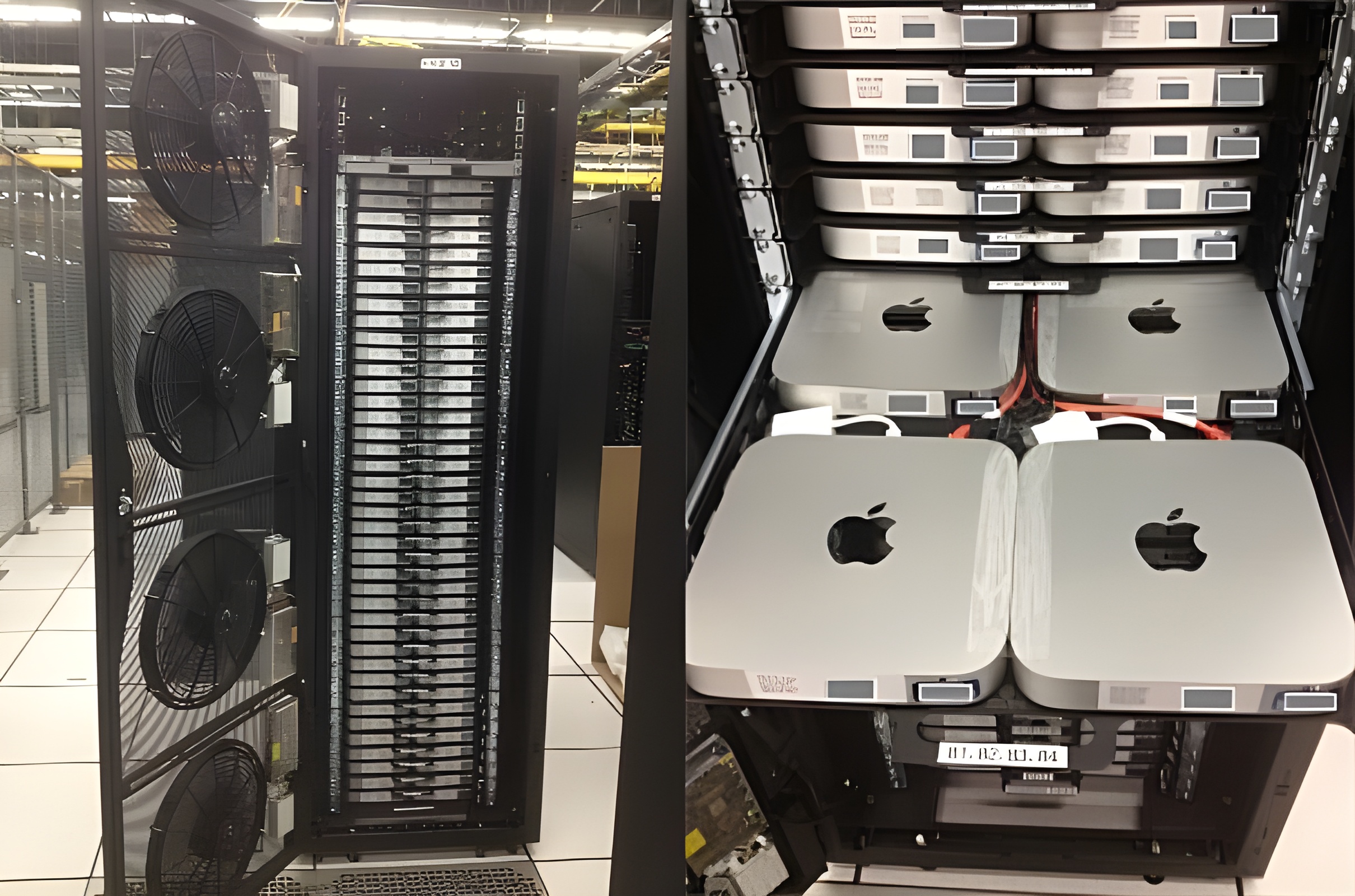
Apple’s AI Advantage On Its Mac Cluster Now Under Threat
The ability to pool computational power by clustering a number of Mac mini or Apple Studio devices via the Thunderbolt 5 is indeed a potent tool, especially given Apple’s unified memory architecture, which makes available copious memory at a time when a given quantum of memory resource is worth its weight in gold.
Yet, even as Apple introduces tools to better exploit this unique advantage, its overall competitiveness is being chipped away by the expiration of its memory-focused long-term agreements (LTAs), setting the stage for a considerable surge in prices for its upcoming products, including the upcoming M5-based Mac mini and Apple Studio.
Apple’s AI advantage vis-à-vis the Mac mini and Apple Studio clusters is now under threat from expiring memory-focused LTAs
At the heart of this advantage lies Apple silicon’s unified memory architecture, where the CPU and GPU use the same memory cache. So, as an example, the M4 Pro Mac mini boasts 64GB of RAM (unified memory) vs. the RTX 4090’s 24GB of RAM.
When you link a number of Mac mini devices via Thunderbolt 5, the pooled memory scales rapidly for AI-related tasks. What’s more, this advantage becomes all the more lucrative when combined with the superior processing power of the upcoming M5-based Mac mini and Apple Studio.
Meanwhile, Apple appears to be doing everything in its power to highlight this pooled computing advantage. For instance, macOS Tahoe 26.2 introduced a new driver to the MLX, Apple’s bespoke machine learning platform, replete with support for Thunderbolt 5.
Unlike a typical Ethernet-based computing cluster, where the connection speed maxes out at around 10Gb/s, the Thunderbolt 5 has a max bandwidth of 80Gb/s. What’s more, Apple has instituted Remote Direct Access Memory (RDMA) with Thunderbolt 5, which allows any given CPU node in the cluster to read the memory of another, and that too without expending much processing power of the CPU node that is being read.
To illustrate this concept, the YouTuber, Jeff Geerling, recently built a cluster of four Mac Studios loaned to him by Apple. The cluster boasted of a unified memory of around 1.5TB and costs roughly $40,000.
For comparison, pooling the same quantum of memory by clustering the NVIDIA DGX Spark would require you to acquire 12 units, with each unit costing roughly $4,000. This equates to a total cost of $48,000, giving Geerling’s cluster of 4 Apple Mac Studios an ~$8,000 advantage.
This cost advantage that Apple currently retains is at least partially due to its long-term agreements (LTAs) with some of the biggest names in the memory sphere. However, as we noted in a recent dedicated post, some of Apple’s LTAs are set to end as soon as January 2026, with Samsung and SK Hynix chomping at the bit to increase their quotation prices for Apple as a result.

Against this backdrop, we would not be surprised if the $8,000 advantage that we detailed above shrinks to mere hundreds of dollars, or disappears in its entirety, come January.
Follow Wccftech on Google to get more of our news coverage in your feeds.
First Appeared on
Source link






