


Archaeologists May Have Just Cracked The Code Of Peru’s 5,200 Ancient Holes
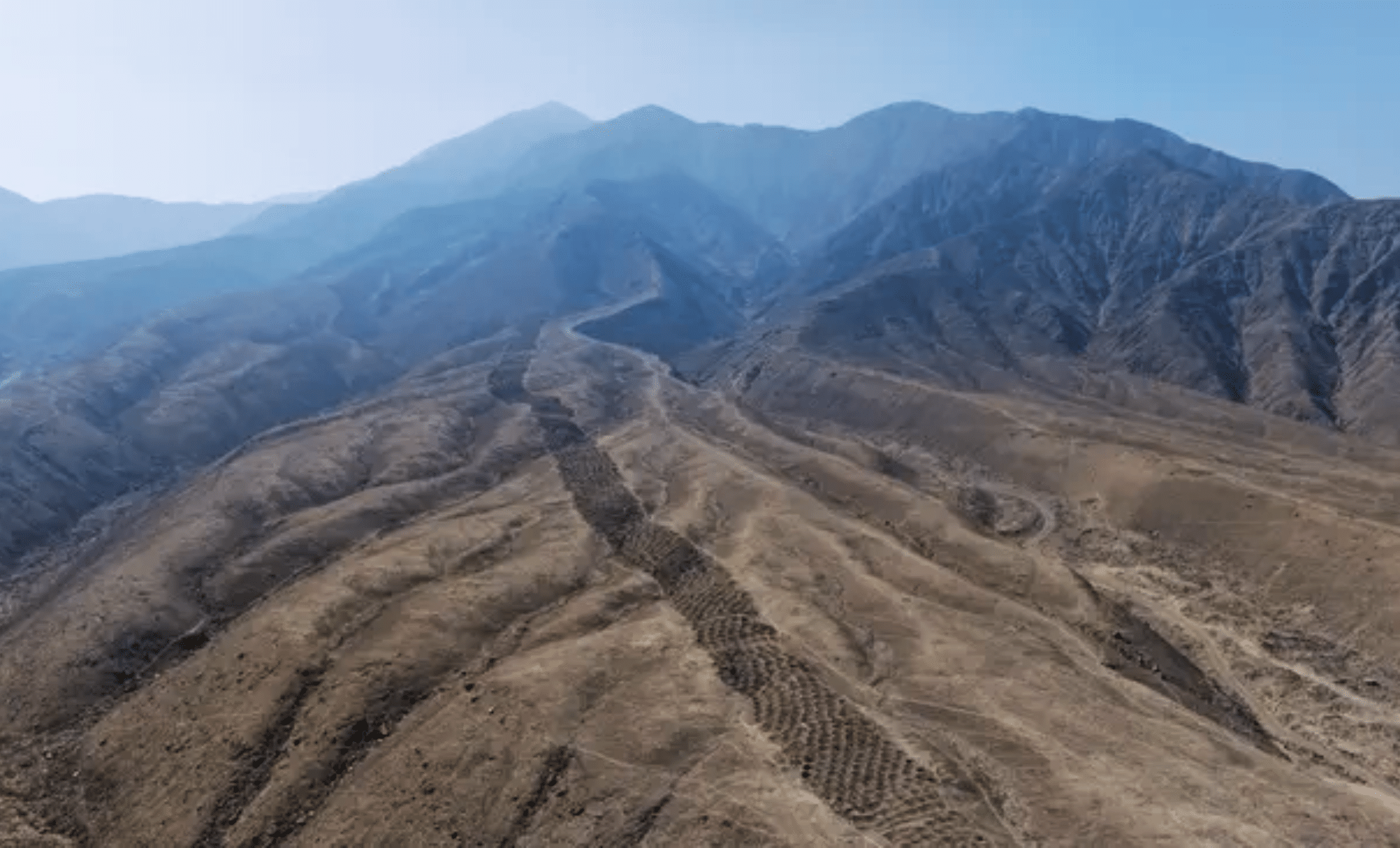
For nearly a century, a mysterious site in southern Peru has puzzled archaeologists and travelers alike. Thousands of perfectly carved holes stretch across the ridge of Monte Sierpe, forming a landscape that seems almost otherworldly. For decades, no one could explain their origin or purpose. Now, new research may finally shed light on this ancient enigma — and its surprising role in the pre-Inca world.
Clues Hidden In The Foothills Of The Andes
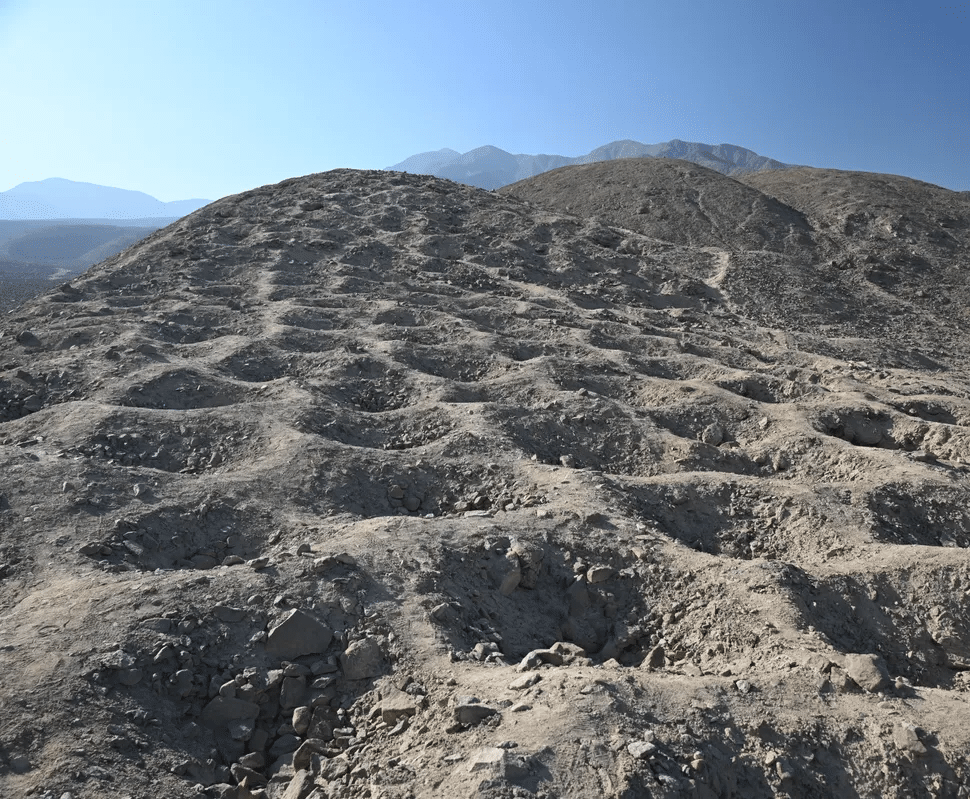
In a recent study published in Antiquity, a team led by archaeologist Jacob Bongers from the University of Sydney offers a compelling interpretation of the 5,200 holes that line the arid ridge of Monte Sierpe. Using sediment analysis, drone mapping, and radiocarbon dating, the researchers uncovered traces of ancient plant materials — maize, quinoa, barley, and squash — embedded in the pits. These botanical clues suggest that the site may have served first as a marketplace and later as a sophisticated accounting system.
“Why would ancient peoples make over 5,000 holes in the foothills of southern Peru? Were they gardens? Did they capture water? Did they have an agricultural function?” Bongers asks. “We don’t know why they are here, but we have produced some promising new data that yield important clues and support novel theories about the site’s use.”
This insight rewrites what many believed about the Inca-controlled region. The holes were once assumed to belong to the Inca Empire, which dominated the Andes after 1400 CE. Yet charcoal samples dating between 1320 and 1405 CE indicate that the Chincha culture, who lived there before the Inca, may have built the site. Pottery fragments scattered nearby reinforce that idea — revealing a thriving civilization that predated the empire by generations.
From Marketplace To Monumental Accounting System
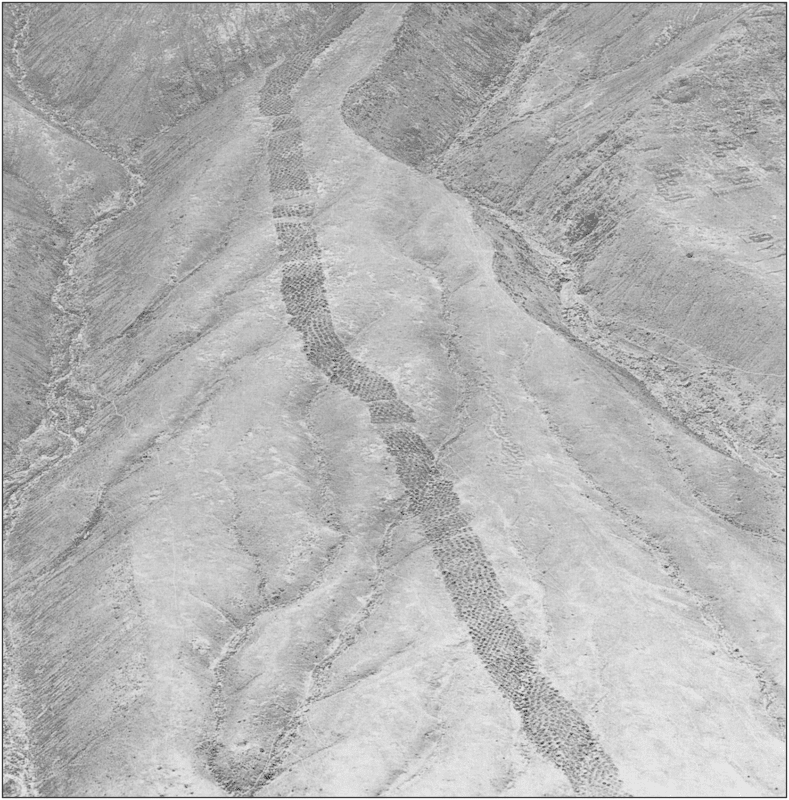
As Bongers and his colleagues examined the distribution of the pits, aerial imagery revealed something even more fascinating: the holes were arranged in blocks resembling the Inca khipu — a knotted-string device used for counting and recording information. This visual similarity suggests that when the Inca later took control of the region, they repurposed Monte Sierpe into a massive tribute registry, using it as a physical form of taxation or inventory tracking.
“This is very intriguing,” Bongers says. “Perhaps this was a pre-Inca marketplace, like a flea market. We know the pre-Hispanic population here was around 100,000 people. Perhaps mobile traders (seafaring merchants and llama caravans), specialists (farmers and fisherfolk), and others were coming together at the site to exchange local goods such as corn and cotton.”
The diversity of plant residues — coupled with signs of woven materials from willow and bulrush used in baskets — supports the idea of trade and exchange. Monte Sierpe might have been a place where merchants gathered to barter goods, long before formalized taxation systems existed. Later, under the Inca Empire, its function evolved — the site transforming from a center of commerce to an administrative hub, a kind of “landscape ledger” carved into stone and earth.
“Fundamentally, I view these holes as a type of social technology that brought people together, and later became a large-scale accounting system under the Inca Empire,” Bongers explains.
This perspective paints a vivid image of how ancient societies adapted and layered meaning into their infrastructure, merging the economic with the ceremonial, and the practical with the symbolic.
Unanswered Questions Beneath The Andean Sky
Despite these groundbreaking findings, Monte Sierpe continues to guard its secrets. Why did such a massive construction exist only here, and not elsewhere across the Andes? Was it a regional innovation, a cultural experiment, or something entirely different?
“There are still many more questions – why is this monument only seen here and not all over the Andes? Was Monte Sierpe a sort of ‘landscape khipu’? – but we are getting closer to understanding this mysterious site. It is very exciting,” says Bongers.
The next phase of research will involve more sampling and comparison with known khipus from the same region. Each pit, each grain of pollen, may hold another fragment of the story — a narrative of trade, power, and communication that shaped pre-Columbian Peru. As new technologies uncover ancient patterns, Monte Sierpe stands as a testament to the ingenuity of the Andean civilizations — and a reminder that even in the driest landscapes, human creativity has always found a way to leave its mark.
First Appeared on
Source link






