


Archaeologists May Have Just Found Long-Lost Proof of Hannibal’s War Elephants in Spain!
For centuries, the legendary war elephants of Hannibal have been the stuff of myth and history, with little physical evidence to back up the dramatic accounts of their role in the Second Punic War. But a recent discovery in Spain may change that forever. Archaeologists have unearthed a 2,200-year-old elephant bone in Cordoba, believed to be the first direct evidence linking these mighty creatures to Hannibal’s famous military campaign. Published in the Journal of Archaeological Science: Reports, this find could offer a groundbreaking glimpse into one of history’s most iconic moments.
A Historic Find in Iberia
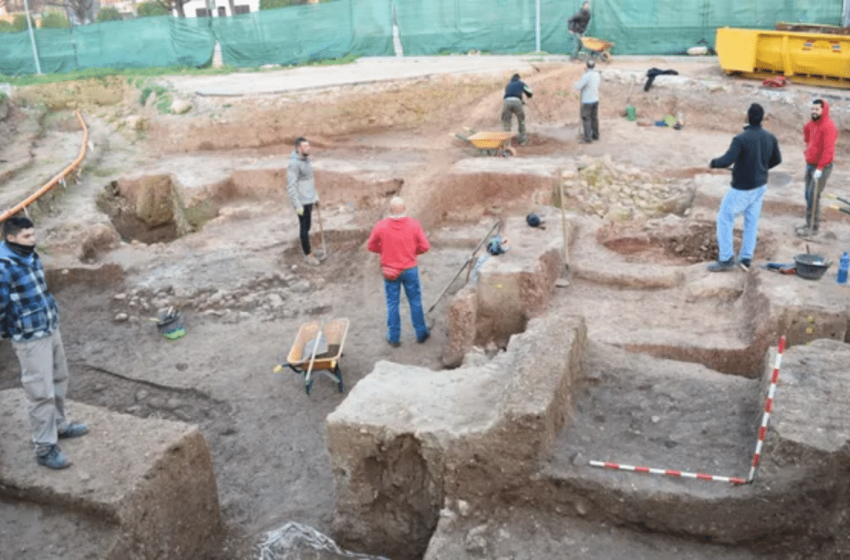
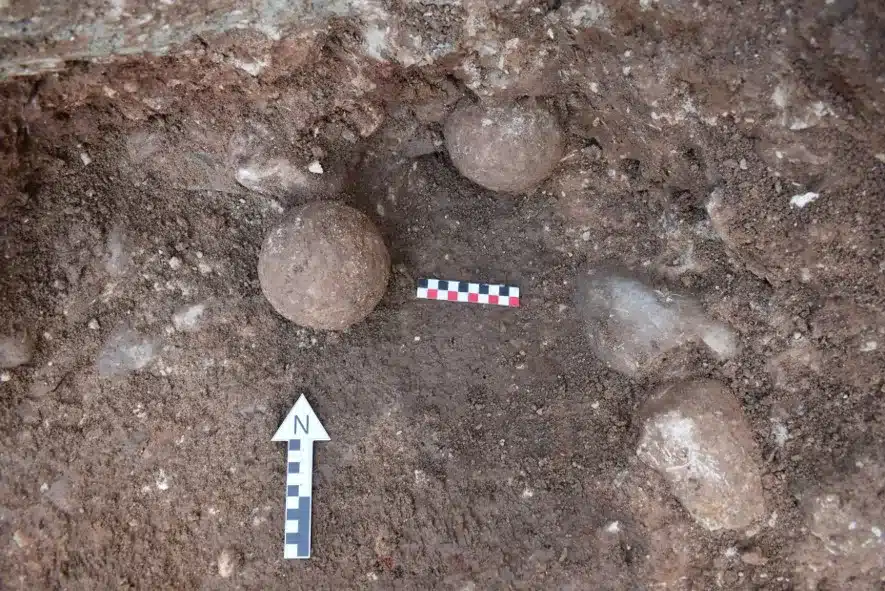
The discovery of an elephant’s carpal bone in Cordoba represents a significant leap forward in our understanding of ancient warfare. The bone, found in 2020 during an excavation ahead of construction work at the Cordoba Provincial Hospital, is believed to have come from an African elephant. What makes this find so extraordinary is its dating to approximately 2,250 years ago, long before the Roman conquest of the region in the mid-2nd century BCE. Archaeologists have confirmed that the bone is not of a species native to the Iberian Peninsula, confirming its foreign origins. Rafael Martínez Sánchez, Associate Professor at the University of Córdoba, told IFLScience:
“[T]his is the first time an elephant bone remnant linked to that chronology has been found in Iberia and, to our knowledge, in Europe.”
This discovery is particularly significant as it is the first to directly link these ancient war elephants to the region of Iberia, which played a crucial role during Hannibal’s campaign.
The importance of this find cannot be overstated. Until now, evidence of war elephants in Europe was purely based on literary sources or iconographic depictions, such as those from Roman accounts of Hannibal’s journey across the Alps. However, there has been a longstanding historical curiosity regarding the physical remains of these animals, especially in the 18th and 19th centuries when scholars and antiquarians scoured Europe for any sign of their existence. Martínez Sánchez continues,
“This stands in contrast to the interest shown by scholars and antiquarians in the 18th and 19th centuries in finding bones of these famous elephants.”
Now, with the unearthing of this remarkable bone, scholars have begun to confirm the historical texts’ accuracy.
The Discovery Process and Its Context
The process behind the discovery of the elephant bone is as fascinating as the find itself. Martínez Sánchez wasn’t involved in the excavation when it began. In fact, he had simply stopped by the site on his way to visit another excavation when his attention was drawn to a large bone that had been uncovered.
“I arrived there simply as a visitor, on my way to visit the excavation of a colleague and good friend, Agustín López Jiménez, when my attention was drawn to a very large bone that had just been discovered. The contextual analysis came later, partly thanks to the expertise in the archaeology of warfare held by Dr. Fernando Quesada Sanz, co-author of the study,” he explained.
This chance encounter led to a deeper examination of the bone and its significance. As they studied the remains, the team realized that the bone likely came from an African elephant used during the Carthaginian Empire’s military campaigns, specifically during the Second Punic War.
The site itself, once an Iberian fortification known as the Oppidum of Cordoba, provides important contextual information that strengthens the case for the bone’s association with the Punic Wars. These fortifications were strategic military sites, which adds further credibility to the theory that Hannibal’s elephants could have passed through the region during their campaign across the Iberian Peninsula.
Ongoing Research and DNA Analysis
Though this discovery is thrilling, questions remain. Researchers are working diligently to extract ancient DNA from the specimen in hopes of definitively identifying the species of elephant from which the bone came. Martínez Sánchez noted that there’s ongoing debate about the species of North African elephants that Hannibal likely used in his army. He remarked,
“We are currently endeavouring to extract ancient DNA from this specimen to determine the taxonomy of these animals. There is ongoing debate regarding the species of the North African elephants, from which the Carthaginians sourced their armies.”
The debate centers around the identification of these elephants, specifically whether they belong to one of the two modern species of African elephants (Loxodonta africana vs. Loxodonta cyclotis), or perhaps a now-extinct species that once roamed North Africa.
Another crucial aspect of the research, published in the Journal of Archaeological Science: Reports, involves determining how the bone arrived in Iberia. Martínez Sánchez cautioned that while this find is groundbreaking, it is not definitive proof that the bone came from an elephant used in battle.
“The bone itself is not definitive proof – we do not rule out the possibility that the bone could have arrived in Córdoba as a curiosity or something similar – but it is the closest thing to definitive evidence of the presence of these animals, beyond literary or iconographic sources,” he explained.
Even with this uncertainty, the bone offers the clearest physical link to the war elephants described in ancient texts.
First Appeared on
Source link






