


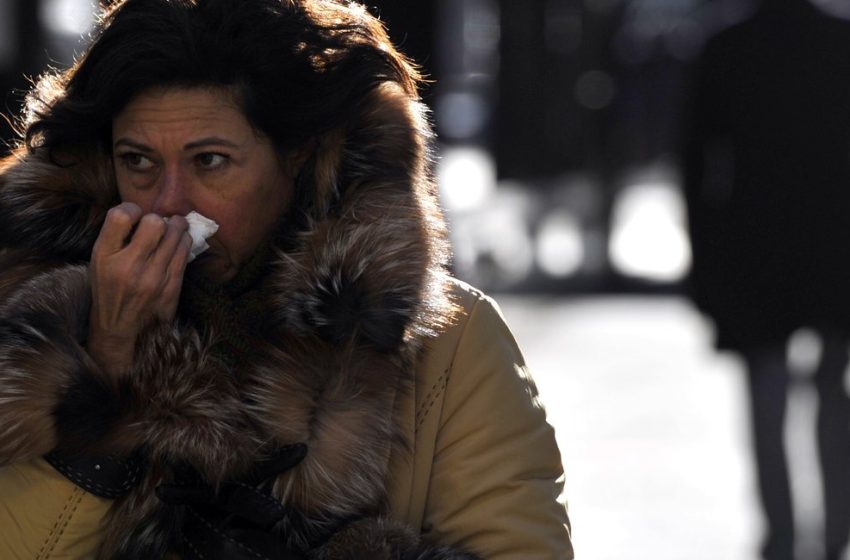
As allergy season returns to NYC, here’s how you can save yourself from pollen
While the weather still has New Yorkers asking whether to grab their hoodies or their puffy coats, the blooms on the trees are a clear sign that both spring and allergy season have arrived.
All the tree pollen swirling around causes New Yorkers with seasonal allergies to sneeze, get watery eyes or feel congested in late March or early April. Other allergens will pop up later, causing symptoms through the summer and fall, allergy experts say.
Here’s what causes seasonal allergies, what to expect this year and how to manage the symptoms.
The least showy blossoms are to blame
Tree pollen is the main culprit for seasonal allergies this time of year, with the primary allergens shifting to grass in the summer and a variety of weeds in the fall, according to Shauna Moore, the Brooklyn Botanic Garden’s director of horticulture.
But while cherry blossoms might be New York City’s most iconic spring flowers, they aren’t the primary cause of seasonal allergies, Moore said. Less eye-catching blooms on birch trees, maples, poplars and willows are mostly responsible, she said.
Trees with more ornamental blooms like cherry blossoms have stickier pollen that’s spread by bees and insects, rather than wind, meaning it’s less likely to irritate humans, Moore said.
“The trees that are less showy with flowers that are not as remarkable don’t trick the insects into passing [their pollen] along, so they need the environment like the wind and the rain and the weather to do that for them,” Moore said.
How do I know if I have seasonal allergies?
For those with pollen allergies, the body responds to the powder entering their nose or lungs as a dangerous intruder, triggering an immune response, according to the Cleveland Clinic.
Pollen allergies often come with symptoms such as sneezing, congestion, runny nose and itchy, red or watery eyes, said Dr. Aaron Pearlman, an otolaryngologist at NewYork-Presbyterian and Weill Cornell Medicine.
It can be difficult to distinguish between the symptoms of allergies and a cold, since both can come on suddenly, Pearlman said. But he said seasonal allergies typically arrive around the same time every year and last longer. A cold, on the other hand, might come with a fever and a stronger sense of malaise but will only last a few days, he said.
Not everyone with seasonal allergies will start getting symptoms in the springtime, though.
Some might be sensitive to tree pollen, while others might be sensitive to other allergens, so their symptoms could spike in summer or fall, Pearlman said.
What can I do to ease the symptoms?
Oral antihistamines such as cetirizine (sold as Zyrtec) or loratadine (sold as Claritin) can help relieve symptoms, Pearlman said.
He added that those with seasonal allergies can also be proactive by regularly using a nasal corticosteroid to stave off symptoms — think of nasal sprays like Flonase.
It also helps to be aware of the weather. Exposure to pollen is typically worse on dry, windy days, whereas rain can wash it away, said Brett Anderson, a senior meteorologist at Accuweather.
Closing the windows or limiting time outside when conditions are bad can help, Pearlman said.
Is this allergy season expected to be worse than usual?
“For the New York area, we’re expecting fairly average conditions for all three types of pollen this year,” said Anderson, the meteorologist, adding that the Midwest will likely have it worse.
But he said trees did start flowering a couple of weeks early this year because of the unseasonably warm weather that briefly hit the region last month.
In general, allergy season is getting longer with climate change because warm temperatures are making trees bloom earlier in the year and the first frost is coming later, Anderson said.
First Appeared on
Source link






